

Science
NASA Deploys Robotic Mission to Avert Uncontrolled Telescope Re-entry
RA
Rachel Adams
1 day ago7 min read
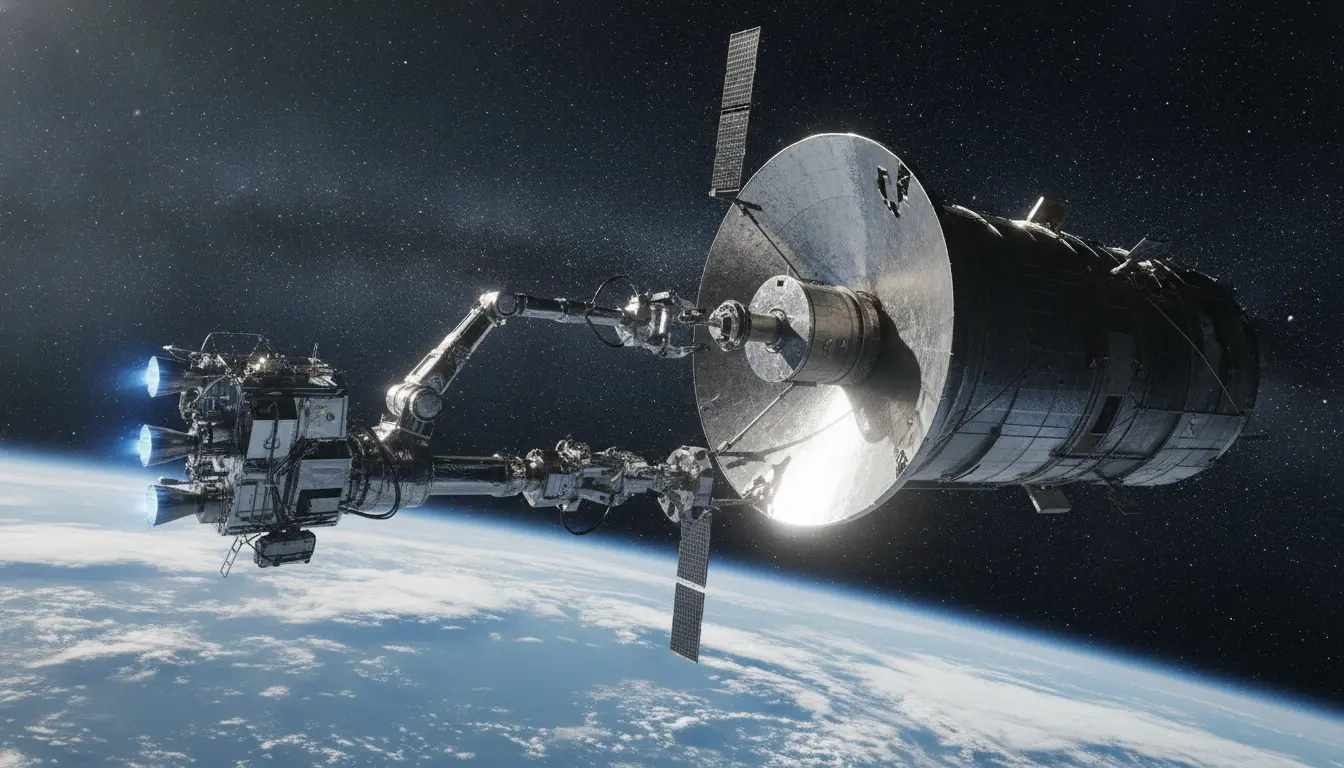
NASA has initiated an unprecedented robotic mission aimed at intercepting and safely de-orbiting a large, defunct orbital telescope, a critical maneuver designed to prevent its uncontrolled re-entry into Earth's atmosphere. The ambitious operation underscores growing global concerns about space debris and the potential hazards posed by massive objects falling back to Earth without guidance, presenting a significant test for advanced autonomous space technology and orbital risk management.For decades, the Earth's orbit has accumulated a vast amount of debris, ranging from spent rocket stages and defunct satellites to tiny fragments from collisions. While smaller pieces often burn up harmlessly during re-entry, larger objects can pose a substantial risk to populated areas.The incident involving this particular telescope, whose operational life has concluded and is now descending, highlights the urgent need for proactive solutions to manage the orbital environment. Unlike planned re-entries where spacecraft are guided to safe, unpopulated zones, an uncontrolled descent leaves its trajectory largely to chance, making the potential impact zone unpredictable and raising international safety and liability concerns.The robotic interceptor spacecraft, a product of years of research and development, represents a new frontier in active debris removal. Equipped with sophisticated navigation systems, advanced robotic arms, and specialized grappling mechanisms, the mission’s primary objective is to rendezvous with the tumbling telescope.Once a secure connection is established, the robotic craft will then exert a controlled thrust, altering the telescope's orbital path to guide it towards a precise, pre-determined re-entry corridor, likely over an uninhabited ocean region. The precision required for such an operation, involving the synchronization of complex telemetry and autonomous robotics in the harsh vacuum of space, is immense.The decision to launch this intercept mission was not taken lightly, reflecting the perceived scale of the threat posed by the telescope's uncontrolled descent. Experts indicate that the sheer mass and structural integrity of the object could allow significant portions to survive re-entry and impact the ground, potentially causing severe damage or casualties.The mission is also a proactive step by NASA to demonstrate capabilities that could be vital in a future where active debris removal becomes a routine aspect of space operations, mitigating risks not just to Earth-bound populations but also to operational satellites and crewed missions in orbit. Success in this endeavor would mark a significant milestone in space sustainability, validating technologies crucial for maintaining a safe and accessible orbital environment.It would set a precedent for future missions involving orbital servicing, refueling, and the removal of other high-risk space junk. Beyond the immediate safety implications, the mission carries profound policy implications, potentially influencing international guidelines on satellite end-of-life disposal and encouraging greater investment in orbital clean-up technologies by both national space agencies and private enterprises.However, the mission faces formidable technical challenges. Manipulating a large, inert object in orbit, especially one that may be rotating unpredictably, requires extraordinary precision and adaptability.Any miscalculation could exacerbate the problem or create more debris. The outcome of this ambitious undertaking will be closely watched by the global space community, offering invaluable insights into the feasibility and efficacy of active debris mitigation strategies and shaping the future of responsible space stewardship.
#featured
#NASA
#Space Debris
#Robotic Mission
#Orbital Safety
#Satellite Re-entry
#Space Sustainability
Stay Informed. Act Smarter.
Get weekly highlights, major headlines, and expert insights — then put your knowledge to work in our live prediction markets.

Comments
It's quiet here...Start the conversation by leaving the first comment.