

Hottest
Finance
Fed Signals Potential July Rate Cut as Inflation Cools and Growth Slows
OL
Olivia Scott
13 hours ago7 min read
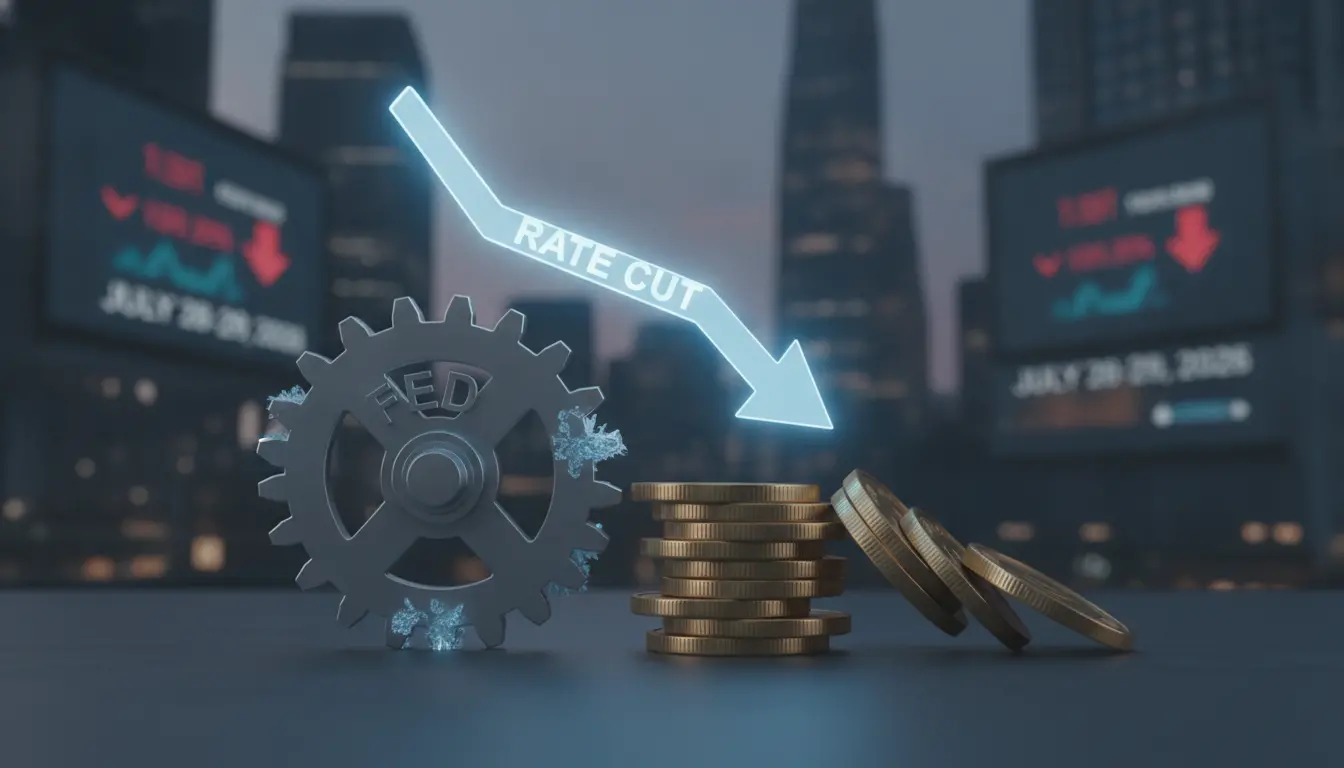
The Federal Reserve is laying the groundwork for a potential interest rate cut at its July 28-29, 2026, meeting, as fresh economic data shows inflation steadily moderating while the broader economy exhibits signs of deceleration. Policymakers, led by Chair Jerome Powell, have begun signaling a shift in tone, moving away from the hawkish stance that defined much of the past two years.The shift comes after the Personal Consumption Expenditures (PCE) price index — the Fed’s preferred inflation gauge — fell to 2. 3% in May, its lowest level since early 2021, edging closer to the central bank’s 2% target.Behind the numbers lies a complex balancing act. The labor market, while still historically tight, has shown clear softening.Nonfarm payrolls grew by just 112,000 in June, well below the 2025 monthly average of 180,000, and the unemployment rate ticked up to 4. 2%.Consumer spending, which powered the post-pandemic recovery, has also moderated as pandemic-era savings dwindle and credit card debt reaches record levels. Retail sales data for the second quarter showed a 0.3% decline in real terms, the first quarterly drop since 2023. These indicators have intensified calls from progressive economists and some business leaders for the Fed to ease monetary policy before the economy slips into a more pronounced downturn.The July meeting is now the focal point of market expectations. According to the CME FedWatch Tool, futures markets are pricing in a 68% probability of a quarter-point cut, to a target range of 4.75%–5. 00%.This marks a dramatic reversal from just three months ago, when a cut was seen as unlikely before the fourth quarter. The shift reflects a growing consensus that the Fed’s restrictive policy — rates have been held at 5.25%–5. 50% since September 2025 — is now weighing on business investment and housing.The National Association of Home Builders reported that housing starts fell 14% year-over-year in June, while existing home sales hit their lowest level since 2010, as mortgage rates remained above 7%. Key Fed officials have offered diverging views in recent weeks, underscoring the internal debate.New York Fed President John Williams, a permanent voter on the Federal Open Market Committee, noted in a June 30 speech that “the progress on inflation has been real and sustained,” adding that “it may soon be appropriate to dial back some of the restraint. ” However, Fed Governor Michelle Bowman, a noted hawk, cautioned that “premature easing could reignite price pressures,” pointing to still-elevated services inflation and wage growth above 4%.The final decision will hinge on the July 11 Consumer Price Index report and the July 17 retail sales data, both of which will be released before the FOMC convenes. International developments add another layer of complexity.The European Central Bank cut its benchmark rate by 25 basis points in June, and the Bank of England is expected to follow suit in August. A Fed cut in July would align U.S. policy with a global easing cycle, potentially weakening the dollar and providing relief to emerging markets that have struggled with dollar-denominated debt.Conversely, a decision to hold rates steady could strengthen the dollar further, exacerbating trade imbalances and putting pressure on export-oriented economies. Treasury Secretary Janet Yellen has publicly supported a data-dependent approach, but has also warned that “prolonged high rates risk creating financial stability vulnerabilities.”
For American households and businesses, the stakes are tangible. A rate cut would lower borrowing costs for mortgages, auto loans, and credit cards, offering relief to consumers who have been squeezed by high interest payments.Small business owners, in particular, have reported that access to credit has tightened significantly, with the NFIB’s June survey showing that 12% of owners cited financing as their top business problem — the highest level since 2012. On Wall Street, the S&P 500 has already rallied 8% since mid-May in anticipation of a cut, while the yield on the 10-year Treasury note has fallen to 4.1% from a peak of 4. 7% in April.Looking ahead, the July decision will set the tone for the remainder of 2026. If the Fed cuts, it will likely signal a series of gradual reductions, with futures markets pricing in two additional quarter-point cuts by year-end.If it holds, the central bank risks being seen as behind the curve as economic momentum fades. Either way, the July 28-29 meeting will be one of the most consequential of Powell’s tenure, as the Fed navigates the narrow path between taming inflation and sustaining growth. The outcome will resonate far beyond Washington, shaping everything from global capital flows to the cost of a family’s monthly mortgage payment.
#hottest news
#Federal Reserve
#interest rate cut
#Jerome Powell
#inflation
#FOMC
#monetary policy
#US economy
Stay Informed. Act Smarter.
Get weekly highlights, major headlines, and expert insights — then put your knowledge to work in our live prediction markets.
Related News



Comments
It's quiet here...Start the conversation by leaving the first comment.