

- 뉴스
- 정치
- Renewed US Airstrikes on Iran-Backed Militias Signal Persistent Threat of Escalation in Middle East
Renewed US Airstrikes on Iran-Backed Militias Signal Persistent Threat of Escalation in Middle East
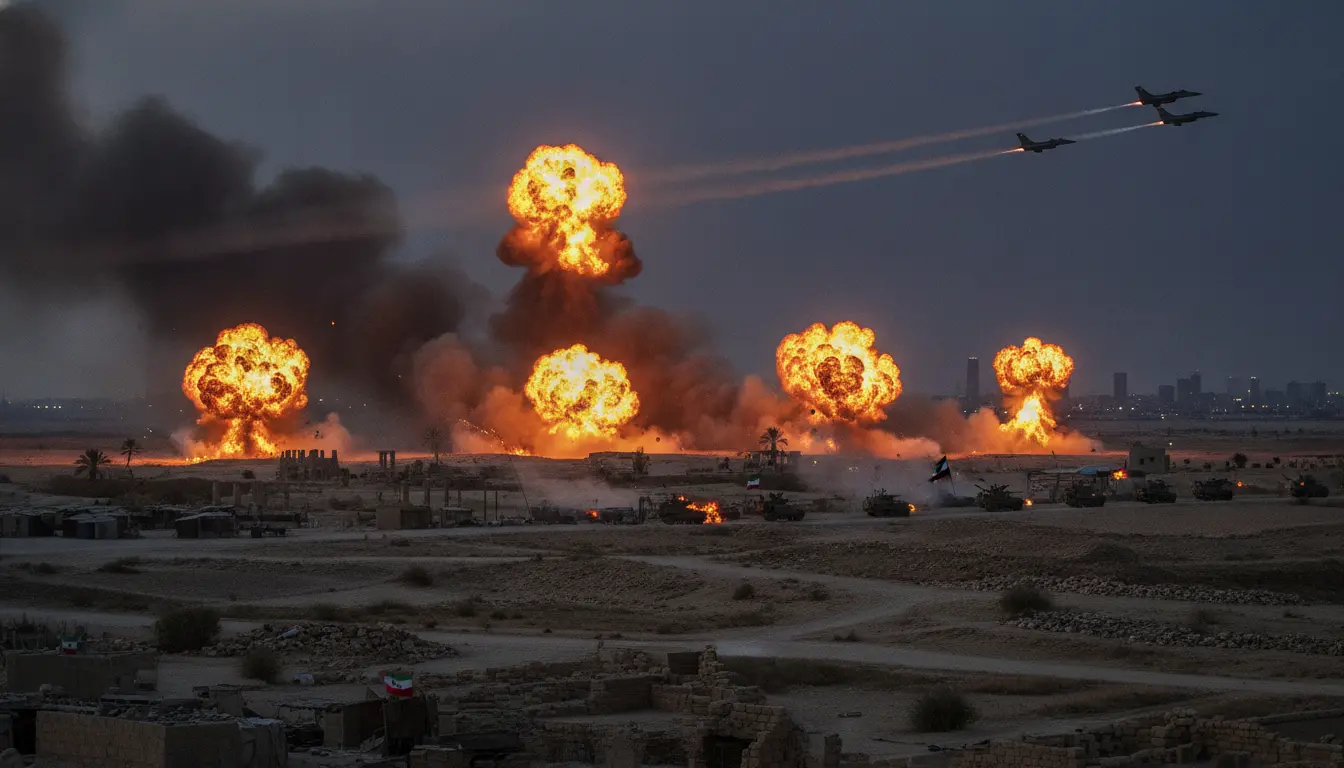
WASHINGTON—The United States has once again conducted military airstrikes against Iran-backed militia targets in Iraq and Syria, shattering a period of relative calm and reigniting concerns over a potential slide into a broader regional conflict. The recent strikes, confirmed by Pentagon officials, were a direct response to a new wave of rocket and drone attacks on bases housing American troops. This latest exchange in the long-simmering shadow war between Washington and Tehran underscores the fragile security situation in the Middle East, where the risk of miscalculation remains perilously high.
For nearly two months, a tenuous quiet had settled over the region following a more severe escalation earlier in the year. That period saw a US drone strike in Baghdad kill a senior commander of the Kata'ib Hezbollah militia, which in turn followed a deadly drone attack on a US base in Jordan that killed three American service members. The subsequent lull was seen by some analysts as a mutual, if undeclared, decision by both the U.S. and Iran to step back from the brink. However, the latest tit-for-tat strikes demonstrate that the underlying drivers of the conflict—namely the presence of US forces in the region and Iran’s use of proxy militias to challenge it—have not been resolved.
The Biden administration has consistently maintained that its retaliatory actions are defensive in nature, intended solely to protect American personnel and deter future aggression. Officials stress that the United States does not seek a direct war with Iran. Yet, Washington is caught in a difficult strategic bind. Inaction in the face of attacks on its troops is seen as a sign of weakness that could invite further, more deadly assaults. Conversely, each retaliatory strike carries the inherent risk of an escalatory spiral, where one side misjudges the other's red lines, leading to an unintended and devastating direct confrontation.
From Tehran's perspective, the use of proxy forces across Iraq, Syria, Lebanon, and Yemen is a core tenet of its regional security doctrine. These groups allow Iran to project power, harass its adversaries, and maintain strategic depth, all while preserving a degree of plausible deniability and avoiding the costs of a conventional war. Groups like Kata'ib Hezbollah in Iraq and others operating under the banner of the "Islamic Resistance in Iraq" are supplied, trained, and often directed by Iran's Islamic Revolutionary Guard Corps (IRGC). Their stated objective, shared by their patrons in Tehran, is the complete withdrawal of American forces from the Middle East. The ongoing conflict in Gaza has further fueled their operations, providing a potent rallying cry and a justification for striking U.S. and allied interests.
The Iraqi government is frequently caught in the middle of this dangerous dynamic. While it officially hosts US troops as part of the ongoing mission to counter remnants of ISIS, it is also subject to immense political pressure from powerful, pro-Iranian factions within its own security and political establishment. Each US strike on Iraqi soil is viewed as a violation of sovereignty, sparking public condemnation from Baghdad and complicating the delicate diplomatic relationship with Washington. This dynamic provides a constant source of friction, undermining stability in Iraq and challenging the long-term viability of the American military presence there.
As tensions simmer, the path forward remains fraught with uncertainty. The cycle of attack and reprisal appears deeply entrenched, with no clear diplomatic off-ramp in sight. While both Washington and Tehran have demonstrated a desire to keep the conflict below the threshold of all-out war, the persistent low-level violence creates a dangerously permissive environment for a catastrophic misstep. With regional animosities inflamed by the war in Gaza and Iran's advancing nuclear program looming in the background, the recent strikes serve as a stark reminder that the fragile peace in the Middle East can be broken at any moment.