

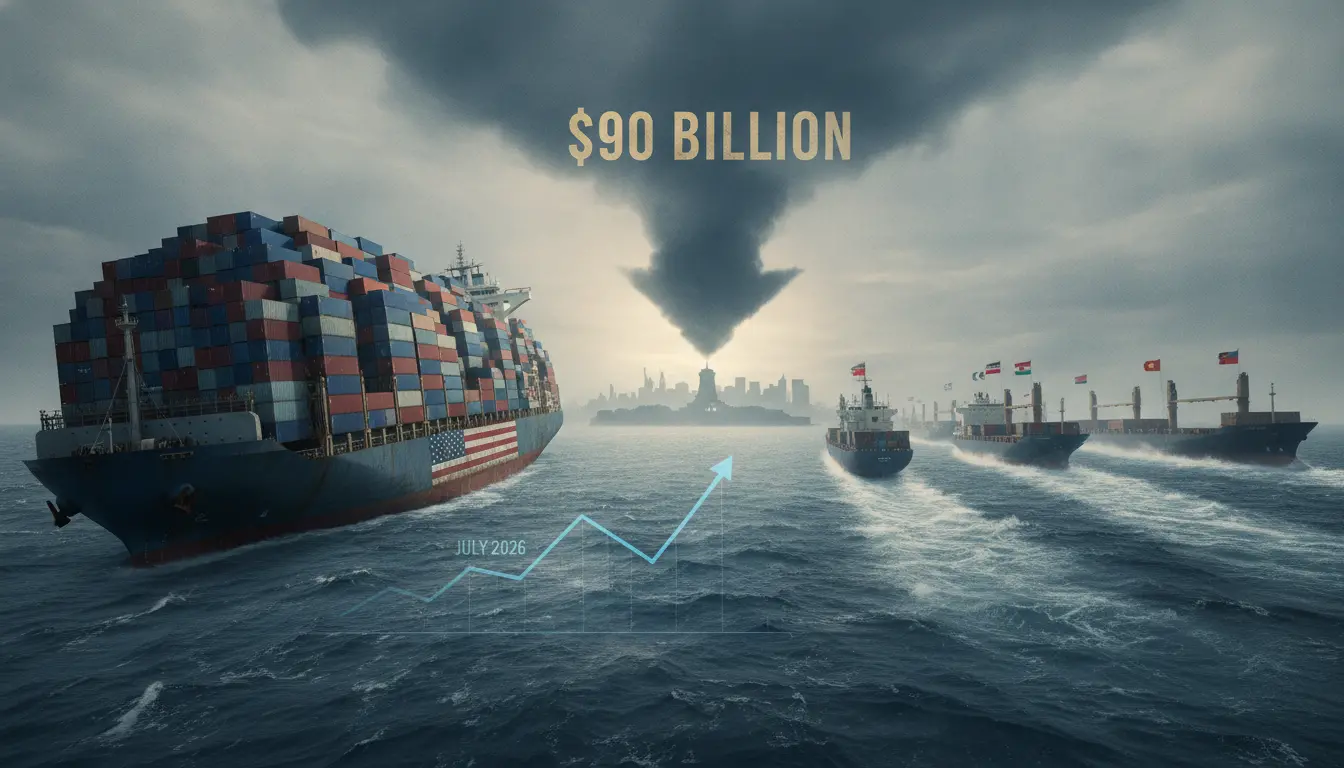
Widening US Trade Deficit Projected to Surpass $90 Billion by July 2026
The United States is bracing for a sustained expansion of its trade deficit, with projections indicating a shortfall exceeding $90 billion by July 2026. This trend underscores persistent economic imbalances and raises critical questions about global trade dynamics, domestic manufacturing capacity, and the long-term health of the American economy. A widening trade gap, which reflects the difference between the value of goods and services a country imports versus what it exports, is a complex indicator often influenced by a confluence of factors, from consumer demand to international geopolitical shifts. For policymakers in Washington, managing this deficit remains a delicate balancing act with significant economic and political implications.
The historical trajectory of the US trade deficit reveals a consistent reliance on imported goods and services, often fueled by robust domestic consumption and a strong dollar. While a deficit can sometimes signal a healthy economy with high demand, a consistently expanding gap can erode domestic manufacturing bases, lead to job displacement in certain sectors, and potentially pressure the national currency. Furthermore, it implies that the United States is increasingly borrowing from other nations to finance its consumption, accumulating external debt that could become a fiscal burden over time. The structural nature of this imbalance is a key focus for economists and trade experts, who point to everything from differing labor costs to varying regulatory environments as contributing factors.
Several key factors contribute to the projected widening of the deficit. Strong domestic demand, spurred by consumer spending and business investment, continues to draw in a high volume of imports. While a sign of economic resilience, this demand often outpaces the nation's export capabilities. Global supply chains, still recalibrating after pandemic-era disruptions, play a crucial role, with US industries relying heavily on foreign components and finished goods. Energy prices, though volatile, can also impact the deficit, as the US remains a significant importer of certain energy products. Additionally, the fiscal policies of successive administrations, including substantial government spending and tax incentives, can stimulate demand and inadvertently increase imports, further exacerbating the trade gap. Major trading partners like China, the European Union, and Mexico remain central to these dynamics, with the flow of goods across these borders forming the bulk of the deficit.
The current economic environment, characterized by efforts to combat inflation, rising interest rates, and ongoing geopolitical tensions, adds layers of complexity to the trade outlook. While the Federal Reserve's tightening monetary policy aims to cool domestic demand, its effects on import levels versus export competitiveness are multifaceted. Simultaneously, global economic growth rates, particularly in key export markets for the US, will influence demand for American goods. Policymakers are also grappling with calls for greater supply chain resilience and “friend-shoring” initiatives, which seek to diversify sourcing away from geopolitical rivals. These efforts, if successful, could alter trade patterns but may take years to meaningfully impact the overall deficit.
The stakes involved in a persistently widening trade deficit are considerable. Economically, it can exert downward pressure on the Gross Domestic Product (GDP) due to net outflows of capital and can signal a weakening of domestic industrial capacity. Politically, a large deficit often fuels protectionist sentiment, leading to calls for tariffs or trade restrictions that could provoke retaliatory measures from trading partners and disrupt global commerce. Maintaining competitiveness in advanced manufacturing and high-tech sectors is paramount for the US, and a growing deficit can suggest a lagging position in these critical areas. As the 2026 projection looms, the ongoing debate about industrial policy, trade agreements, and fiscal responsibility will intensify, seeking strategies to rebalance the nation's economic ledger without stifling growth or innovation.
Addressing the structural drivers of the trade deficit will require a multi-pronged approach. Investments in domestic infrastructure, workforce development, and advanced manufacturing could bolster export capacity and reduce reliance on imports. Carefully calibrated fiscal policies that balance stimulating growth with managing national debt will also be critical. Furthermore, diplomatic efforts to open foreign markets and ensure fair trade practices are essential. The trajectory of the US trade balance through mid-2026 and beyond will serve as a key barometer of the nation's economic health and its position within an interconnected global economy.