Otherweather & natural eventsFloods and Landslides
Military Deployed in Sri Lanka and Indonesia Amid Deadly Asian Floods
EM
Emma Wilson
3 months ago7 min read
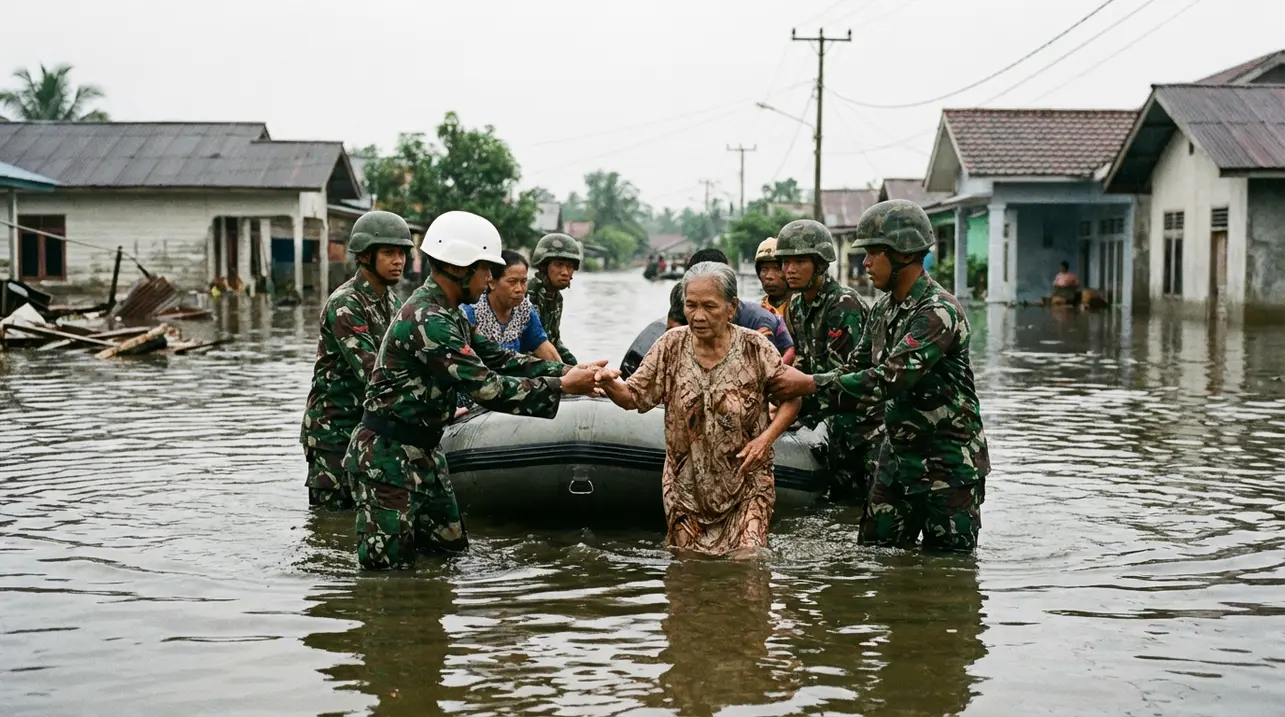
The military has been deployed in Sri Lanka and Indonesia as catastrophic flooding across Asia claims nearly a thousand lives, a stark and urgent response to a natural disaster unfolding with terrifying speed. Separate, relentless weather systems have pounded the entire island of Sri Lanka and vast swathes of Indonesia’s Sumatra, southern Thailand, and northern Malaysia over the past week, transforming streets into raging rivers and homes into isolated islands.Arriving in the devastated North Sumatra region on Monday, Indonesian President Prabowo Subianto underscored the government’s immediate priority: the evacuation and survival of tens of thousands of displaced citizens, a mission now falling heavily on the shoulders of soldiers and rescue teams navigating submerged landscapes. This crisis is not an isolated event but part of a worsening pattern of extreme weather gripping the region, where seasonal monsoons are increasingly turbocharged by the broader effects of climate change, leading to rainfall of biblical proportions that overwhelm centuries-old drainage systems and unprepared communities.In Sri Lanka, where the death toll climbs amid landslides that have wiped out entire villages, the scenes are hauntingly familiar to the floods of 2017 that killed over 200 people, revealing a cyclical vulnerability that post-disaster promises of infrastructure hardening have failed to adequately address. Meanwhile, in Indonesia, the focus in North Sumatra is a grim triage of search, rescue, and the looming threat of waterborne disease outbreaks, with health workers warning of cholera and dysentery spreading through contaminated water supplies as sanitation systems collapse.The regional impact is profound, with southern Thailand’s crucial tourist hubs facing paralysis and northern Malaysia’s agricultural heartland seeing crops destroyed, threatening both immediate food security and long-term economic stability for farmers already on the edge. Expert climatologists point to the unusually warm Indian Ocean, a phenomenon linked to global heating, as a key driver behind these concurrent torrents, suggesting that what were once-in-a-generation disasters are becoming frighteningly routine operational challenges for national governments.The human cost is immeasurable—families torn apart, children orphaned, livelihoods erased in an instant—a narrative of loss that repeats across borders with a chilling sameness. As aid organizations scramble to deliver clean water and emergency shelters, the logistical nightmare is compounded by severed road networks and compromised communications, making the military’s logistical prowess not just useful but essential for reaching the most cut-off victims.Looking ahead, the political consequences for leaders in Jakarta and Colombo will hinge on the perceived speed and efficacy of this response, with any misstep likely to fuel public anger in regions that feel historically neglected during such calamities. Furthermore, this disaster serves as a brutal stress test for regional cooperation mechanisms like ASEAN’s Coordinating Centre for Humanitarian Assistance, which now faces the practical challenge of orchestrating a multi-national relief effort amid competing domestic priorities.The long shadow of this event will stretch for years, influencing policy debates on climate adaptation funding, urban planning in flood-prone zones, and the painful migration of communities from ancestral lands rendered uninhabitable. For now, the immediate reality is one of mud, grief, and a desperate race against time, as soldiers and civilians alike wade through the wreckage of a normal life washed away in a matter of days.
#featured
#Sri Lanka
#Indonesia
#floods
#military deployment
#natural disaster
#Asia
#casualties
Comments

It's quiet here...Start the conversation by leaving the first comment.
© 2026 Outpoll Service LTD. All rights reserved.