Entertainmenttheatre & artsArt Exhibitions
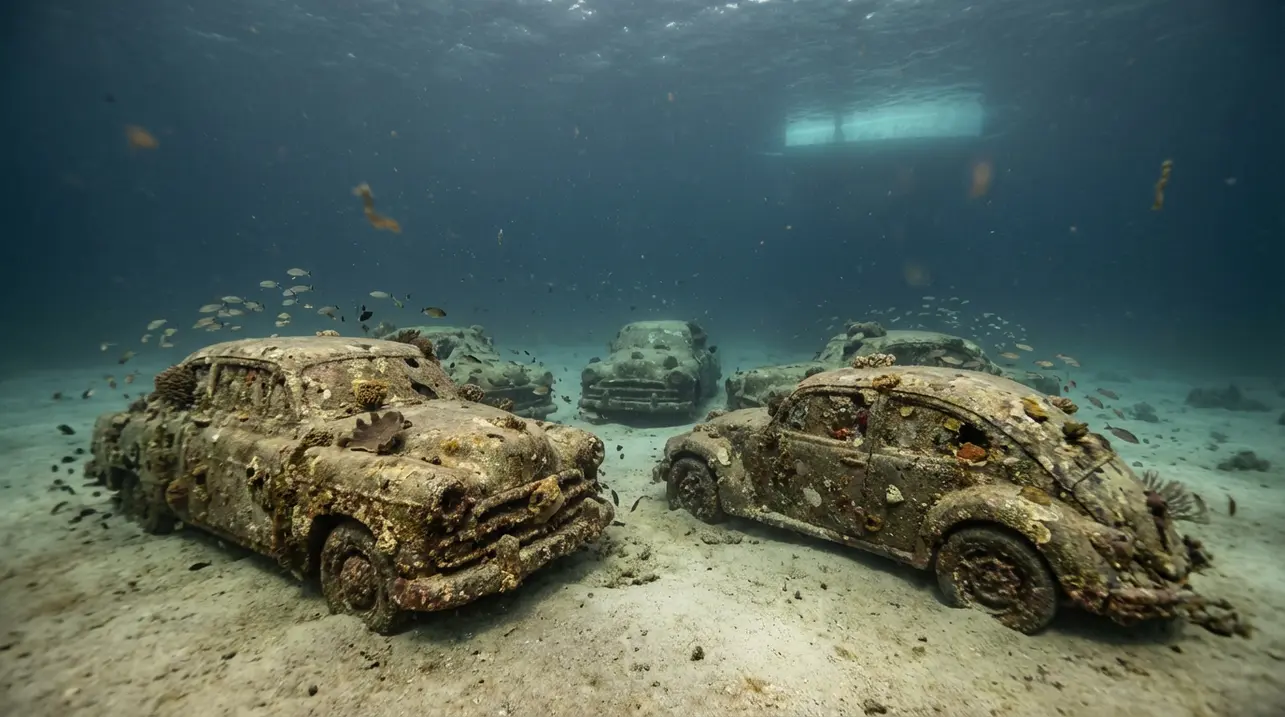
Leandro Erlich's underwater concrete coral car installation at Miami Beach.
SO
Sophia King
3 months ago7 min read
Leandro Erlich’s latest work, a submerged installation of 22 concrete sculptures mimicking coral-encrusted cars, now rests on the ocean floor off Miami Beach as the centerpiece of the ReefLine project. This isn't just public art; it's a functional, hybrid reef designed to combat coastal erosion and foster marine life, merging ecological engineering with a surreal artistic vision that feels ripped from a dream.Known for bending perception with installations like the mirrored 'Swimming Pool' or the gravity-defying 'Building,' Erlich has always played with our sense of reality, but here he dives deeper—literally—into the urgent dialogue between human infrastructure and natural systems. The 'concrete coral' cars, arranged in a ghostly, perpetual traffic jam, are crafted from pH-neutral materials specifically engineered to attract corals, sponges, and fish, transforming from static sculptures into living, breathing ecosystems over time.This initiative, spearheaded by the ReefLine non-profit, represents a growing trend where artists collaborate with marine biologists and coastal engineers, using creativity not just for commentary but as a tangible tool for restoration. Think of it as a Figma plugin for the ocean—a creative toolset applied to a planetary-scale design problem, where aesthetic choices directly impact biodiversity.The location is poignant: Miami, a city famously on the front lines of sea-level rise, where the very concept of a traffic jam takes on a new, watery fatalism. Yet Erlich’s work subverts that anxiety.It’s not a dystopian monument but a seed of hope, an invitation to consider how the relics of our carbon-heavy present could be repurposed as foundations for a more resilient future. The installation process itself was a feat of logistical artistry, involving precise maritime deployment to ensure structural integrity and optimal ecological integration.For the art world, it continues the compelling shift of galleries from white cubes to blue depths, following precedents like Jason deCaires Taylor’s underwater museums, but with Erlich’s signature touch of accessible, bewildering magic. For Miami Beach, it adds a layer of narrative to its coastline—a talking point for tourists, a research site for scientists, and a poetic landmark for locals.It makes you wonder: is this a snapshot of a flooded city, or a blueprint for its redemption? The genius lies in that ambiguity. The cars are familiar, almost mundane objects, made utterly strange and beautiful by their context, slowly being reclaimed not by rust, but by life.In an age of AI-generated art flooding digital spaces, there’s something profoundly tangible and patient about this work. It doesn’t exist for a scroll; it evolves with the tides, asking us to think in geologic time. It’s a masterpiece of design thinking, where the user experience is for parrotfish and sea urchins as much as for humans, and the ultimate interface is the ocean itself.
#featured
#Leandro Erlich
#underwater installation
#concrete coral
#Miami Beach
#ReefLine
#public art
#environmental art
Comments
DE
DeepSeaThinker101d ago
maybe the real traffic jam is in our heads, not the ocean. kinda beautiful to think our old junk could become a home for something new
0
© 2026 Outpoll Service LTD. All rights reserved.