SportfootballInjuries and Suspensions
Ty Simpson benched vs. Indiana: Explaining why Alabama QB was pulled from Rose Bowl
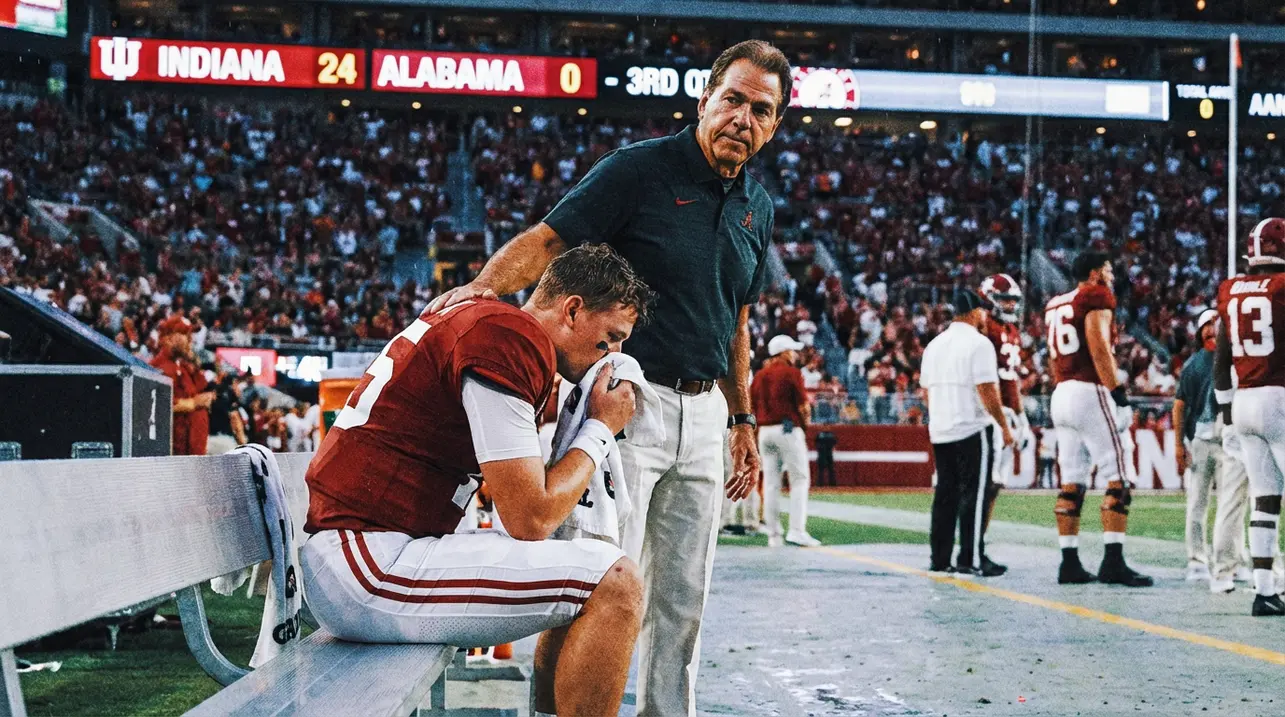
The Rose Bowl, a stage synonymous with college football legend, witnessed a seismic shift in its narrative on January 1, 2026, as the Alabama Crimson Tide’s playoff hopes crumbled under the relentless pressure of the Indiana Hoosiers. At the heart of this collapse was a quarterback conundrum that will be dissected for years: the benching of Ty Simpson.While the ESPN broadcast tersely labeled it a “coach’s decision,” the reality, as is often the case in the high-stakes chess match of modern football, was a complex interplay of injury, performance analytics, and raw, in-game necessity. Trailing 24-0 midway through the third quarter, Head Coach Kalen DeBoer faced a decision reminiscent of pulling a wounded general from the front lines.Simpson, the sophomore signal-caller, had entered the game already compromised, nursing a persistent elbow injury that had limited his practice reps for weeks. The turning point wasn’t a single errant throw, but a vicious second-quarter hit that saw Simpson stripped of the ball—a fumble Indiana recovered and swiftly converted into a touchdown, stretching their lead to a daunting 17-0.That hit didn’t just force a turnover; it aggravated the existing injury to a critical degree. Observant reporters on the Pasadena sideline noted a telling detail during halftime warm-ups: Simpson, having received treatment, lacked his characteristic “zip,” his throws floating with diminished velocity, each release accompanied by a visible grimace.The analytics here are stark. Before his exit, Simpson’s stat line—12-of-16 for 67 yards, no touchdowns, and that crucial fumble—paints a picture of a quarterback managing the game but incapable of the explosive plays needed to mount a historic comeback.His 4. 2 yards per attempt is a figure more akin to a conservative game manager than a championship-caliber playmaker, especially when juxtaposed against Indiana’s offensive onslaught.DeBoer’s calculus became clear: a hampered Simpson, even with his experience, offered a lower ceiling than a healthy, if less seasoned, backup. Enter Austin Mack, the redshirt sophomore who immediately engineered Alabama’s first scoring drive, providing a spark of life, however fleeting, to a moribund Tide offense.This decision echoes historical precedents where coaches, from Bill Belichick to Nick Saban, have prioritized a player’s health and the team’s situational need over sheer seniority. The move also shines a harsh light on Alabama’s quarterback depth chart, which lists true freshman Keelon Russell as the third option, revealing a potential vulnerability in a program famed for its roster fortitude.The broader context here is Alabama’s uncharacteristic offensive stagnation; being held scoreless in the first half for the second time in three games points to systemic issues beyond one player’s health. For Simpson, the aftermath is a career inflection point. Will this be remembered as a blip, a tough day exacerbated by injury, or does it open a genuine quarterback competition heading into the offseason? For DeBoer, it was a ruthless but necessary verdict in the face of a playoff blowout, a reminder that in the analytics-driven theatre of college football, sentiment is a luxury no coach can afford when the scoreboard tells a story of domination.
#Alabama Crimson Tide
#Ty Simpson
#Rose Bowl
#quarterback injury
#coach's decision
#Austin Mack
#College Football Playoff
#featured