
Sciencespace & astronomyNASA Missions
Mysterious Green Fireball Explodes Over Midwest at Extreme Speed
TH
Thomas Green
5 months ago7 min read
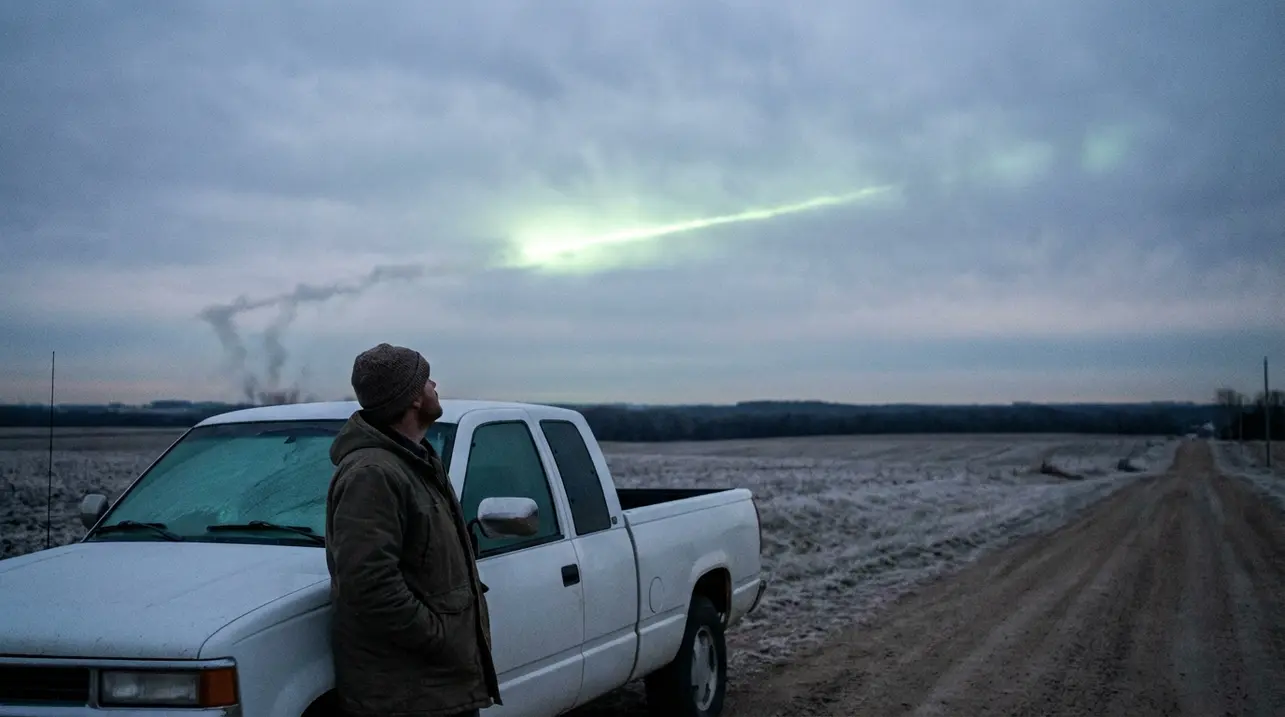
There’s something deeply humbling about waking up at 5 a. m., stumbling toward the coffee machine, and learning a piece of interplanetary shrapnel just screamed across the Midwest sky at nearly 100,000 miles per hour. That’s what happened on Nov.23, when a bright green fireball tore over the Great Lakes region and gave the Midwest a cosmic wake-up call. This wasn’t just any shooting star; it was a meteoroid, likely a chunk of asteroid no bigger than a dinner plate, entering Earth’s atmosphere with such ferocious energy that it exploded in a brilliant flash visible from multiple states.The American Meteor Society logged over 150 reports, with witnesses describing a sudden, silent burst of emerald light that briefly turned night into an eerie, surreal day. The green hue, a classic signature of such events, is caused by the intense heating and ionization of metals in the space rock—primarily magnesium and nickel—as it vaporizes in a fiery plunge.This particular visitor was traveling at an extreme speed, around 27 miles per second, which places it on the faster end of typical meteoroid velocities. That blistering pace suggests it might have originated from the asteroid belt between Mars and Jupiter, on a long, elliptical orbit that finally intersected with ours.While events like this feel rare and dramatic, our planet is constantly bombarded by cosmic debris; NASA estimates that about 48. 5 tons of material rain down daily, though most is dust-sized and goes unnoticed.What makes this event noteworthy is its visibility over a densely populated area and the sheer kinetic energy released—equivalent to several tons of TNT. It’s a stark reminder that we live in a dynamic solar system, a shooting gallery where gravitational nudges can send ancient rocks careening toward us.Scientists, particularly those at NASA’s Planetary Defense Coordination Office, track larger, potentially hazardous asteroids, but objects of this size, perhaps a meter or two across, are too small to detect beforehand yet large enough to create a significant airburst. The 2013 Chelyabinsk event in Russia, which injured over 1,500 people, was caused by a roughly 20-meter asteroid, underscoring the real, if low-probability, risk.The Midwest fireball, while harmless, serves as a perfect natural experiment. Data from infrasound sensors, which detect low-frequency sound waves inaudible to humans, can help researchers triangicate the impact energy and even pinpoint where any potential meteorite fragments might have landed, often in rural fields or frozen lakes.For astronomers and planetary scientists, each such event is a free sample of the early solar system, offering clues about the composition and history of asteroids without the billion-dollar price tag of a sample-return mission. In a broader sense, this green flash over America’s heartland connects us to a much grander narrative.It’s the same basic process that delivered water and organic molecules to a young Earth, potentially seeding the ingredients for life. Every meteor is a messenger from the deep past, and witnessing one, even briefly, pulls our perspective from the mundane to the cosmic.It’s a fleeting moment of public astronomy that does more than any textbook can—it makes the vast, impersonal mechanics of the universe viscerally real. As private ventures like SpaceX aim for Mars and probes visit distant asteroids, these sudden, brilliant visitors remind us that space isn’t just a frontier ‘out there’; it’s an active participant in our terrestrial environment, capable of delivering both wonder and, on rare occasions, a sobering jolt to our collective sense of security.
#featured
#green fireball
#meteor
#Midwest
#explosion
#space event
#NASA
#astronomy
Stay Informed. Act Smarter.
Get weekly highlights, major headlines, and expert insights — then put your knowledge to work in our live prediction markets.
Related News
Comments
It's quiet here...Start the conversation by leaving the first comment.