

Science
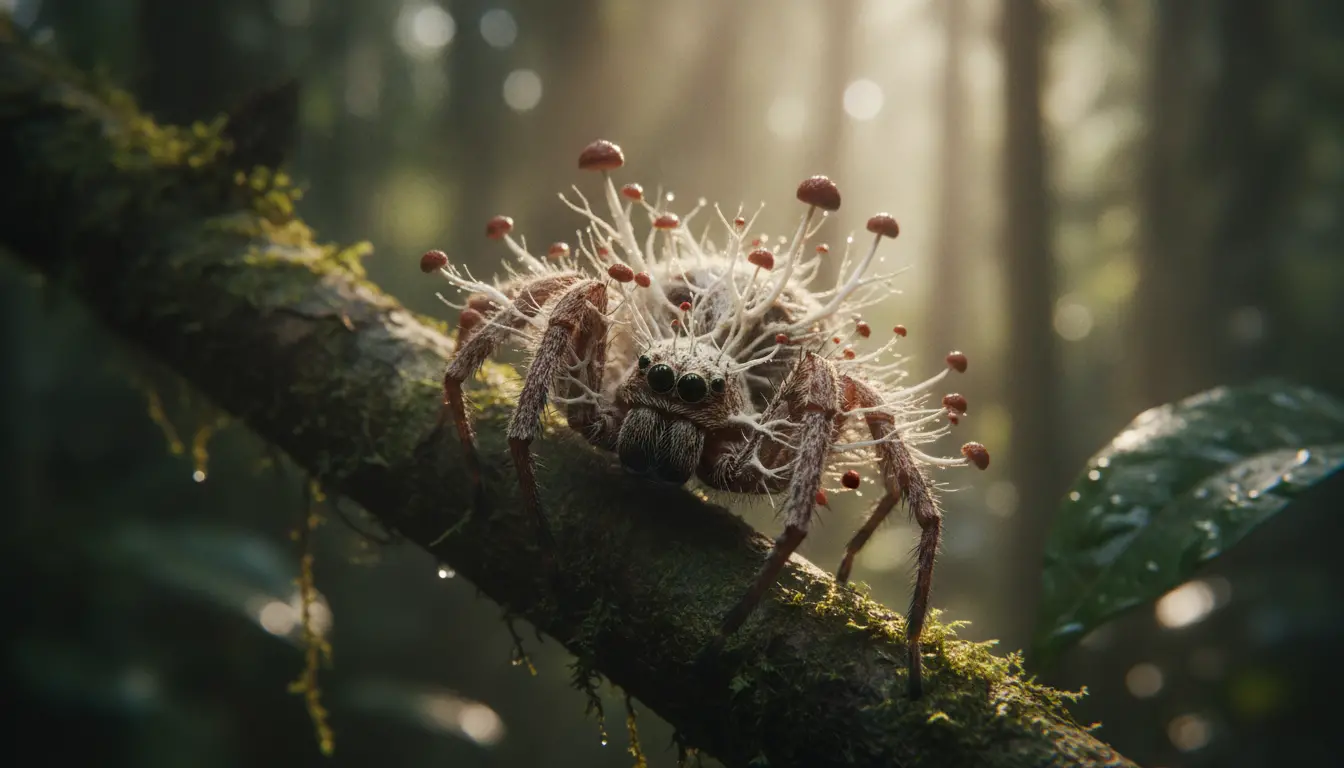
Scientists discover spider that disguises itself as a parasitic fungus
RA
Rachel Adams
3 months ago
In a remarkable testament to nature's boundless capacity for deception and survival, scientists have unveiled a newly discovered Amazonian spider species that masterfully mimics a parasitic fungus. This extraordinary arachnid, formally named *Taczanowskia waska*, employs a disguise so complete it extends beyond mere appearance, encompassing behavior, presenting a vivid example of evolutionary adaptation in one of Earth's most biodiverse ecosystems.The phenomenon of mimicry, where one organism evolves to resemble another or its environment, is a well-documented survival strategy across the animal kingdom. From harmless snakes imitating venomous ones to insects camouflaging themselves as leaves or twigs, these adaptations serve critical roles in evading predators, ambushing prey, or attracting mates. However, the mimicry displayed by *T. waska* stands out for its specific choice of model: a parasitic fungus, an organism typically associated with gruesome control over its insect hosts. This particular form of mimicry, known as Batesian mimicry when a harmless species imitates a harmful one, or Müllerian mimicry if both are harmful, is taken to a novel extreme by *T. waska*, suggesting a highly evolved strategy to navigate the complex food webs of the Amazon.The research team's findings indicate that *Taczanowskia waska* doesn't just bear a superficial resemblance to these insidious fungi, which are notorious for their ability to zombify insects. Instead, the spider appears to emulate the texture, coloration, and even the posture often adopted by fungi like *Cordyceps* as they sprout from their incapacitated hosts. Such fungi are widely recognized for their chilling life cycle, infecting insects, taking over their nervous systems, and eventually erupting from their bodies to spread spores. By adopting the guise of something so universally avoided and potentially deadly within the insect world, the spider likely deters predators who would otherwise view it as a meal, mistakenly associating it with the threat of fungal infection.Beyond predator avoidance, this ingenious disguise may also offer a tactical advantage in hunting. In an environment teeming with life and constant struggle for survival, any edge in securing sustenance is invaluable. While the precise mechanisms are still under investigation, it's plausible that by appearing as a fungal growth, *T. waska* could more easily ambush unsuspecting prey that might otherwise perceive it as a threat. Many insects instinctively avoid diseased or fungus-covered areas, and a spider that appears to be part of the inert, albeit deadly, fungal landscape could leverage this aversion to its benefit, allowing prey to approach without alarm.The discovery of *T. waska* underscores the sheer depth of unexplored biodiversity within the Amazon rainforest, a region that continues to yield species with astonishing adaptations. Each new discovery not only enriches our catalog of life on Earth but also offers profound insights into the intricate dance of evolution, co-existence, and survival. It highlights how selective pressures can drive organisms to develop extraordinarily complex and specialized traits, pushing the boundaries of what we understand about the natural world's ingenuity. Understanding these relationships is crucial, especially as the Amazon faces unprecedented environmental threats, making every discovery a call to greater conservation efforts.Scientists anticipate that further research into *T. waska* will involve detailed behavioral studies, genetic analysis, and ecological surveys to fully unravel the extent and implications of its mimicry. Such studies could reveal new insights into the evolutionary pathways of mimicry, the specific fungal species being mimicked, and the broader ecological impact of this spider's unique strategy. The Amazon, with its unfathomable biodiversity, promises countless more secrets yet to be uncovered, each one a reminder of the delicate balance and astonishing creativity inherent in Earth's ecosystems. This latest finding offers a thrilling glimpse into the hidden marvels that still await discovery, reinforcing the critical need to protect these irreplaceable natural laboratories.Ultimately, the discovery of *Taczanowskia waska* serves as a powerful reminder of the endless wonders hidden within our planet's wild spaces. It compels us to look closer, to appreciate the nuanced strategies of survival, and to recommit to the preservation of habitats like the Amazon, which continue to surprise and educate humanity with their unparalleled biological richness.
Stay Informed. Act Smarter.
Get weekly highlights, major headlines, and expert insights — then put your knowledge to work in our live prediction markets.
Comments
It's quiet here...Start the conversation by leaving the first comment.