

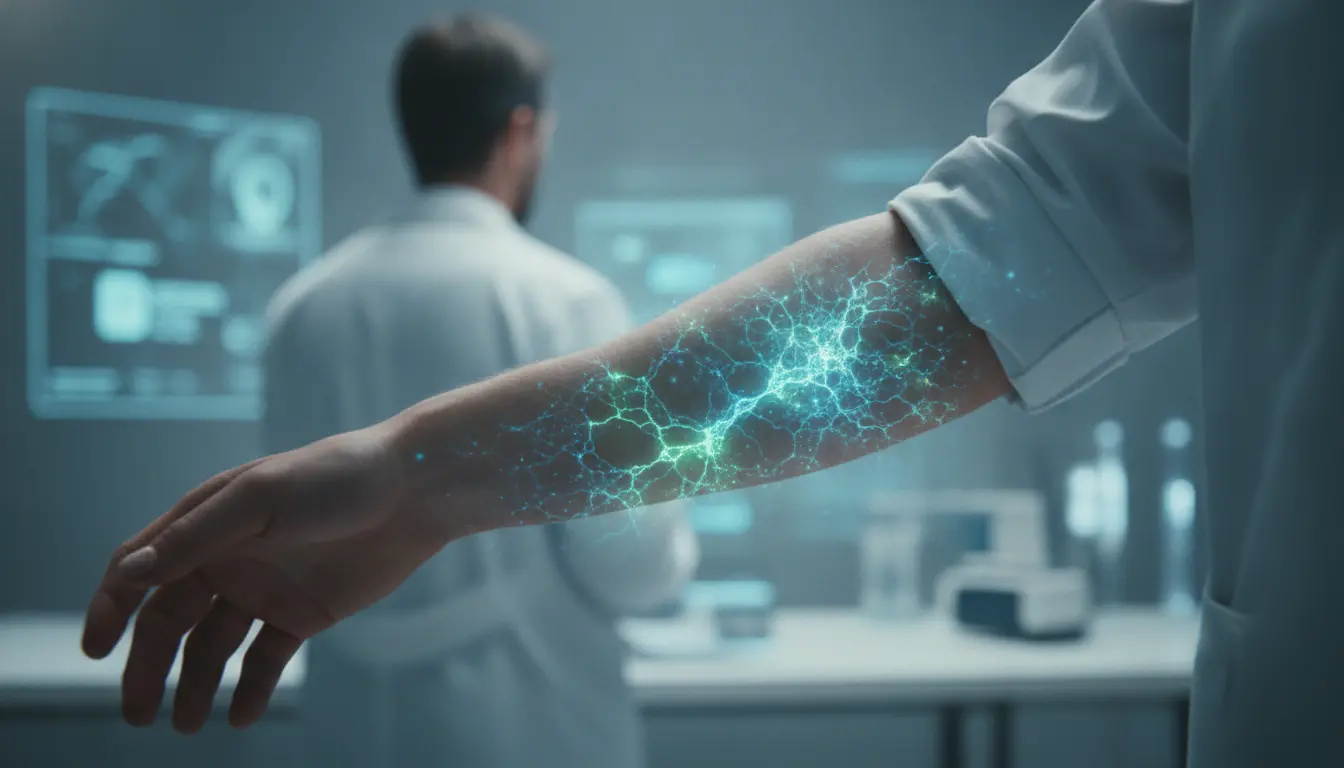
Humans may have hidden regenerative powers
In a development that challenges long-held biological assumptions, scientists have uncovered compelling evidence suggesting that mammals, including potentially humans, may harbor dormant regenerative capabilities. Far from being a lost evolutionary trait, the ability to rebuild complex body parts could merely be ‘switched off,’ a revelation that could fundamentally alter approaches to injury and disease.
The groundbreaking research, conducted in animal studies, demonstrates a novel two-stage treatment capable of redirecting the body’s innate healing response. Traditionally, severe injuries in mammals trigger a process of scar formation—a rapid, though functionally inferior, patch-up job that prioritizes structural integrity over full restoration. This new approach successfully diverts this scar-centric healing, instead steering the biological machinery toward genuine regrowth, leading to the complete restoration of bone, joints, ligaments, and tendons following amputation.
For decades, the contrast between the regenerative prowess of amphibians and certain fish—which can regrow entire limbs, organs, and even parts of their brains—and the limited healing capacity of mammals has been a significant puzzle in biology. While some mammalian tissues, like liver and skin, show remarkable regenerative abilities, the regrowth of complex musculoskeletal structures has remained largely elusive. The prevailing scientific consensus attributed this disparity to evolutionary trade-offs, where the rapid development and complex nervous systems of mammals might have come at the expense of broad regenerative potential. This new work, however, suggests a more optimistic outlook: the blueprint for regeneration might still exist within us, merely overridden by other biological priorities.
The precise mechanisms of the two-stage treatment, while not fully detailed in initial reports, represent a sophisticated manipulation of the cellular environment post-injury. It appears designed to first halt the cascade of events that typically leads to fibrotic scarring, then to stimulate the local tissue cells to embark on a program of true regeneration. This involves a delicate orchestration of biochemical signals, growth factors, and potentially the reactivation of developmental pathways that are usually dormant after embryonic development. The success in rebuilding such intricate structures as joints and ligaments, which involve multiple tissue types working in concert, is particularly noteworthy, pointing to a profound biological recalibration.
Should these findings translate effectively, the implications for human medicine are vast and transformative. Millions suffer annually from debilitating injuries, congenital defects, and degenerative conditions that lead to irreversible tissue damage and functional loss. The possibility of reactivating inherent regenerative powers could offer hope for a future where amputated limbs could regrow, damaged spinal cords might repair themselves, and chronic joint pain could be resolved by regenerating healthy cartilage and bone, rather than relying on prosthetics or implants.
However, the path from animal studies to human application is long and fraught with challenges. The complexity of human physiology, the larger scale of human organs and limbs, and the ethical considerations surrounding such advanced biological interventions mean that extensive further research, rigorous safety testing, and careful clinical trials will be essential. Scientists will need to identify the exact molecular targets, refine the treatment protocols, and ensure the long-term stability and functionality of any regenerated tissues. Understanding how to precisely control and stop the regenerative process, preventing uncontrolled growth, will also be critical.
Despite these hurdles, this breakthrough represents a monumental leap forward in regenerative medicine. It fundamentally alters our understanding of mammalian biology, suggesting that our bodies possess a hidden capacity for self-repair that was previously thought to be the sole domain of simpler life forms. It ignites a new wave of research, promising a future where the limitations of injury and disease might be overcome not just by repair, but by genuine, endogenous regeneration, unlocking a new era of healing. The journey is only just beginning, but the destination—a world where humans truly possess hidden regenerative powers—now seems less like science fiction and more like an attainable scientific frontier.
Stay Informed. Act Smarter.
Get weekly highlights, major headlines, and expert insights — then put your knowledge to work in our live prediction markets.