

- News
- Science
- Ebola Outbreak in DRC and Uganda Escalates to International Emergency, Sparks Global Monitoring After French Case
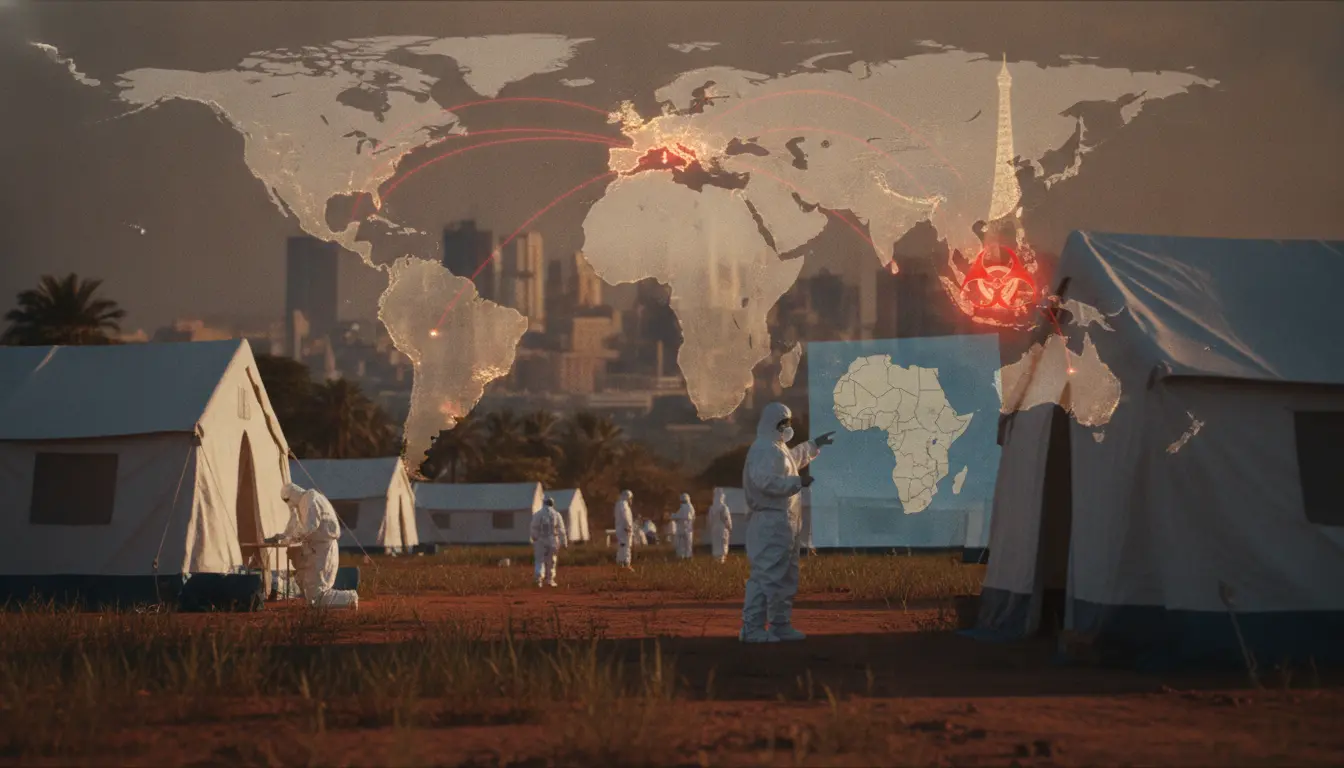
Ebola Outbreak in DRC and Uganda Escalates to International Emergency, Sparks Global Monitoring After French Case
Global health authorities are on high alert following the World Health Organization’s (WHO) declaration of an Ebola outbreak in the Democratic Republic of Congo (DRC) and Uganda as a Public Health Emergency of International Concern (PHEIC) on May 16, 2026. The gravity of the situation was further underscored on June 24, 2026, when France confirmed its first imported case, amplifying concerns about the virus's potential spread beyond the African continent and prompting heightened surveillance across developed nations.
Ebola virus disease, a severe and often fatal illness, has historically posed significant challenges to public health systems due to its high mortality rate, rapid transmission, and the complex socio-political environments in which outbreaks frequently occur. The current outbreak in the DRC, which subsequently affected neighboring Uganda, marks one of the most persistent and geographically challenging in recent memory. Characterized by hemorrhagic fever, the virus spreads through direct contact with the blood, secretions, organs or other bodily fluids of infected people, and from contaminated surfaces and materials. Containment efforts are frequently hampered by factors such as community mistrust, armed conflict, and limited healthcare infrastructure in affected regions, making rapid response and effective isolation extremely difficult.
This latest resurgence began several months prior to the PHEIC declaration, with health officials grappling to control its spread across vast, often remote, areas. The WHO's decision to classify it as a PHEIC — a rare designation used for severe events that pose a public health risk to other countries through international spread and potentially require a coordinated international response — reflected growing alarm over the escalating case numbers, the movement of populations, and the potential for wider regional and international dissemination. The declaration serves as a global call to action, urging member states to strengthen their preparedness and response capacities, enhance surveillance, and facilitate international aid and cooperation.
The confirmation of an imported Ebola case in France has significantly elevated the urgency of this global health challenge, shifting the focus to the preparedness of high-income countries. While France's robust healthcare system is well-equipped to manage and isolate such cases, the incident serves as a stark reminder of the interconnectedness of global health and the ease with which pathogens can traverse borders. Major international travel hubs and the sheer volume of global movement mean that imported cases, while rare, are an ever-present risk. This development has undoubtedly prompted a re-evaluation of screening protocols and emergency response plans within other G7 nations and similarly developed economies, ensuring that their own health infrastructures are ready for potential isolated or further imported cases.
International efforts are intensifying to support the affected African nations, focusing on rapid diagnostic testing, contact tracing, isolation and treatment centers, and community engagement. Crucially, the deployment of existing Ebola vaccines, which have proven highly effective in previous outbreaks, is a key component of the current strategy. However, logistical hurdles in administering vaccines in conflict-affected zones and to mobile populations remain substantial. The global health community emphasizes the need for sustained financial and technical support to bolster the local response, aiming to extinguish the outbreak at its source and prevent further international spread.
What is at stake is not merely the containment of a single outbreak but the reinforcement of global health security. The continuous emergence and re-emergence of zoonotic diseases like Ebola highlight the critical need for robust surveillance, rapid diagnostic capabilities, and equitable access to medical countermeasures worldwide. The experience in France underscores that no country is immune to the effects of distant epidemics, necessitating a coordinated, proactive, and equitable international response to protect global public health and prevent future pandemics.
Ultimately, the ongoing situation demands unwavering vigilance and collaborative action from governments, international organizations, and local communities. The long-term stability of regions like the DRC and Uganda, alongside global health resilience, hinges on the capacity to effectively manage such health crises and build sustainable, resilient health systems capable of responding to future threats.
Stay Informed. Act Smarter.
Get weekly highlights, major headlines, and expert insights — then put your knowledge to work in our live prediction markets.
Related News

France Confirms First Ebola Patient Following Doctor's Return from DRC Outbreak Zone
Democratic Republic of Congo Battles Rapidly Escalating Ebola Outbreak Amid Warnings of Child Infection Spike
WHO Under Scrutiny Amid Protracted Ebola Outbreak in DR Congo; International Community on Alert
Africa Grapples with 'Fastest-Growing Ever' Ebola Outbreak Amidst Rising Death Toll
Democratic Republic of Congo Confronts Unprecedented Ebola Outbreak Amidst Regional Health Crisis
Africa CDC Warns of Unprecedented Ebola Spread as DR Congo Death Toll Climbs Past 600
Australia Records First Mainland H5N1 Bird Flu Case Amid Global Pandemic Watch
Kenyan Court Order Halts Construction of Crucial US-Backed Infectious Disease Facility

US States Confront Escalating Heatwave Crisis, Potential for Emergency Declarations Looms

French Government Under Constant Threat of Collapse From Opposition No-Confidence Votes