

Politics
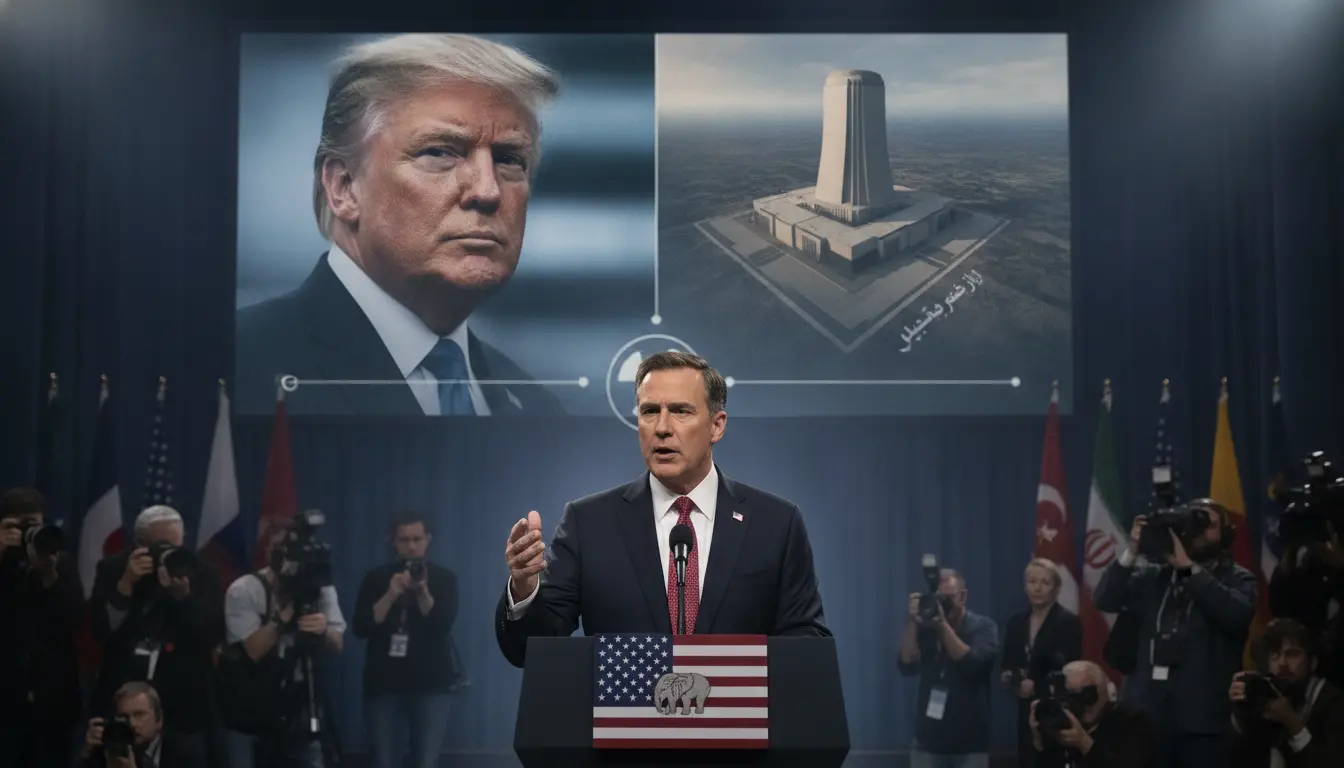
Vance defends Trump’s controversial Iran deal
AN
Anna Wright
3 months ago
In a political landscape continually grappling with the echoes of past administrations, Senator J.D. Vance has notably positioned himself as a staunch defender of former President Donald Trump's foreign policy decisions, including the contentious withdrawal from the Iran nuclear deal. This stance reinforces a broader conservative push to critique and dismantle international agreements perceived as detrimental to American interests, particularly those brokered by previous Democratic administrations. Vance’s vocal support underscores a lingering debate over the efficacy of multilateral diplomacy versus a more unilateral approach to global security and regional stability in the Middle East.The Iran nuclear deal, formally known as the Joint Comprehensive Plan of Action (JCPOA), was signed in 2015 by Iran and the P5+1 group of world powers—the United States, United Kingdom, France, China, Russia, and Germany—along with the European Union. Its primary objective was to prevent Iran from developing nuclear weapons by imposing stringent restrictions on its nuclear program in exchange for the lifting of international sanctions. Proponents argued that the agreement offered the best path to forestall a nuclear-armed Iran, averting potential military confrontation and fostering greater regional security through diplomatic engagement and robust verification mechanisms.However, the deal was met with fierce criticism, particularly from conservative lawmakers and the Israeli government, who argued that its provisions were insufficient to permanently curb Iran's nuclear ambitions. Critics also pointed to the deal's expiration clauses, known as sunset provisions, and Iran's continued support for proxy groups in the region, which they contended destabilized the Middle East. These concerns formed the bedrock of Donald Trump's campaign promise to exit the agreement, which he ultimately fulfilled in May 2018, reimposing a raft of crippling sanctions on Tehran and initiating a policy of “maximum pressure.”Senator Vance's defense aligns with this maximalist approach, emphasizing a belief that the JCPOA was fundamentally flawed and ultimately emboldened the Iranian regime. For figures like Vance, the deal represented a capitulation to an adversarial power, failing to address Iran's ballistic missile program or its regional malign activities. Their perspective often frames the withdrawal as a necessary corrective, aimed at forcing Iran back to the negotiating table for a more comprehensive agreement that would permanently dismantle its nuclear capabilities and curtail its broader destabilizing actions. This position resonates deeply within a segment of the Republican Party that prioritizes American sovereignty and takes a hard line against nations perceived as threats to global order.The ramifications of the U.S. withdrawal were immediate and far-reaching. Iran subsequently began to gradually roll back its commitments under the JCPOA, increasing its uranium enrichment levels and deploying advanced centrifuges, pushing its nuclear program closer to weapons-grade thresholds. This escalation triggered renewed international concern and efforts by European signatories to salvage the deal, often at odds with Washington’s policy. The resulting standoff has deepened mistrust between Iran and the West, creating a precarious situation that has seen periodic flare-ups and heightened tensions in the Persian Gulf.Looking ahead, the debate surrounding the Iran deal remains a pivotal foreign policy issue, particularly as the possibility of renewed negotiations periodically surfaces. Any future administration, regardless of its political stripe, will inherit the complex challenge of managing Iran's nuclear program and its regional influence. Vance's continued advocacy for Trump's approach suggests a strong inclination within certain conservative circles to maintain a firm stance, prioritizing national security interests through assertive action rather than re-engagement with agreements they deem inadequate. His defense serves as a reminder that the strategic choices of the past continue to shape the contours of present-day foreign policy discussions and alliances, making the path forward for diplomacy with Tehran exceedingly challenging.
Stay Informed. Act Smarter.
Get weekly highlights, major headlines, and expert insights — then put your knowledge to work in our live prediction markets.
Comments
It's quiet here...Start the conversation by leaving the first comment.