

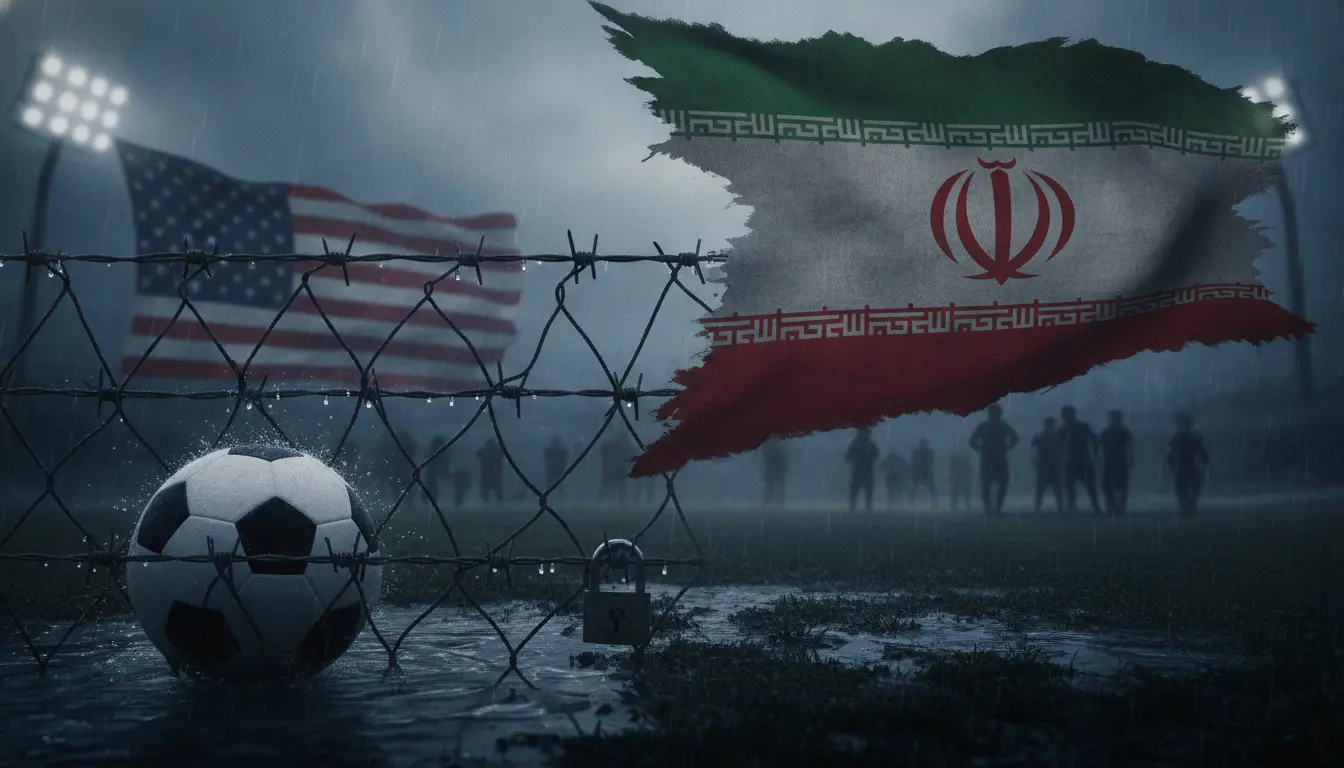
US refuses to ease Iran World Cup travel restrictions for Belgium match
WASHINGTON – In a move that underscores the deep and persistent chasm in relations between Washington and Tehran, the United States will not be easing travel restrictions for Iran’s national football team ahead of their World Cup group stage matches. The decision, highlighted in a statement by political commentator Andrew Giuliani, confirms that the world of elite international sport will not be exempt from the geopolitical realities governing the two nations. The Iranian team, set to face Belgium in a highly anticipated match on U.S. soil, will be subject to the same stringent visa and entry protocols as other Iranian nationals, with no special dispensation granted for their participation in the global tournament.
This firm stance from Washington is rooted in decades of diplomatic hostility and a comprehensive sanctions regime targeting Iran. U.S. policy restricts travel for Iranian citizens, particularly those with ties to government entities, in response to concerns over Iran's nuclear program, its support for regional proxy groups, and its human rights record. While major sporting events have occasionally served as a rare bridge for “sports diplomacy,” offering a neutral ground for adversaries, this instance signals a clear message that core foreign policy principles will not be set aside. The refusal to accommodate the team for an extended stay beyond their immediate match requirements serves as a stark reminder that even the unifying power of the World Cup has its limits when faced with entrenched international rivalries.
The logistical implications for the Iranian squad are significant. Standard visa processing for Iranian nationals can be a lengthy and arduous affair, and the team will likely be granted entry for a minimal duration, covering only the necessary time for preparation and competition for their specific matches. This contrasts sharply with the typical experience of participating nations, whose teams often arrive well in advance to acclimate, train, and engage in pre-tournament activities. Political figure Andrew Giuliani’s comments crystallized this position, stating that the players would not be permitted to remain in the country for longer than is absolutely necessary for their group stage commitments, effectively precluding any extended training camps or cultural engagement on U.S. soil.
This development places FIFA, the international governing body for football, in a delicate position. The organization has historically championed the principle of separating sport from politics, striving to ensure that all qualified nations can participate freely and without discrimination. Situations where host nations impose politically motivated restrictions on visiting teams challenge this core tenet. While FIFA has yet to issue a formal response, it will likely engage in behind-the-scenes discussions to seek assurances that the logistical hurdles do not unfairly disadvantage the Iranian team's ability to compete. Precedents for such interventions exist, but the unyielding nature of U.S. foreign policy towards Iran presents a formidable challenge for football’s diplomats.
The decision is also reflective of a broader, hardline consensus within certain U.S. political circles that any concession to Iran, even symbolic, is unacceptable. Proponents of this view argue that granting special privileges to a team representing the Islamic Republic would normalize a regime that the U.S. officially designates as a state sponsor of terrorism. This perspective holds that the integrity of national security and foreign policy sanctions must be paramount, overriding the customary courtesies extended during international sporting events. The controversy thus becomes a microcosm of the larger debate over engagement versus isolation in U.S. foreign policy toward its adversaries.
As the tournament approaches, the focus will now shift to the practical execution of this policy and its impact on the Iranian team's performance and morale. For the players and coaching staff, the challenge will be to insulate themselves from the political storm and concentrate on their on-field preparations for a difficult group that includes a formidable Belgian side. For the watching world, the situation serves as a powerful illustration of how global sports, despite their aspirational role as a unifying force, are inextricably linked to the complex and often unforgiving landscape of international politics. The beautiful game will be played, but it will be done so under the long shadow of a diplomatic stalemate with no resolution in sight.
Stay Informed. Act Smarter.
Get weekly highlights, major headlines, and expert insights — then put your knowledge to work in our live prediction markets.
Related News
Iran to lodge complaint with FIFA over World Cup 2026 travel restrictions
US-Iran delegations arrive as talks begin in Switzerland

Vance Delays Trip to Switzerland for Direct Talks on Iran Deal
US and Iran Envoys Convene in Switzerland for Crucial Diplomatic Talks
Sunday shows preview: Iran’s Strait of Hormuz closure threatens Trump MOU ahead of planned Switzerland peace talks

US-Iran Nuclear Diplomacy Stalls Amid Envoy Delays and Regional Volatility
US and Iran Set for High-Stakes Doha Talks on Ceasefire and Strait of Hormuz Disputes
FIFA Defends Balogun Suspension, Issues Veiled Rebuke to Trump's Interference
US Grapples with Full Terrorist Designation for Iran's IRGC Amid Diplomatic Tensions
Trump's Initial Iran Memorandum of Understanding Ignites Bipartisan Congressional Scrutiny