

US Senate Leaders Reach Deal on Stopgap Funding to Avert Government Shutdown
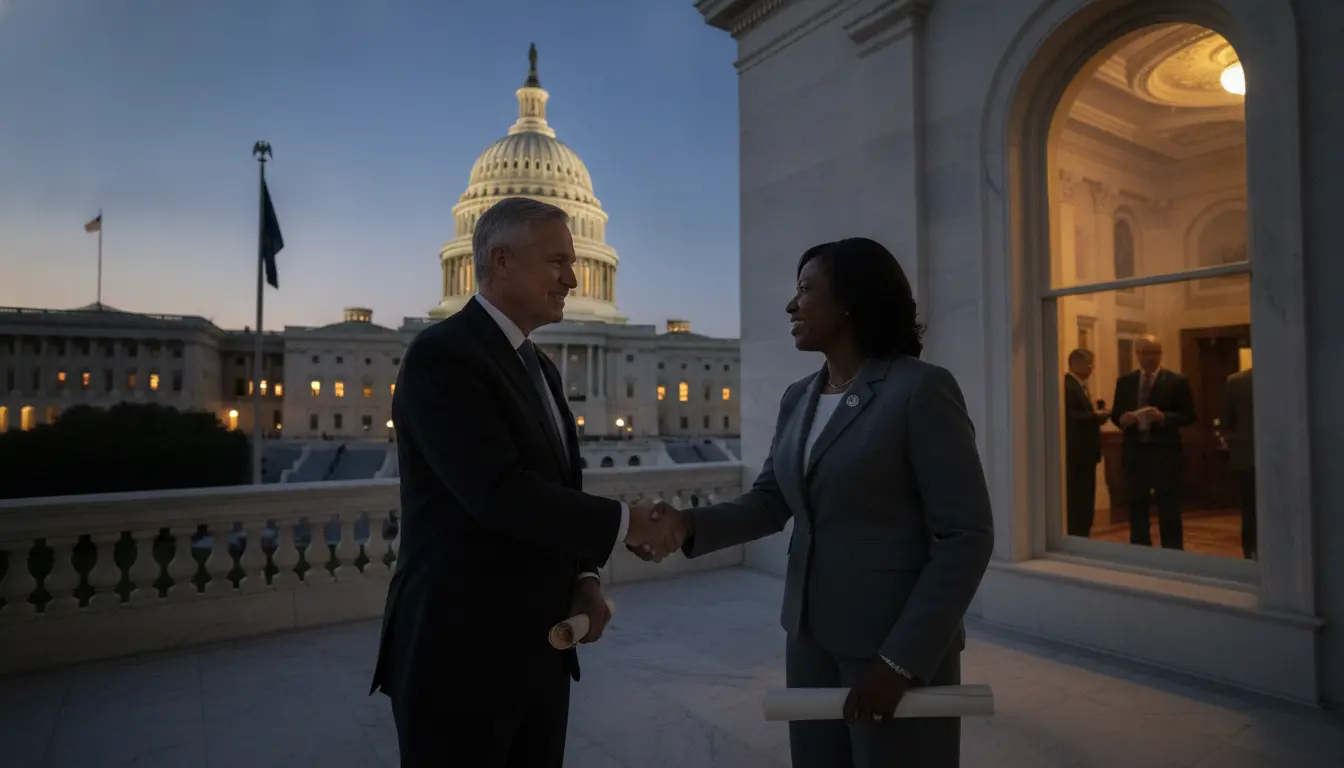
Washington D.C. — Congressional leaders in the U.S. Senate have successfully brokered a crucial agreement on a stopgap funding measure, signaling a temporary reprieve from an imminent government shutdown. The bipartisan deal, reached by Senate appropriators, aims to keep federal agencies operational beyond the September 30 fiscal year deadline, preventing a disruptive halt to services across the nation. This breakthrough comes after weeks of intense negotiations and growing concerns that partisan gridlock would force the federal government into a costly and politically damaging shutdown, impacting millions of Americans and the global economy.
The specter of a government shutdown loomed large as the end of the fiscal year rapidly approached, with Congress having failed to pass the dozen annual appropriations bills required to fund government operations. Without these bills, or a temporary continuing resolution (CR), funding lapses, leading to the furlough of non-essential federal employees, the closure of national parks, and a disruption of various government services. The last major shutdown, in late 2018 and early 2019, lasted 35 days and cost the economy billions, highlighting the severe consequences of such a stalemate. This year's budget battle has been particularly fraught, exacerbated by a divided Congress, with Democrats controlling the Senate and White House, and Republicans holding a narrow majority in the House of Representatives.
The stopgap measure, often referred to as a continuing resolution, is designed to fund the government at current levels for a predetermined, short period—typically a few weeks to several months. While the precise duration and any additional provisions of the Senate's agreed-upon CR are still emerging, such bills typically avoid major policy changes, serving solely to maintain the status quo. The agreement signifies a willingness among Senate leaders to prevent a crisis, allowing more time for the full appropriations process to unfold. However, the path forward is not entirely clear, as the House of Representatives, under Republican leadership, has its own set of demands and priorities, including significant spending cuts and border security enhancements, which could complicate the final passage of any funding bill.
Key players in the negotiations included Senate Majority Leader Chuck Schumer, Senate Minority Leader Mitch McConnell, and the respective chairs and ranking members of the Senate Appropriations Committee. Their ability to forge a bipartisan consensus reflects a shared concern about the economic and social fallout of a shutdown. However, the temporary nature of this solution means that the underlying budgetary disagreements remain unresolved. Once this stopgap measure expires, Congress will again face the daunting task of passing comprehensive appropriations bills or risk another funding lapse, potentially escalating the political tensions as the 2024 election cycle intensifies.
The consequences of a government shutdown extend far beyond the immediate disruption of services. It can erode public trust in government, impact the credit rating of the United States, and create uncertainty for businesses and investors. Federal workers face financial hardship, and vital programs, from food safety inspections to scientific research, can be delayed or suspended. While the current agreement offers immediate relief, it merely postpones the larger debate over federal spending priorities, national debt, and the scope of government. The next few months will test the ability of Congress to move past short-term fixes and forge a durable fiscal path forward, a challenge that historically proves difficult amidst deep partisan divides.
The focus now shifts to the legislative calendar, with both chambers needing to quickly pass the continuing resolution. The Senate is expected to move swiftly, given the bipartisan agreement. However, the real test will come in securing enough votes in the House, where conservative factions have expressed strong opposition to any CR that does not include their demanded spending cuts and policy riders. The immediate goal is to avoid a shutdown, but the broader battle over the nation's fiscal future is far from over, promising further legislative clashes in the coming weeks and months. This temporary agreement marks a critical first step, but the journey to a long-term budget solution remains fraught with political hurdles.
This development underscores the perpetual challenge of governance in a deeply polarized political landscape, where even basic functions like funding the government become high-stakes negotiations. The success of this stopgap effort will buy valuable time, but it also sets the stage for future confrontations, as both parties seek to advance their distinct visions for federal spending and policy. The American public watches closely, hoping that this temporary stability can evolve into a more permanent and predictable legislative environment.
Stay Informed. Act Smarter.
Get weekly highlights, major headlines, and expert insights — then put your knowledge to work in our live prediction markets.