

- News
- Politics
- US Interest in Greenland Rekindled Amid Geopolitical Shifts; Denmark Firmly Rejects Sale
US Interest in Greenland Rekindled Amid Geopolitical Shifts; Denmark Firmly Rejects Sale
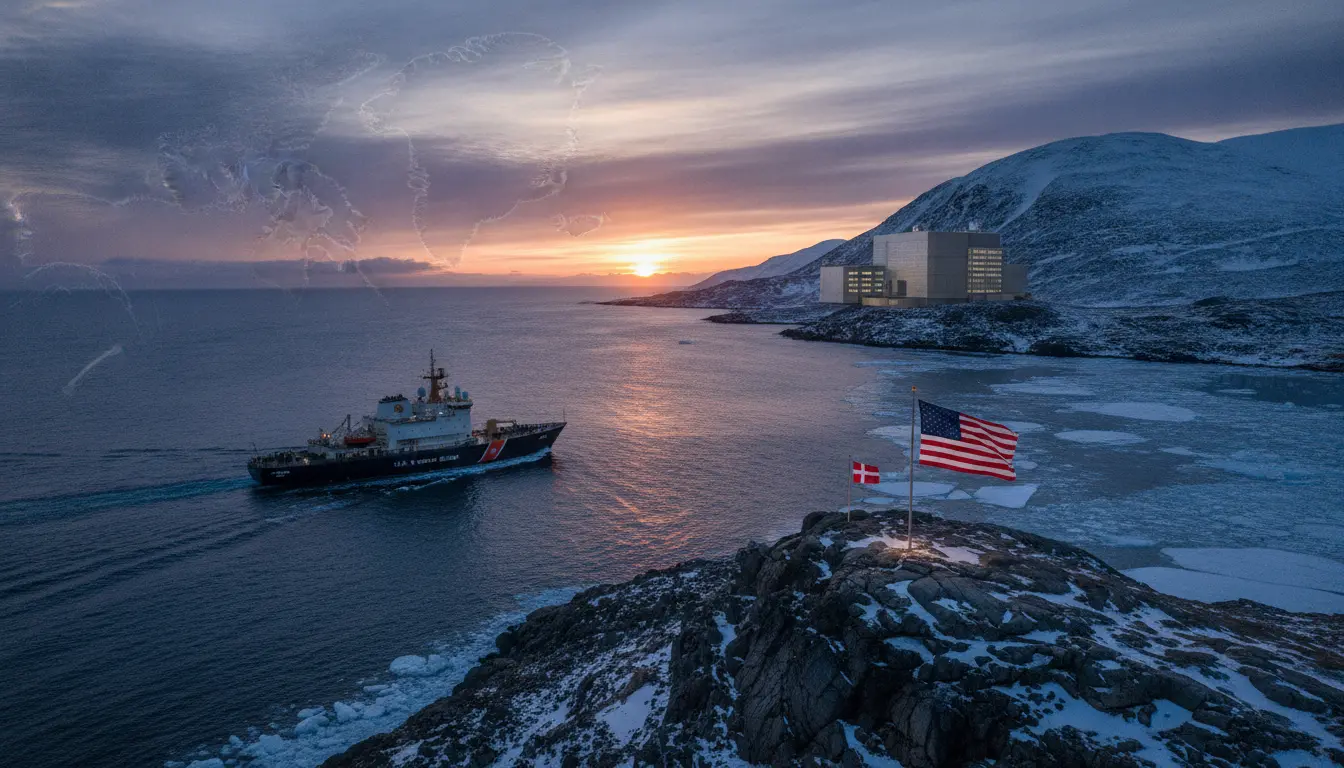
Speculation has once again resurfaced regarding the United States' long-standing strategic interest in Greenland, following reports of former President Donald Trump renewing discussions about a potential acquisition during a recent NATO summit. This renewed focus has prompted a swift and unequivocal response from Denmark, whose Prime Minister has reiterated the nation’s steadfast commitment to defending its autonomous territory, emphatically stating that Greenland is not for sale. The development underscores the enduring geopolitical significance of the vast Arctic island, a strategic nexus for global powers facing an increasingly complex international landscape.
The notion of the United States acquiring Greenland is not new; it dates back over a century, with the most prominent attempt occurring in 1946 when President Harry Truman offered Denmark $100 million for the island. However, it was former President Trump's surprising public inquiry in August 2019 that brought the issue back into contemporary headlines, catching both Copenhagen and Nuuk, Greenland's capital, off guard. That initial overture was met with immediate disdain and outright rejection from Danish officials, who dismissed the idea as absurd. Despite the diplomatic chill it caused then, the consistent strategic allure of Greenland, particularly its vast natural resources and pivotal location in the Arctic, continues to place it on the agenda of American foreign policy discussions.
Geographically, Greenland commands a critical position in the North Atlantic, acting as a crucial link between North America and Europe. Its location provides unparalleled strategic advantages, particularly in monitoring Russian military movements in the Arctic and North Atlantic, an area of increasing strategic competition. The thawing Arctic ice cap is also opening new shipping routes and exposing vast untapped reserves of minerals, including rare earth elements essential for modern technology, making control of Greenland even more attractive to nations vying for economic and geopolitical dominance. From a military standpoint, the U.S. already operates Thule Air Base in Greenland, a vital component of its ballistic missile early warning system and space surveillance network, demonstrating existing strategic ties.
Denmark, however, views Greenland not as a commodity but as an integral part of its Kingdom, albeit an autonomous territory with significant self-governing powers. Greenland gained home rule in 1979 and further self-rule in 2009, giving it control over most domestic affairs, including resource management, while Denmark retains control over foreign policy, defense, and monetary policy. Any proposition of a sale would not only be a profound violation of Danish sovereignty but also a deeply offensive gesture to the Greenlandic people, who are increasingly asserting their identity and seeking greater independence. Prime Minister Mette Frederiksen's firm stance reflects not just national pride but also a pragmatic understanding of Greenland's indispensable role within the Danish Realm and the sensitivities surrounding its future.
The renewed discussion highlights broader tensions in the Arctic, a region rapidly transforming into a new frontier for global power competition. Russia has been steadily expanding its military presence in its Arctic territories, while China has declared itself a “near-Arctic state” and invested heavily in Arctic research and infrastructure, fueling concerns about its long-term intentions. For the United States, securing influence in Greenland is seen by some as a necessary countermeasure to these expanding interests, ensuring American strategic advantages in a region critical for future global trade routes, resource extraction, and military operations. This complex interplay of national interests, historical ties, and emerging geopolitical realities means that while a formal offer may seem unlikely to succeed, the strategic debate around Greenland is far from over.
Ultimately, the prospect of the United States making a formal offer to purchase Greenland remains fraught with diplomatic complexities and is consistently met with Danish defiance. While the strategic rationale for the U.S. to secure a stronger foothold in the Arctic continues to grow, any such move would likely be perceived by Denmark, and indeed by the international community, as a significant overreach. The focus instead is likely to remain on strengthening existing partnerships, such as the robust defense cooperation already in place, and engaging Greenland as a valued partner in Arctic governance, rather than pursuing a path that fundamentally undermines the sovereignty and self-determination of a close ally and its autonomous territory.
Stay Informed. Act Smarter.
Get weekly highlights, major headlines, and expert insights — then put your knowledge to work in our live prediction markets.
Related News
Strategic Importance of Greenland Drives Persistent US Interest Amid Danish Sovereignty Stance
Denmark Firmly Reaffirms Greenland's Status Amid Renewed Reports of US Acquisition Interest

Greenland's Geopolitical Importance Grows, Rekindling US Acquisition Speculation and Danish Pushback

Trump's Renewed Threats to Withdraw US Troops from Europe Spark Alarm Among NATO Allies

NATO Considers Further Expansion Amid European Security Concerns

NATO's Article 5 Defense Pact Under Intensified Scrutiny Amid Geopolitical Flashpoints and US Political Uncertainty

Trump-Backed Venezuela Oil Agreement Faces Stiff Congressional Resistance

Washington Considers Reviving F-35 Deal for Turkey Amid Israeli Concerns
Trump Signals Intent for Major Oil Deal with Venezuela, Prompting Scrutiny Over Sanctions and Geopolitics

Succession Discussions Intensify for NATO's Top Post as 2026 Deadline Approaches