

- News
- Politics
- UK celebrities including Stephen Fry and Aisling Bea urge PM not to weaken torture protections
Politics
UK celebrities including Stephen Fry and Aisling Bea urge PM not to weaken torture protections
AN
Anna Wright
6 months ago7 min read
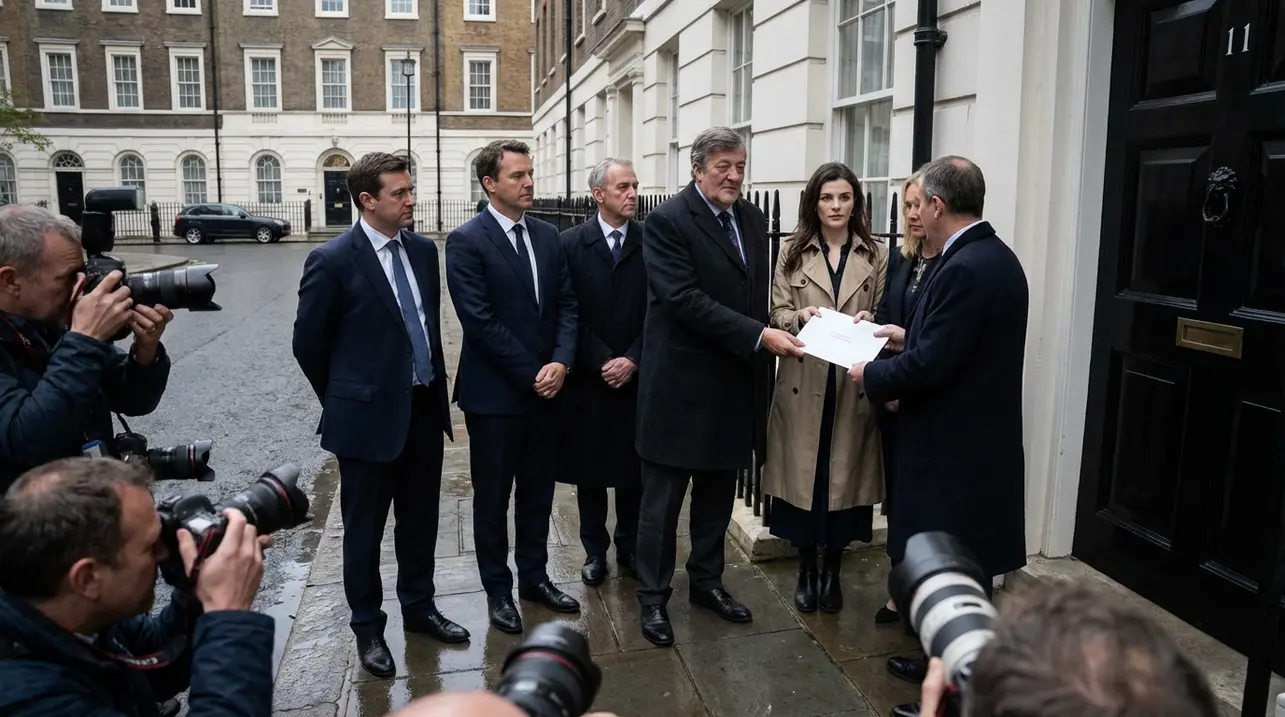
A coalition of prominent British cultural figures, including actors Stephen Fry, Joanna Lumley, Michael Palin, and comedian Aisling Bea, has issued a stark and impassioned plea to Prime Minister Keir Starmer, urging him to abandon any plans to reinterpret the European Convention on Human Rights (ECHR) in a way that would weaken protections for asylum seekers. The letter, signed by 21 luminaries from the arts and letters such as novelist Julian Barnes and actor Adrian Lester, arrives on the eve of Foreign Secretary David Lammy’s critical attendance at a Council of Europe meeting in Strasbourg, where legal changes aimed at stemming bogus asylum claims are set for discussion.The signatories frame the government’s potential move not as a narrow technical adjustment but as a profound moral failing, declaring that “any attempt at undermining universal protections is an affront to us all and a threat to the security of each and every one of us. ” This intervention transcends typical celebrity activism; it represents a direct challenge to the Labour government’s foundational principles, questioning whether it will uphold the international legal commitments that form the bedrock of post-war European stability and human dignity.The core of the controversy lies in the proposed reinterpretation of Article 3 of the ECHR, which absolutely prohibits torture and inhuman or degrading treatment or punishment. For decades, this provision has been interpreted by the European Court of Human Rights to prevent the deportation of individuals to countries where they face a real risk of such abuse, a principle that has repeatedly thwarted UK government attempts to remove asylum seekers to nations with questionable human rights records.The Starmer administration, inheriting a system overwhelmed by backlog and political pressure, appears to be exploring a more restrictive reading that would raise the threshold of evidence required to block a deportation, a move critics argue would effectively create a two-tiered system of justice and place vulnerable individuals back in the path of persecutors they fled. The letter’s signatories, leveraging their cultural capital, argue this is not merely a legalistic pivot but a dangerous erosion of Britain’s standing as a rule-of-law nation.They implicitly invoke the legacy of the UK’s own role in drafting the Convention, a project born from the ashes of World War II to ensure states could never again commit atrocities with impunity. To now seek to dilute its protections for a specific, politically targeted group—asylum seekers—is, in their view, to betray that history and embolden authoritarian regimes worldwide who routinely dismiss human rights as inconvenient Western constructs.The security argument presented is particularly nuanced: true national security, they contend, is fortified by a consistent, principled adherence to international law, not undermined by it. Creating loopholes in the global system designed to prevent torture destabilizes the very norms that protect British citizens abroad and fosters a climate where brutality becomes normalized, ultimately making the world less safe for everyone.This moment presents a defining test for Keir Starmer’s leadership. Having campaigned on restoring Britain’s moral credibility on the world stage, he now faces intense pressure from within his own traditional support base—the artistic and intellectual classes—to hold that line against the pragmatic, border-control-focused demands that dominate daily headlines.The government likely views the Strasbourg discussions as a necessary diplomatic maneuver to address a broken asylum process and demonstrate tangible action to a skeptical electorate. However, the celebrities’ letter frames the choice in starker, more human terms: between the expedient path of dilution and the principled stand of preservation.It asks whether the Prime Minister will side with the architects of a fragile global covenant against torture, or become a participant in its unravelling. The outcome will resonate far beyond the Council of Europe’s chambers, signaling to victims, advocates, and autocrats alike what values the new Britain truly intends to champion.
#editorial picks news
#UK
#Keir Starmer
#European Convention on Human Rights
#asylum seekers
#torture protections
#Stephen Fry
#David Lammy
#Council of Europe
Stay Informed. Act Smarter.
Get weekly highlights, major headlines, and expert insights — then put your knowledge to work in our live prediction markets.
Related News
Comments
It's quiet here...Start the conversation by leaving the first comment.