

- News
- Politics
- Trump's Stance on USMCA Sparks North American Trade Tensions, Setting Stage for Renegotiation
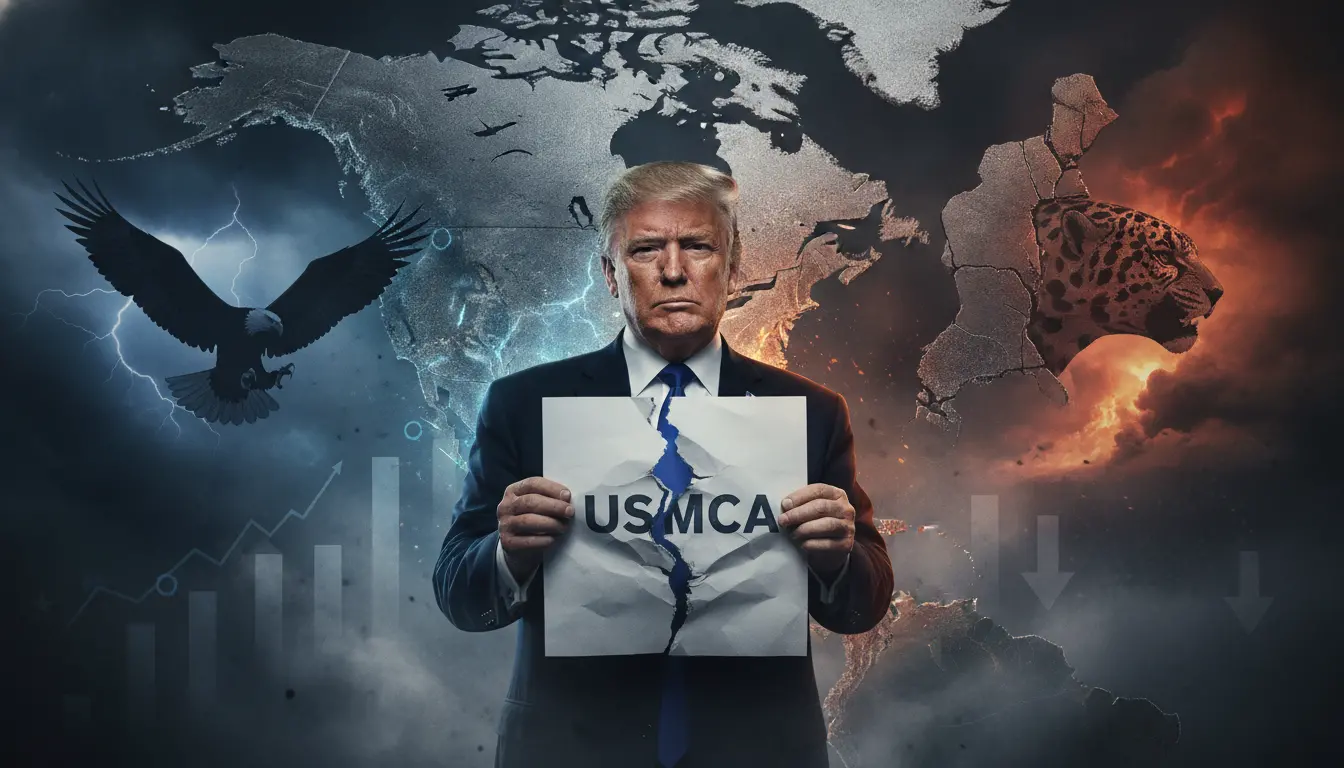
Trump's Stance on USMCA Sparks North American Trade Tensions, Setting Stage for Renegotiation
The future of North American trade hangs precariously as signals emerge from former President Donald Trump regarding his potential refusal to renew the United States-Mexico-Canada Agreement (USMCA). This stance, if acted upon in a future administration, would plunge the intricately linked economies of the U.S., Mexico, and Canada into a period of profound uncertainty, potentially unraveling years of established trade relations and forcing a contentious round of new negotiations. Such a development would not only disrupt critical supply chains but also challenge the fundamental principles of regional economic integration that have defined the continent for decades.
The USMCA, which came into effect in July 2020, was itself a product of heated negotiations under the Trump administration, replacing the nearly three-decade-old North American Free Trade Agreement (NAFTA). Trump had campaigned vigorously against NAFTA, labeling it a “disaster” and arguing it led to American job losses and trade deficits. The USMCA aimed to modernize the trade relationship, particularly in areas like digital trade, environmental protection, and labor standards, while also introducing stricter rules of origin for automobiles to incentivize North American manufacturing. For Canada and Mexico, adhering to the demands of the Trump administration was a strategic necessity to preserve access to the lucrative U.S. market, a cornerstone of their respective economies.
Key provisions of the USMCA include updated rules for the automotive industry, requiring 75% North American content for vehicles to qualify for zero tariffs, up from NAFTA’s 62.5%. It also introduced a labor value content requirement, mandating that 40-45% of auto content must be made by workers earning at least $16 per hour. Furthermore, the agreement bolstered intellectual property protections and opened up Canadian dairy markets to U.S. farmers. These changes were hard-won compromises, reflecting the competing interests of agricultural, manufacturing, and technology sectors across all three nations, and formed a delicate balance crucial for regional stability.
Should a future Trump administration opt against renewing the USMCA, the ripple effects would be immediate and far-reaching. Without an overarching trade framework, the default scenario could involve a return to World Trade Organization (WTO) most-favored-nation tariffs, significantly increasing costs for businesses engaged in cross-border trade. Industries like automotive manufacturing, agriculture, and energy, which rely heavily on integrated supply chains and tariff-free access, would face immense pressure. Consumers could see higher prices, and companies might consider relocating or restructuring operations, leading to potential job losses in all three countries. The uncertainty alone could deter investment and slow economic growth across North America.
For Mexico, the U.S. is by far its largest trading partner, and its economy is deeply intertwined with American manufacturing and consumer demand. Canada similarly sends the vast majority of its exports to the U.S. Any disruption to the USMCA would force both nations to rapidly reassess their economic strategies and potentially seek new trading relationships, all while navigating the complexities of their primary trading partner’s protectionist leanings. Domestically, U.S. industries that benefit from the current agreement, such as technology and certain agricultural sectors, could find themselves lobbying against non-renewal, highlighting the deep divisions that often characterize trade policy debates.
The specter of renewed trade negotiations also raises questions about the political will and capacity of all three countries to forge a new agreement that satisfies their respective domestic constituencies. The original USMCA negotiations were arduous and often fractious, marked by tariff threats and ultimatums. A fresh round of talks would likely be even more challenging, given the lessons learned from the previous process and the heightened geopolitical landscape. The 2026 review clause within the existing agreement provides a natural inflection point for these discussions, but a definitive stance from a U.S. presidential administration could preemptively set the tone for confrontation rather than collaboration.
Ultimately, the potential decision not to renew the USMCA represents a significant inflection point for North American economic integration. It underscores the enduring influence of an “America First” trade philosophy and its capacity to reshape established international agreements. Businesses, governments, and citizens across the continent are bracing for what could be a tumultuous period, as the foundational rules governing trillions of dollars in trade and millions of jobs are once again brought into question. The path forward will require careful diplomacy, economic foresight, and a willingness to navigate potentially divisive negotiations to preserve the core economic ties that bind these three nations.
Stay Informed. Act Smarter.
Get weekly highlights, major headlines, and expert insights — then put your knowledge to work in our live prediction markets.
Related News
Trump-Era Policy Stance Casts Shadow Over USMCA's Future Ahead of 2026 Review
Trump Hints at Scrapping USMCA, His Own Signature Trade Deal, Sparking Economic Uncertainty
Trump's Threat of 100% Tariffs on Europe Stokes Fears of a New Transatlantic Trade War
Trump Vows 100% Tariffs on Europe Over Digital Taxes, Threatening New Trade War
Analysts Warn of Sweeping Global Tariff Expansion Under Potential Future Trump Administration

US Considers Reviving 100% Tariffs on European Digital Services, Sparking Transatlantic Trade Concerns
Trump's Tariffs Threat Rekindles US-EU Digital Tax Tensions
Former President Trump's Tariff Threat on European Digital Services Looms Ahead of US Election

US Considers Imposing Fresh Tariffs on Chinese Goods Amid Persistent Trade Frictions
Potential Trump Administration Eyes Significant Economic Sanctions Escalation Against Iran