

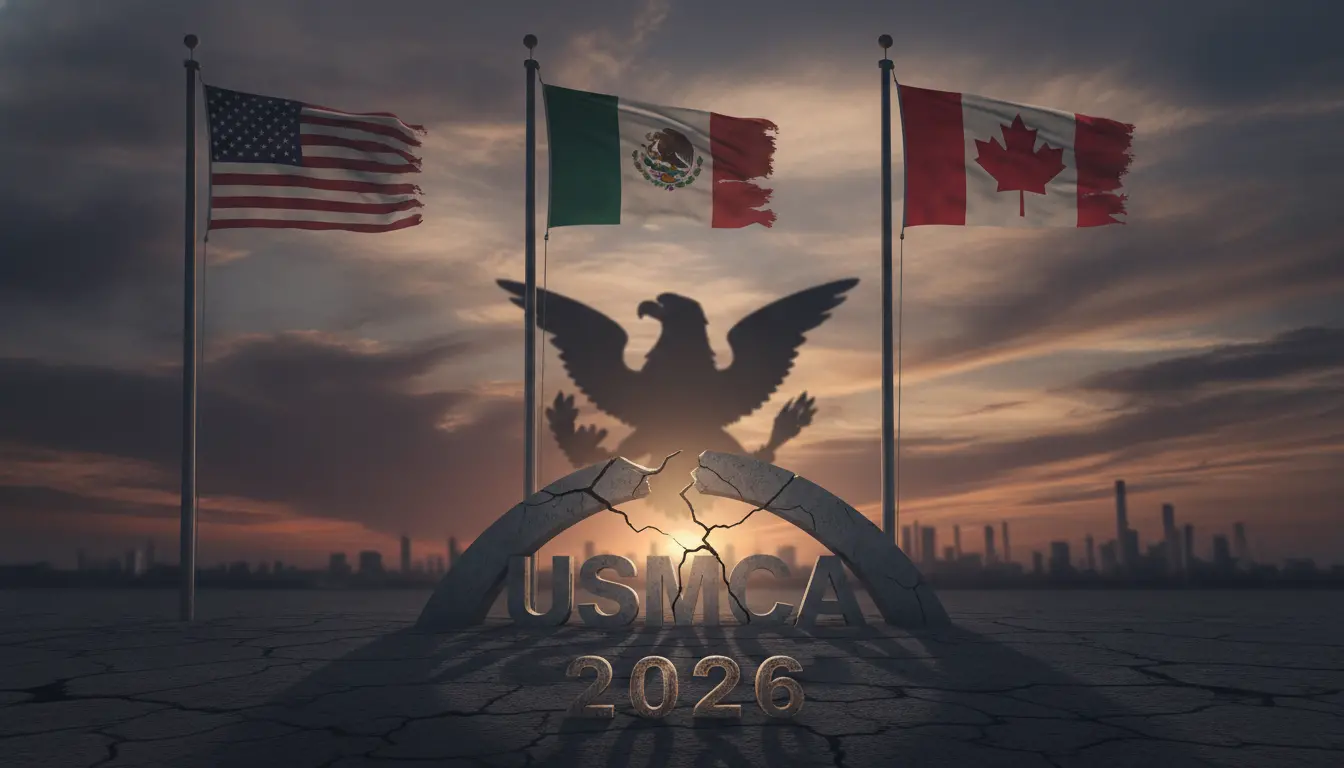
Trump-Era Policy Stance Casts Shadow Over USMCA's Future Ahead of 2026 Review
The bedrock of North American trade, the United States-Mexico-Canada Agreement (USMCA), faces a critical juncture as a past policy stance from the Trump administration signals potential non-renewal, injecting significant uncertainty into regional economic relations. With the agreement's mandatory six-year review approaching in 2026, stakeholders across all three nations are bracing for a period of intense scrutiny and possible renegotiation that could reshape supply chains, investment landscapes, and the stability of one of the world's most integrated trade blocs.
Signed into law in 2020, the USMCA superseded the North American Free Trade Agreement (NAFTA) and was championed by former President Donald Trump as a modernized pact designed to bring manufacturing jobs back to the United States, particularly within the automotive sector. Key provisions included stricter rules of origin for vehicles, enhanced labor protections, updated digital trade clauses, and new intellectual property standards. Crucially, the agreement incorporated a "sunset clause" mechanism: a 16-year term with a mandatory joint review every six years. This review period, set to commence in mid-2026, requires all three countries to affirm their intent to continue the agreement, or it will automatically terminate after another decade. A stated intention from a previous administration not to renew, if reiterated or acted upon, could trigger a contentious period of diplomatic and economic maneuvering.
For the United States, the future of USMCA is deeply intertwined with domestic political priorities, particularly concerning industrial policy, job creation, and strategic competition. The specter of a potential return to power by the Trump administration, or a similar protectionist tilt from any future White House, brings renewed focus on trade policies that prioritize national interests, even at the expense of established international frameworks. Canadian officials, while generally satisfied with the USMCA's current framework, are acutely aware of their economy's deep reliance on access to the vast U.S. market, making any threat to the agreement a major concern. Mexico, equally reliant on stable trade relations with its northern neighbors, particularly for its critical automotive and manufacturing sectors, faces the challenge of maintaining foreign investment and economic stability amidst evolving U.S. policy demands.
The economic stakes are immense. North America represents a trillion-dollar trade relationship, with integrated supply chains supporting millions of jobs. Sectors from automotive and agriculture to energy and technology are deeply intertwined, making the prospect of significant changes to the USMCA a source of anxiety for businesses and investors. Disrupting these established frameworks could lead to increased tariffs, regulatory hurdles, and a broader dampening of cross-border investment, ultimately impacting consumer prices and economic growth across the continent. Industries that have adapted to the USMCA's rules, such as auto manufacturers investing heavily in regional content, face the risk of having to reconfigure strategies and supply networks.
Trade experts and policy analysts are closely monitoring political developments in all three capitals, particularly in Washington. While the current Biden administration has largely upheld the USMCA, the groundwork for the 2026 review will be laid against a backdrop of potentially shifting political landscapes. The specific implications of a "decision not to renew" could range from demanding comprehensive renegotiation of key chapters to a more drastic, though less likely, withdrawal. The coming years will undoubtedly see intense diplomatic engagement and lobbying efforts from various industry groups keen to preserve stability and ensure favorable terms for their sectors.
Ultimately, the ability of the United States, Canada, and Mexico to navigate this upcoming review period with a unified vision for North American trade will be a critical test of regional cooperation. The stability of the USMCA is not merely an economic issue; it underpins geopolitical alignment and mutual security interests across the continent. As the 2026 review looms, the dialogue and negotiations that unfold will determine the trajectory of North American economic integration for decades to come, demanding thoughtful leadership and a commitment to collective prosperity.
Stay Informed. Act Smarter.
Get weekly highlights, major headlines, and expert insights — then put your knowledge to work in our live prediction markets.
Related News
Trump's Stance on USMCA Sparks North American Trade Tensions, Setting Stage for Renegotiation
Trump Hints at Scrapping USMCA, His Own Signature Trade Deal, Sparking Economic Uncertainty

US Considers Imposing Fresh Tariffs on Chinese Goods Amid Persistent Trade Frictions

US-China Economic Standoff Intensifies Amidst Calls for New Tariffs by 2026

Washington Considers Imposing New Trade Tariffs on Spain Amid Diplomatic Rifts

US Considers Reviving 100% Tariffs on European Digital Services, Sparking Transatlantic Trade Concerns
Analysts Warn of Sweeping Global Tariff Expansion Under Potential Future Trump Administration
US and China Navigate Complex Trade Impasse as Pressure Mounts for New Comprehensive Agreement by 2026

Former President Trump's Tariff Threat on European Digital Services Looms Ahead of US Election
Trump's Threat of 100% Tariffs on Europe Stokes Fears of a New Transatlantic Trade War