

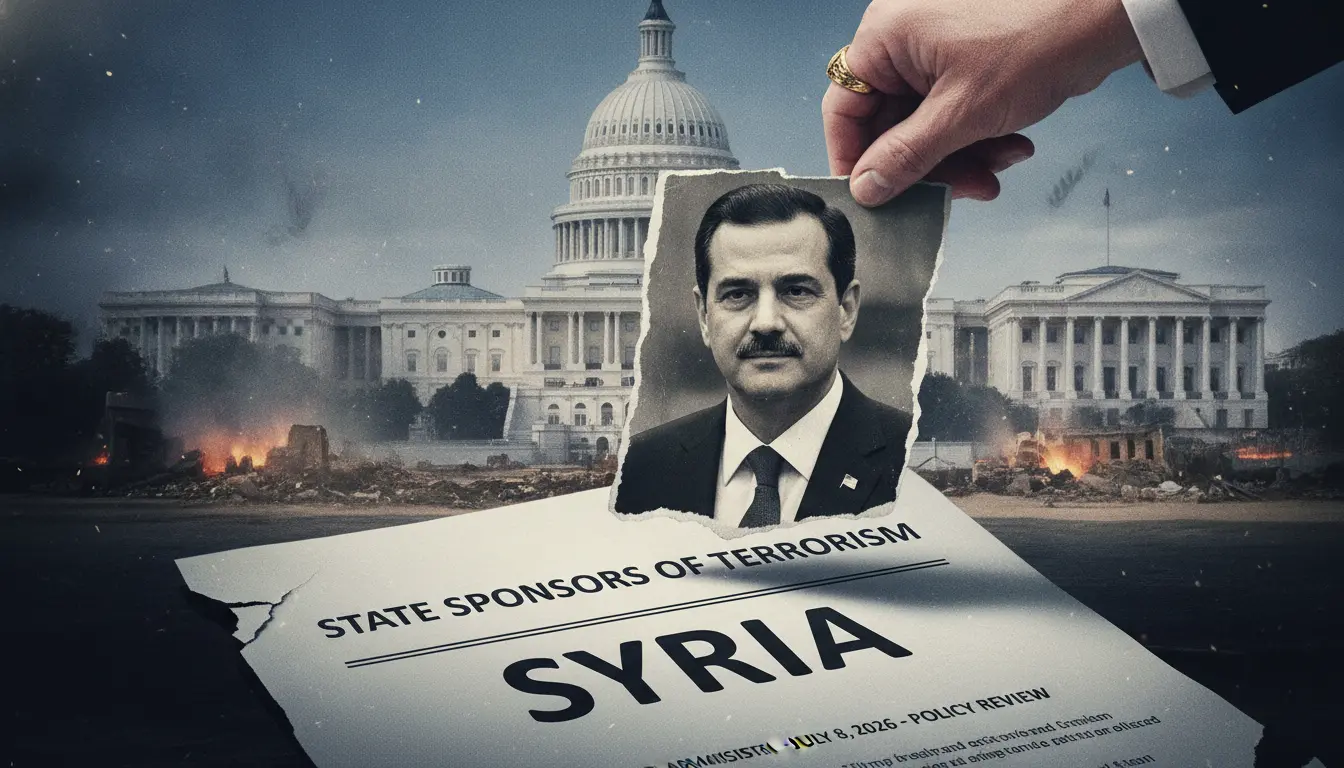
Trump Administration Reportedly Explores Removing Syria from State Terrorism List
Reports emerging on July 8, 2026, indicate that the Trump administration is actively considering the removal of Syria from the contentious U.S. list of State Sponsors of Terrorism. Such a move, if it materializes, would represent a seismic shift in Washington’s long-standing foreign policy towards Damascus and could trigger profound geopolitical repercussions across the Middle East. While details remain sparse, the contemplation alone signals a potential re-evaluation of engagement with the Bashar al-Assad regime, challenging decades of diplomatic isolation and economic pressure.
Syria has been designated a State Sponsor of Terrorism since 1979, primarily due to its support for various Palestinian militant groups, including Hamas and Palestinian Islamic Jihad, and its close alliance with Iran and Hezbollah. This designation carries significant weight, imposing severe sanctions, including restrictions on U.S. foreign aid, a ban on arms-related exports and sales, controls over dual-use items, and various financial and other restrictions. For decades, successive U.S. administrations have maintained Syria’s inclusion on the list, citing its continued patronage of groups deemed terrorist organizations and its alleged development and use of chemical weapons, particularly during the brutal Syrian civil war that began in 2011. The list's criteria require a nation to have "repeatedly provided support for acts of international terrorism."
The potential motivations behind such a policy shift are multifaceted and subject to intense speculation within diplomatic circles. A Trump administration might view delisting as a strategic lever to reshape regional alliances, perhaps aiming to distance Syria from Iran or to foster a new approach to counter-terrorism efforts that bypasses traditional allies. Alternatively, it could be part of a broader push to reduce U.S. entanglement in complex Middle Eastern conflicts, prioritizing American interests through transactional diplomacy. Proponents of delisting might argue that the current policy has not achieved its desired outcomes and that a change could open avenues for political solutions, humanitarian aid, or even economic opportunities, albeit controversial ones.
However, any move to delist Syria would undoubtedly face fierce opposition from Capitol Hill, human rights organizations, and key international partners. Critics would immediately point to the Assad regime's egregious human rights record, its alleged use of chemical weapons against its own population, and its continued ties to groups like Hezbollah, which remains a potent threat in the region. There would be significant concerns that delisting would legitimize a regime responsible for widespread atrocities, undermine international efforts to hold it accountable, and potentially embolden other state actors that support terrorism. The U.S. Congress plays a crucial oversight role in such decisions, often requiring notification periods and potentially exercising powers to block or delay a removal if it deems it unwarranted.
Historically, removal from the SSOT list is a rigorous process, requiring a presidential determination that the country has not provided support for international terrorism for at least the preceding six months, and has provided assurances that it will not do so in the future. Congress must be notified 45 days in advance of the proposed delisting. Nations like Sudan and Cuba have been removed from the list in recent years, often following extensive diplomatic negotiations, significant policy changes within those countries, and substantial reparations or concessions. For Syria, the bar for demonstrating a fundamental shift away from supporting terrorism and respecting human rights would be exceptionally high, given the depth of its historical entrenchment with designated groups and the scale of its civil conflict.
Should Syria be removed from the list, the immediate practical implications could include the potential for increased foreign investment, the easing of some international sanctions, and a pathway for greater diplomatic engagement. Economically, a delisted Syria could begin to rebuild, though years of conflict, corruption, and continued international isolation would still present formidable challenges. Diplomatically, it could embolden other nations, particularly those in the Arab League who have already begun cautious steps towards normalization with Damascus, to further re-engage with the Assad government. However, the move would also risk alienating traditional U.S. allies and undermining global efforts to isolate regimes that violate international norms and support terror.
The coming months are therefore poised to be critical, as the Trump administration navigates the complex ethical and strategic considerations surrounding such a monumental policy decision. The debate will undoubtedly highlight fundamental disagreements over the effectiveness of sanctions, the role of human rights in foreign policy, and the most viable path towards stability in a perennially volatile region. The implications extend far beyond Washington and Damascus, touching upon the future of regional power dynamics and the very definition of international accountability.
Stay Informed. Act Smarter.
Get weekly highlights, major headlines, and expert insights — then put your knowledge to work in our live prediction markets.
Related News

US Grapples with Full Terrorist Designation for Iran's IRGC Amid Diplomatic Tensions
Trump Eyes Separate Bilateral Meetings with Zelensky, Syrian Foreign Minister at NATO Summit
Trump's High-Stakes NATO Summit: Pivotal Meetings with Ukrainian and Syrian Leaders Could Reshape Global Conflicts

Washington Considers Reviving F-35 Deal for Turkey Amid Israeli Concerns

Tentative 14-Point US-Iran Memorandum on De-escalation and Sanctions Relief Reportedly Under Discussion

Future of US-Iran Diplomacy Under Scrutiny Amid Reports of Potential High-Level Talks
Trump Administration Announces Intent to Resume Formal Nuclear Negotiations with Iran on August 3, 2026
President Trump Poised to Announce New Iran Sanctions Amid Escalating Regional Tensions
Potential Trump Administration Eyes Significant Economic Sanctions Escalation Against Iran
Trump's Initial Iran Memorandum of Understanding Ignites Bipartisan Congressional Scrutiny