
The Body as Revolution: Che Guevara on Social Medicine and Political Health
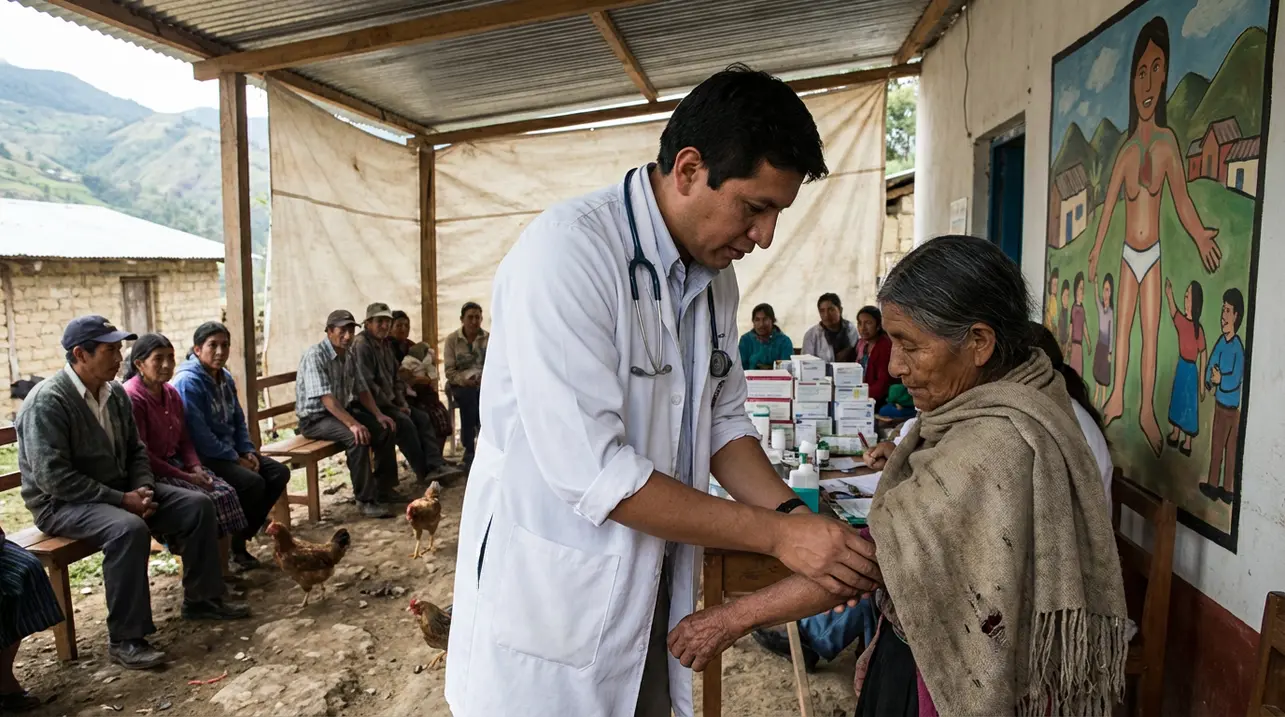
The question of the body’s role in political struggle, posed so poetically by Walt Whitman in his defiance of Cartesian dualism, finds a stark and practical answer in the life of Ernesto 'Che' Guevara. Long before modern neuroscience began mapping how trauma lodges in our nervous systems, or how physical well-being is inseparable from mental health, Guevara—a trained physician—was enacting a philosophy where medicine was not a neutral science but a revolutionary weapon.His concept of 'social medicine' was a direct challenge to the structures of power, arguing that a doctor in a capitalist society is merely a repairman for a system designed to break people, while a revolutionary doctor must work to dismantle that system entirely. For Guevara, the malnourished child, the worker with a preventable disease, the peasant without access to clean water—these were not just medical cases but political indictments.His work in the Cuban Sierra Maestra, treating both guerrilla comrades and local campesinos, was a lived manifesto. He understood that healing a wound or curing an illness in the context of oppression was a temporary salve; true health required the overthrow of the conditions that made people sick in the first place.This ideology directly confronts our contemporary moment, where healthcare remains a fiercely contested political frontier, often reduced to debates about insurance premiums rather than a fundamental human right. Guevara’s vision connects to broader feminist and social justice movements that insist the personal—the bodily—is political, from reproductive rights to disability justice.It asks us to consider: who gets to be well in our society? The legacy of this thinking is visible in initiatives like Cuba’s medical internationalism, sending doctors to global crisis zones, framing health as solidarity. Yet, it also highlights a persistent tension: can institutions of care ever be truly divorced from the power structures they inhabit? Guevara’s answer was a resounding no, advocating for the doctor as a transformative social actor.In an age of increasing disembodiment—where our intellects are digitized and our physical selves often neglected—his insistence on the body as the site of both oppression and revolution feels urgently prophetic. It’s a reminder that political health is not a metaphor; it begins with the concrete, material reality of human bodies and their right to thrive.
#Che Guevara
#social medicine
#political activism
#health as revolution
#featured
Stay Informed. Act Smarter.
Get weekly highlights, major headlines, and expert insights — then put your knowledge to work in our live prediction markets.