

Politics
Tarique Rahman Returns From Exile Ahead of Bangladesh Elections
RO
Robert Hayes
6 months ago7 min read
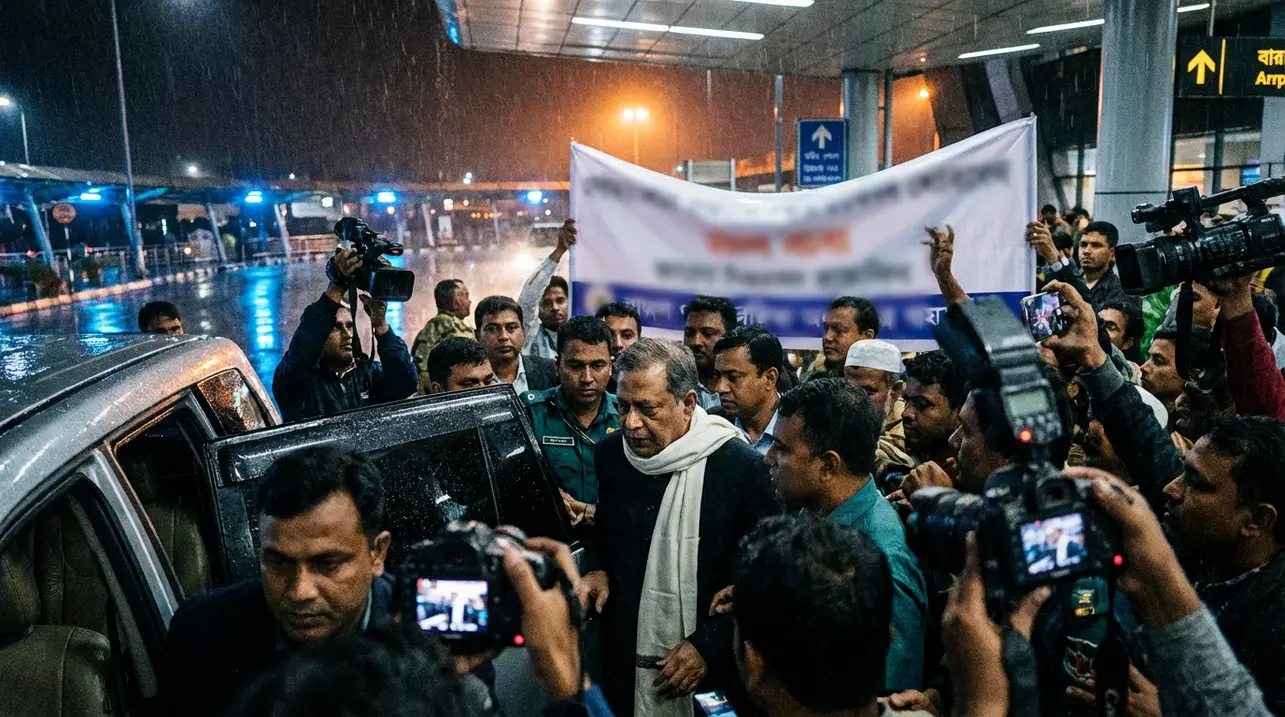
The political landscape of Bangladesh has been jolted by a seismic development, as Tarique Rahman, the acting chairman of the opposition Bangladesh Nationalist Party (BNP), has returned from a self-imposed exile in London that has lasted since 2008. His arrival, mere weeks before a pivotal national election, is not merely a homecoming; it is a calculated gambit that threatens to upend the delicate and often volatile equilibrium of Bangladeshi politics.For over a decade and a half, Rahman has been a spectral figure in his homeland, leading the BNP from a distance while facing a litany of serious charges, including corruption and money laundering, which he and his supporters decry as politically motivated fabrications orchestrated by the ruling Awami League under Prime Minister Sheikh Hasina. This return is a direct challenge to the current administration's authority, a move reminiscent of historical political exiles who have crossed the Rubicon to reclaim their place in the arena, betting that their physical presence can galvanize a fragmented opposition and sway public sentiment in a nation where street politics and electoral legitimacy are perennially contested.The context is critical: Bangladesh stands at a crossroads, with its economy showing resilience yet strained by inflation, and its democratic credentials under intense international scrutiny. Rahman’s father, former Prime Minister Khaleda Zia, remains effectively sidelined due to health and legal battles, leaving her son as the de facto standard-bearer for a political dynasty that has alternated power with the Hasina dynasty for generations.Analysts are now parsing the potential consequences: will his return inflame tensions and lead to widespread unrest, or could it force a negotiated détente? The government’s response will be telling; a heavy-handed crackdown could bolster Rahman’s martyr narrative and draw sharper criticism from Western capitals concerned about democratic backsliding, while a measured tolerance might be interpreted as weakness. This moment echoes other historical returns from exile, such as that of Benazir Bhutto to Pakistan in 2007, which reshaped that nation's political trajectory amidst profound risk.In Dhaka, the calculus involves not just domestic crowds but also geopolitical currents, with Bangladesh balancing relationships with China, India, and the United States. Rahman’s re-entry is therefore a multi-dimensional crisis, a test of institutional strength, and a drama that will define whether the upcoming elections are a mere formality or a genuinely contested battle for the soul of the world's eighth-most populous nation.
#Tarique Rahman
#Bangladesh
#elections
#exile
#return
#politics
#featured
Stay Informed. Act Smarter.
Get weekly highlights, major headlines, and expert insights — then put your knowledge to work in our live prediction markets.
Related News

Comments
It's quiet here...Start the conversation by leaving the first comment.