

- News
- Politics
- Supreme Court Weighs Presidential Power to Dismiss Federal Reserve Governors Without Cause

Supreme Court Weighs Presidential Power to Dismiss Federal Reserve Governors Without Cause
The United States Supreme Court is poised to deliver a monumental decision that could fundamentally reshape the balance of power between the presidency and a cornerstone of the nation’s economic stability, the Federal Reserve. At the heart of the matter is whether the President possesses the unilateral authority to remove a Federal Reserve governor without demonstrating just cause, a long-held legal standard designed to insulate the central bank from political influence. This impending ruling carries profound implications not only for the Fed's operational independence but also for the broader landscape of regulatory agencies and the integrity of economic policymaking.
Since its inception in 1913, the Federal Reserve has been deliberately structured to operate with a degree of autonomy from immediate political pressures. Its governors are appointed to staggered 14-year terms, providing insulation against shifts in presidential administrations and short-term political cycles. Crucially, existing law stipulates that these officials can only be removed “for cause,” a standard upheld by precedent cases like Humphrey's Executor v. United States (1935), which affirmed Congress's power to limit presidential removal authority for officers of independent agencies. This framework is considered essential for enabling the Fed to make tough, often unpopular, decisions on interest rates, inflation, and financial regulation without succumbing to partisan demands or electoral considerations.
The legal challenge centers on the “unitary executive theory,” an interpretation of Article II of the Constitution that asserts the President’s absolute authority over the executive branch and its officers. Proponents of this theory argue that any statutory limitations on the President’s power to remove executive officials are unconstitutional, as they infringe upon the President's inherent executive power. Opponents contend that such an interpretation undermines the system of checks and balances, allowing for an overreach of presidential power that could politicize vital governmental functions. The Court’s prior ruling in Seila Law LLC v. Consumer Financial Protection Bureau (2020), which struck down restrictions on the President's ability to fire the CFPB director, signaled a potential shift in judicial thinking regarding the independence of agency heads, creating anticipation around how this precedent might apply to the Federal Reserve.
The stakes for the US economy are undeniably high. A ruling that grants the President unfettered power to dismiss Fed governors could politicize monetary policy, introducing volatility and uncertainty into financial markets. Imagine a scenario where a President, seeking to boost economic growth ahead of an election, pressures the Fed to lower interest rates, or dismisses a governor who advocates for tighter monetary policy to combat inflation. Such actions could erode confidence in the Fed's ability to act as an impartial steward of the economy, leading to unpredictable fluctuations in bond yields, currency values, and overall economic stability. The independence of the central bank is widely viewed by economists as critical for long-term price stability and sustainable growth.
Beyond monetary policy, the decision could set a precedent for other independent regulatory bodies, such as the Federal Trade Commission, the Securities and Exchange Commission, and the Federal Communications Commission. If the “for cause” removal protection is weakened for Federal Reserve governors, it raises questions about the constitutional validity of similar protections for officials across the federal bureaucracy. This could lead to a significant expansion of presidential control over a vast array of regulatory functions, potentially diminishing the expertise, impartiality, and long-term vision that independent agencies are meant to provide.
Legal scholars, former central bank officials, and politicians from across the spectrum are closely watching this case, recognizing its potential to reshape American governance for decades to come. The Supreme Court is expected to issue its decision by late June or early July, casting a long shadow over the future of executive power and the foundational principles of independent oversight. The outcome will not only determine the parameters of presidential authority but also test the very resilience of the institutional safeguards designed to protect the nation's economic and regulatory frameworks from undue political interference.
Regardless of the specific ruling, the Court's pronouncement will undoubtedly ignite further debate about the appropriate balance between a powerful executive and the need for independent, expert-driven governance in a complex modern economy. It forces a reckoning with the question of whether an increasingly partisan political environment can tolerate institutions designed to stand apart from the fray.
Stay Informed. Act Smarter.
Get weekly highlights, major headlines, and expert insights — then put your knowledge to work in our live prediction markets.
Related News
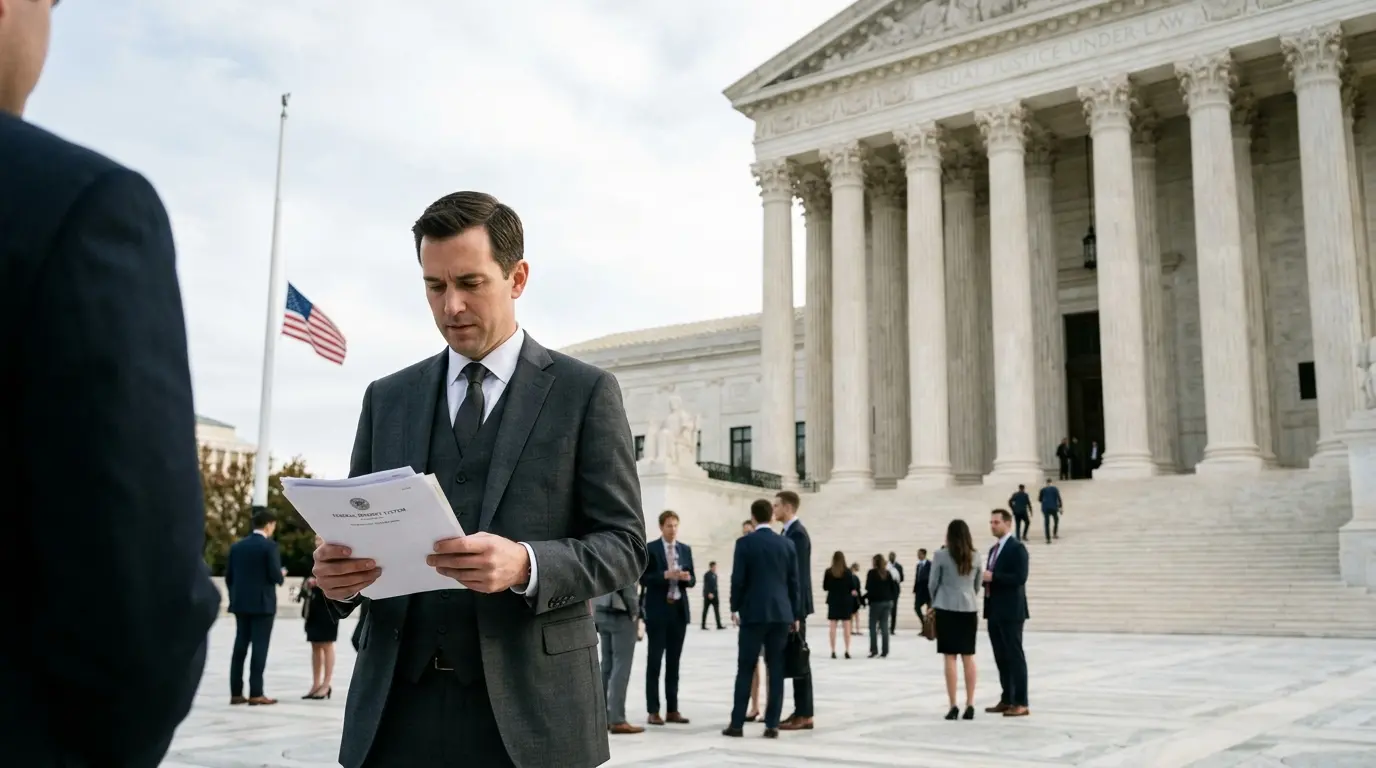
Supreme Court Considers Presidential Authority to Remove Federal Reserve Governors Without Cause
Supreme Court Poised to Rule on Presidential Power to Fire Fed Governors, Threatening Central Bank Independence
Supreme Court Considers President's Power to Remove Federal Reserve Governors

Project 2025 Blueprints Potential Purge of Independent Agency Heads in a Second Trump Term
Legal Challenges Anticipated Regarding Executive Power Over Election Assistance Commission
Federal Reserve Focuses on July 2026 CPI Amid Persistent Inflationary Pressures
Supreme Court Poised for Potential Review of Birthright Citizenship Under 14th Amendment

US Economic Forecasts Point to Sustained PCE Inflation Moderation by Mid-2026
Federal Court Blocks Trump Executive Order on Voter Lists and Mail Ballots, Administration Vows Appeal

US Wage Growth Trajectory for 2026 Under Scrutiny Amid Inflation Concerns