

- News
- Politics
- Supreme Court Rulings Ignite Debate Over Presidential Authority to Challenge FCC Leadership
Supreme Court Rulings Ignite Debate Over Presidential Authority to Challenge FCC Leadership
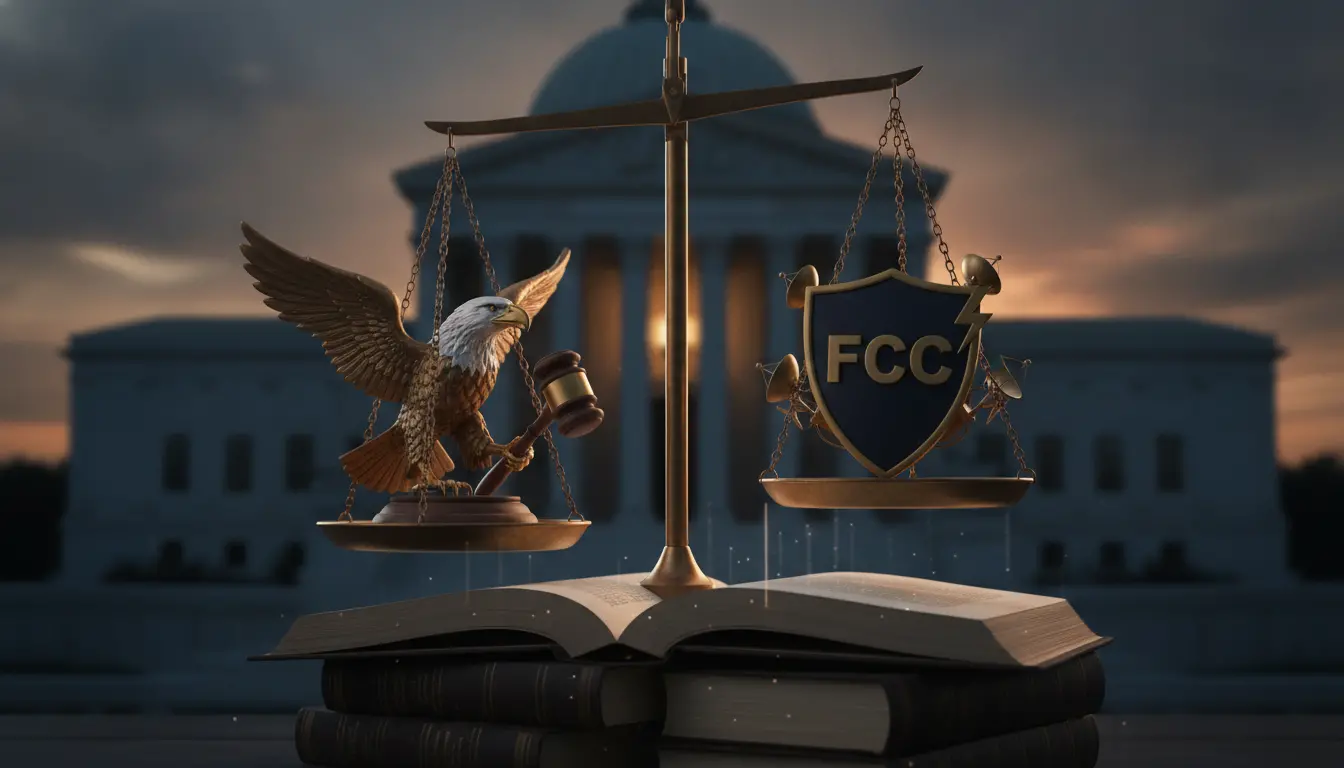
Recent expansions of presidential removal powers by the Supreme Court have sparked widespread speculation among legal scholars and political observers about the future independence of federal regulatory bodies. These landmark decisions, while primarily focusing on single-director agencies, have invigorated the unitary executive theory, suggesting a potential pathway for a future president to assert greater control over traditionally autonomous commissions, including the Federal Communications Commission. The possibility of such a move, particularly under a potential second Trump administration, raises significant questions about the regulatory landscape for telecommunications, media, and technology, and could set the stage for a profound constitutional clash over the separation of powers.
At the heart of this evolving legal debate are Supreme Court cases like Seila Law LLC v. Consumer Financial Protection Bureau (2020) and CFPB v. Community Financial Services Association of America (2024). In Seila Law, the Court ruled that the President has the power to remove the director of the Consumer Financial Protection Bureau at will, striking down its for-cause removal protection. This precedent was reaffirmed and reinforced in the subsequent CFPB case. While these rulings specifically addressed agencies led by a single director, their broader implications are keenly felt across the federal bureaucracy. Critics argue these decisions chip away at the insulation traditionally afforded to independent agencies, which were designed to operate free from direct political interference in order to apply their expertise without partisan pressure. The critical distinction, however, lies between single-director agencies and multi-member commissions like the FCC, which have historically enjoyed stronger protections against presidential removal, generally requiring proof of malfeasance or neglect of duty.
The Federal Communications Commission plays an indispensable role in the nation's digital infrastructure and public discourse. Comprising five commissioners appointed by the president and confirmed by the Senate, with no more than three from any single political party, the FCC is tasked with regulating interstate and international communications by radio, television, wire, satellite, and cable. Its decisions impact everything from net neutrality rules, which dictate how internet service providers manage web traffic, to media ownership policies, broadband deployment, and the allocation of crucial radio spectrum. The Chairman of the FCC, while a presidential appointee, historically serves a five-year term that often extends beyond the appointing president's tenure, fostering continuity and a degree of independence in policy implementation. A president's ability to unilaterally replace the chairman could drastically alter the agency's direction, particularly on contentious issues that often divide along partisan lines.
The prospect of a second presidential term for Donald Trump has intensified this discussion. During his first administration, Trump frequently expressed frustration with federal agencies, viewing them as obstacles to his policy agenda and often clashing with career civil servants and appointed officials. His administration pursued a deregulatory approach across various sectors, and he has signaled a willingness to challenge established norms regarding institutional independence. Should he return to office, and given the Supreme Court's recent leanings, an attempt to replace an FCC Chairman whose policies diverge from his own, even if that chairman's term has not expired, is not beyond the realm of possibility. Such an action would be consistent with a broader strategy to assert stronger executive control over agencies perceived as unresponsive to presidential directives.
An executive move to unilaterally fire the FCC Chairman would undoubtedly trigger a significant legal and political firestorm. Opponents would likely cite the 1935 Supreme Court case Humphrey's Executor v. United States, which established robust protections for multi-member independent agencies against at-will presidential removal. This precedent has long been considered a bedrock of administrative law, safeguarding the impartial and expert-driven work of bodies like the FCC, Federal Trade Commission, and Securities and Exchange Commission. A direct challenge would force the judiciary to revisit the extent of presidential power versus congressional intent in establishing agency independence, potentially leading to a constitutional showdown with far-reaching implications for the structure of American governance.
The stakes in this debate are extraordinarily high. On one side, proponents of a strong unitary executive argue that the President needs unfettered authority to execute policy effectively, holding agency heads accountable to the elected branch. On the other, defenders of agency independence contend that insulating expert bodies from immediate political whims is essential for stable, predictable regulation and to prevent the politicization of critical sectors like telecommunications. As the legal landscape continues to evolve and a potential future administration takes shape, the question of who truly controls the leadership and direction of the FCC – and by extension, other vital independent agencies – remains a focal point for constitutional scrutiny and intense political maneuvering. The outcomes could redefine the balance of power within the federal government for decades to come.
Stay Informed. Act Smarter.
Get weekly highlights, major headlines, and expert insights — then put your knowledge to work in our live prediction markets.
Related News
Supreme Court Expands Presidential Authority to Remove Independent Agency Heads, Redefining Executive Control
Supreme Court Examines Presidential Authority Over Federal Reserve Governor Removals
Supreme Court Poised to Redefine Presidential Authority Over Federal Reserve Leadership
Supreme Court Deliberates Presidential Authority to Remove Federal Reserve Governors
Supreme Court Poised to Redefine Presidential Authority Over Federal Reserve Governors
Supreme Court Weighs Presidential Power to Remove Federal Reserve Governors
Supreme Court Set to Deliver Landmark Ruling on Presidential Authority Over Federal Reserve Governors
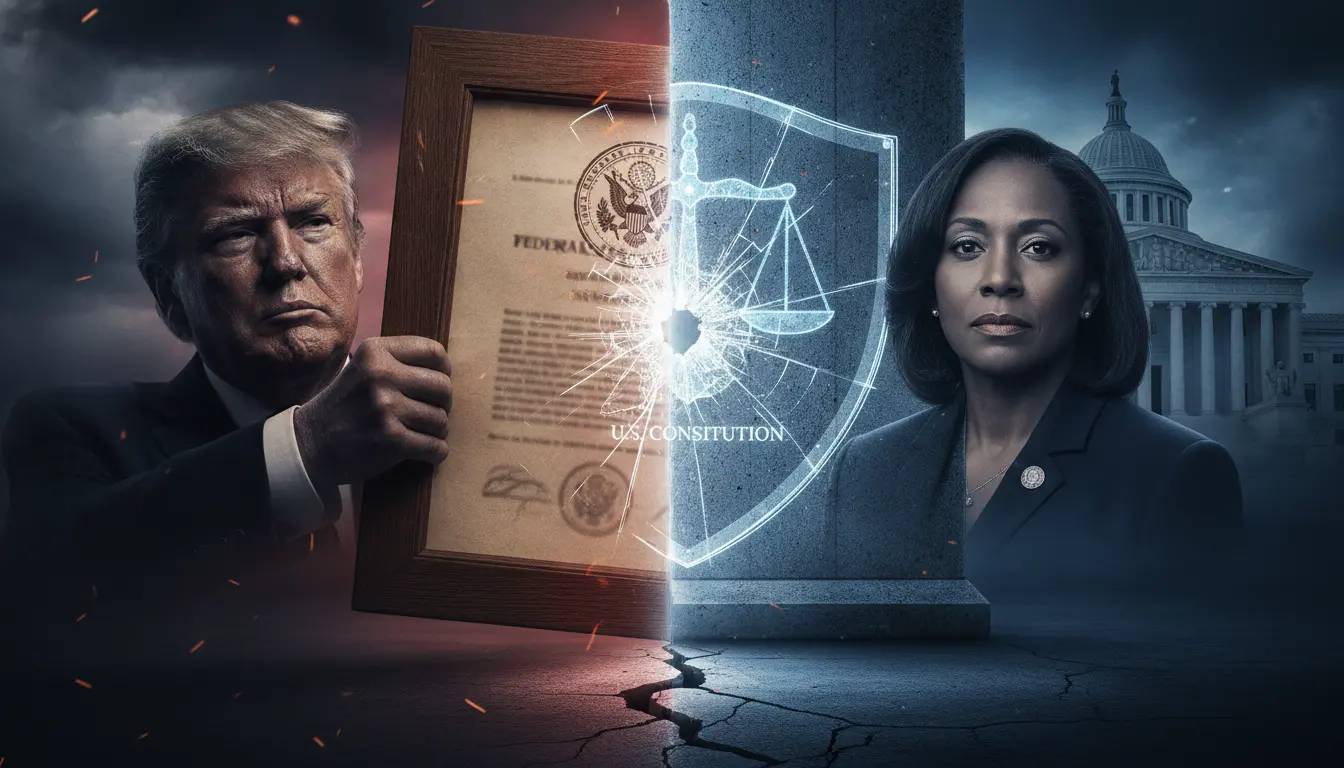
Trump Reportedly Renews Push to Remove Federal Reserve Governor Lisa Cook, Setting Stage for Constitutional Clash
Supreme Court Weighs President's Power to Fire Federal Reserve Governors
U.S. Supreme Court Deliberates Sweeping Presidential Immunity Claims Amidst Landmark Case