


Supreme Court Ruling Threatens to End Federal Reserve's Political Independence
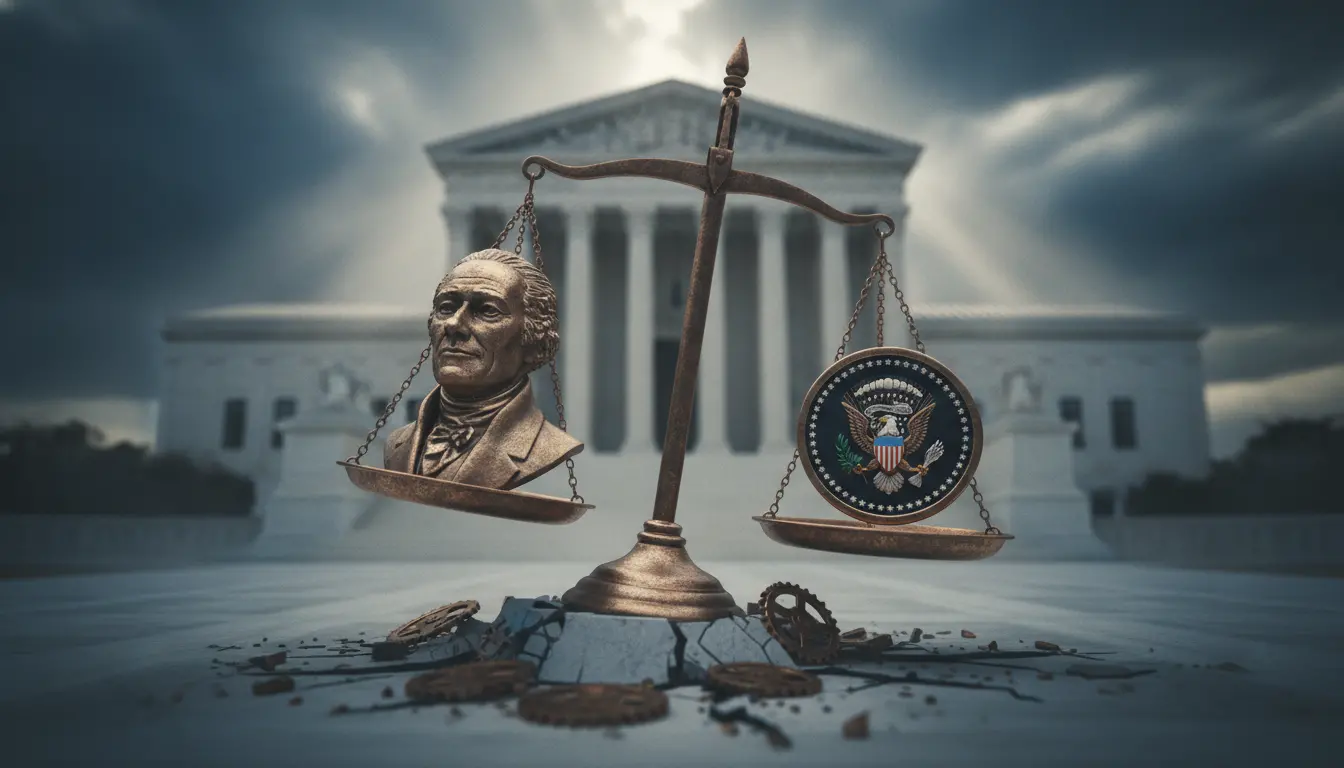
The U.S. Supreme Court is poised to issue a landmark decision that could fundamentally reshape the balance of power between the White House and the nation's central bank, potentially dismantling the long-standing political independence of the Federal Reserve. The ruling, expected in the final weeks of the Court's term, centers on the president's authority to fire the heads of independent agencies. A broad decision could grant the president the power to remove a Federal Reserve governor at will, a move that would upend more than a century of institutional design intended to shield U.S. monetary policy from partisan politics.
The Federal Reserve System was deliberately structured in 1913 to be an independent entity within the government. Its seven governors are appointed by the president and confirmed by the Senate for staggered 14-year terms, a length designed to outlast any single administration. Crucially, under current law, they can only be removed by the president "for cause," a stringent legal standard generally understood to mean demonstrable misconduct or neglect of duty, not policy disagreements. This structural safeguard is widely considered essential for economic stability, as it allows the Fed to make difficult and sometimes unpopular decisions—such as raising interest rates to combat inflation—without succumbing to short-term political pressure from an administration facing an election.
The legal challenge percolating up to the high court is animated by the "unitary executive theory," a constitutional interpretation that asserts the president must have complete control over the executive branch and all its functions. Proponents of this theory argue that independent agencies led by officials who cannot be easily fired are an unconstitutional affront to presidential authority and democratic accountability. They contend that since the president is the only executive official elected by the entire country, he must have the power to direct those who implement federal policy. This legal doctrine has gained significant momentum in conservative circles and has formed the basis for recent successful challenges to the leadership structures of other agencies, including the Consumer Financial Protection Bureau (CFPB).
While the specific case before the justices may not name the Federal Reserve directly, its legal reasoning is expected to set a powerful precedent. The Court has already shown a willingness to curtail agency independence. In the 2020 case Seila Law LLC v. CFPB, the majority ruled that the structure of the consumer watchdog, led by a single director removable only for cause, was unconstitutional. However, the Court has historically viewed multi-member boards and commissions, like the Federal Reserve Board of Governors, differently from single-director agencies. The Biden administration has urged the court to respect this distinction, emphasizing the unique and critical need for an independent central bank to maintain global economic confidence. This contrasts sharply with the position of some critics, including former President Donald Trump, who frequently and publicly berated Fed Chair Jerome Powell over interest rate decisions.
The economic stakes of the impending decision are monumental. Granting the president at-will firing power over Fed governors could shatter the central bank's credibility, which is foundational to its effectiveness. Markets currently operate on the assumption that Fed decisions on interest rates and quantitative easing are driven by objective economic data and its dual mandate of maximizing employment and stabilizing prices. If that assumption is replaced by a fear that monetary policy can be manipulated for political gain—for instance, by artificially stimulating the economy just before an election—the consequences could be severe. It could lead to heightened market volatility, rampant inflation, a loss of confidence in the U.S. dollar, and a destabilized global financial system.
As Washington and Wall Street await the Court's opinion, the future of American economic governance hangs in the balance. A narrow ruling might leave the Fed’s structure intact for now, but a sweeping decision in favor of presidential power would represent a seismic shift. Such an outcome would not only demolish a key pillar of the U.S. financial architecture but would also entangle the nation's monetary policy in the turbulent and unpredictable currents of partisan politics, with far-reaching consequences for the domestic and global economy.
Stay Informed. Act Smarter.
Get weekly highlights, major headlines, and expert insights — then put your knowledge to work in our live prediction markets.
Related News
Federal Reserve's Independence Hangs in Balance as Supreme Court Weighs Presidential Firing Power
Supreme Court's Recent Decisions Hint at Broader Presidential Immigration Powers Ahead
US Supreme Court Bolsters Executive Authority on Immigration, Posing Long-Term Policy Implications

Supreme Court Rulings Stoke Concerns Over Expanding Executive Immigration Powers

Brazilian Senate Weighs Landmark Constitutional Amendment to Rein in Supreme Court Powers

ECB Navigates Persistent Inflation and Growth Headwinds Ahead of Future Rate Adjustments

S&P 500 Poised for New All-Time Highs by 2026 Amid Tech Sector Resurgence and Anticipated Federal Reserve Rate Cuts

UEFA-FIFA Power Struggle Intensifies, Casting Doubt on European Participation in 2026 World Cup
Brazil Braces for Contentious 2026 Presidential Election as Lula Eyes Re-election Bid

Mounting Political Tensions Raise Prospects of Early Canadian Federal Election