

- News
- Politics
- Supreme Court Ruling Paves Way for Deportation of Thousands of Haitian and Syrian TPS Holders

Supreme Court Ruling Paves Way for Deportation of Thousands of Haitian and Syrian TPS Holders
The United States Supreme Court has cleared the path for the potential deportation of tens of thousands of Temporary Protected Status (TPS) holders from Haiti and Syria, affirming a prior administration's decision to terminate their humanitarian protections. This pivotal legal development culminates years of uncertainty and legal challenges, leaving a significant number of individuals, many of whom have lived and worked in the U.S. for decades, vulnerable to removal proceedings. The ruling effectively ends a legal shield that has protected these communities, thrusting their futures into immediate peril and reigniting intense debate over the scope of executive power in immigration matters.
Temporary Protected Status is a humanitarian immigration program established by Congress in 1990, designed to offer temporary legal residency and work authorization to foreign nationals from countries deemed unsafe for return due to armed conflict, natural disasters, or other extraordinary and temporary conditions. Eligible individuals are shielded from deportation and can obtain work permits for renewable periods. Haiti was first designated for TPS in 2010 after a devastating earthquake, while Syria received its designation in 2012 amid its protracted civil war. These protections have allowed hundreds of thousands to build lives, raise families, and contribute to American society, often filling crucial labor gaps and paying taxes, all while maintaining a precarious legal status tied to ongoing conditions in their home countries.
The previous administration initiated a broad review of TPS designations, leading to decisions to terminate protections for beneficiaries from several countries, including Haiti and Syria, based on assessments that the original conditions justifying their status had sufficiently improved. These terminations were met with widespread criticism from immigrant advocates, human rights organizations, and some lawmakers who argued that the conditions in these countries remained volatile and dangerous. Critics also highlighted that many TPS beneficiaries had deep roots in the U.S., including American-born children, making a sudden termination of their status highly disruptive and inhumane.
The terminations sparked immediate legal challenges, most notably in the case of Ramos v. Nielsen (later Ramos v. Mayorkas), which consolidated lawsuits from TPS holders across various nationalities. A federal appeals court, the Ninth Circuit, initially sided with the TPS holders, halting the terminations and allowing beneficiaries to retain their status while the legal battle continued. This decision provided a temporary reprieve, but the government appealed, ultimately bringing the complex question of executive authority over TPS designations before the nation's highest court. The core legal argument revolved around whether the government's reasons for ending TPS were subject to judicial review and if proper procedures were followed.
The Supreme Court's decision, by declining to overturn the termination, allows the executive branch's original intent to proceed, effectively dissolving the injunction that had protected thousands. This means that while no immediate mass deportations are expected, the individuals whose TPS was designated to end are now without that specific legal protection. They may revert to their previous immigration status, if any, or face the prospect of being placed into removal proceedings. The exact timeline for these transitions remains somewhat fluid, often depending on government policy and individual circumstances, but the looming threat of deportation is now very real.
For an estimated tens of thousands of Haitian and Syrian TPS holders, many of whom have raised families and established careers over more than a decade in the U.S., the ruling introduces profound anxiety and instability. Many fear returning to countries still grappling with humanitarian crises, political instability, and violence, conditions they originally fled. The decision underscores the precarious nature of humanitarian protections in the absence of a clear pathway to permanent residency for long-term TPS beneficiaries. It also spotlights the ongoing tension between executive discretion in immigration matters and the humanitarian considerations central to the TPS program's initial creation, placing the fate of countless individuals squarely in the balance of future administrative actions and potential legislative reforms.
Stay Informed. Act Smarter.
Get weekly highlights, major headlines, and expert insights — then put your knowledge to work in our live prediction markets.
Related News
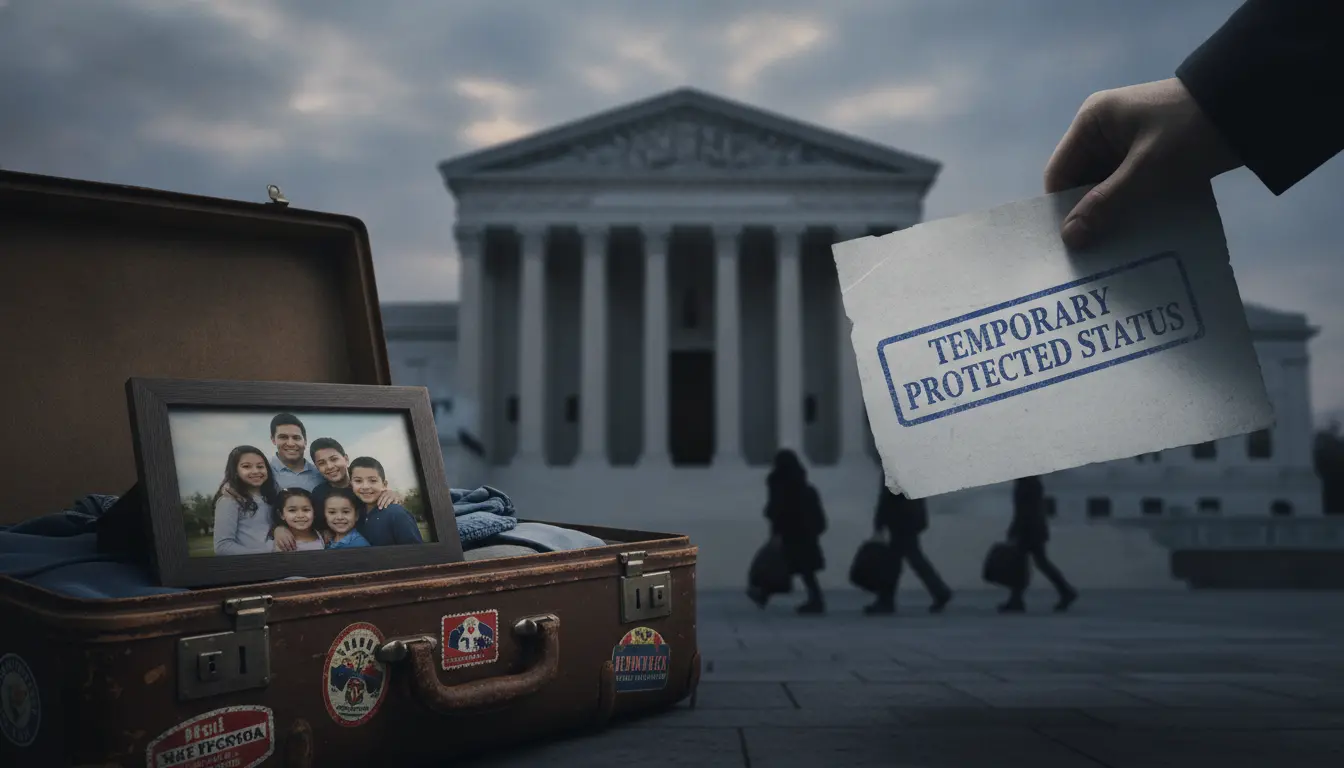
Trump Administration Gains Authority for Potential Deportations as Supreme Court Ends TPS Protections

Deportation Fears Loom for Haitian and Syrian Immigrants as TPS Protections Face Political Headwinds
Advocacy Groups Prepare New Challenges to Supreme Court Asylum Decision
Supreme Court Allows Biden's Strict Asylum Policy to Continue, Setting Stage for Protracted Legal Battle
Trump Readies Supreme Court Bid to Overturn Birthright Citizenship Interpretation

Legal Challenges Mount Against Trump Administration's Birthright Citizenship Executive Orders

Supreme Court Poised for Potential Review of Birthright Citizenship Under 14th Amendment
Supreme Court Poised to Rule on Presidential Power to Fire Fed Governors, Threatening Central Bank Independence
Supreme Court Considers Presidential Authority to Remove Federal Reserve Governors Without Cause

Supreme Court Weighs Presidential Power to Dismiss Federal Reserve Governors Without Cause