

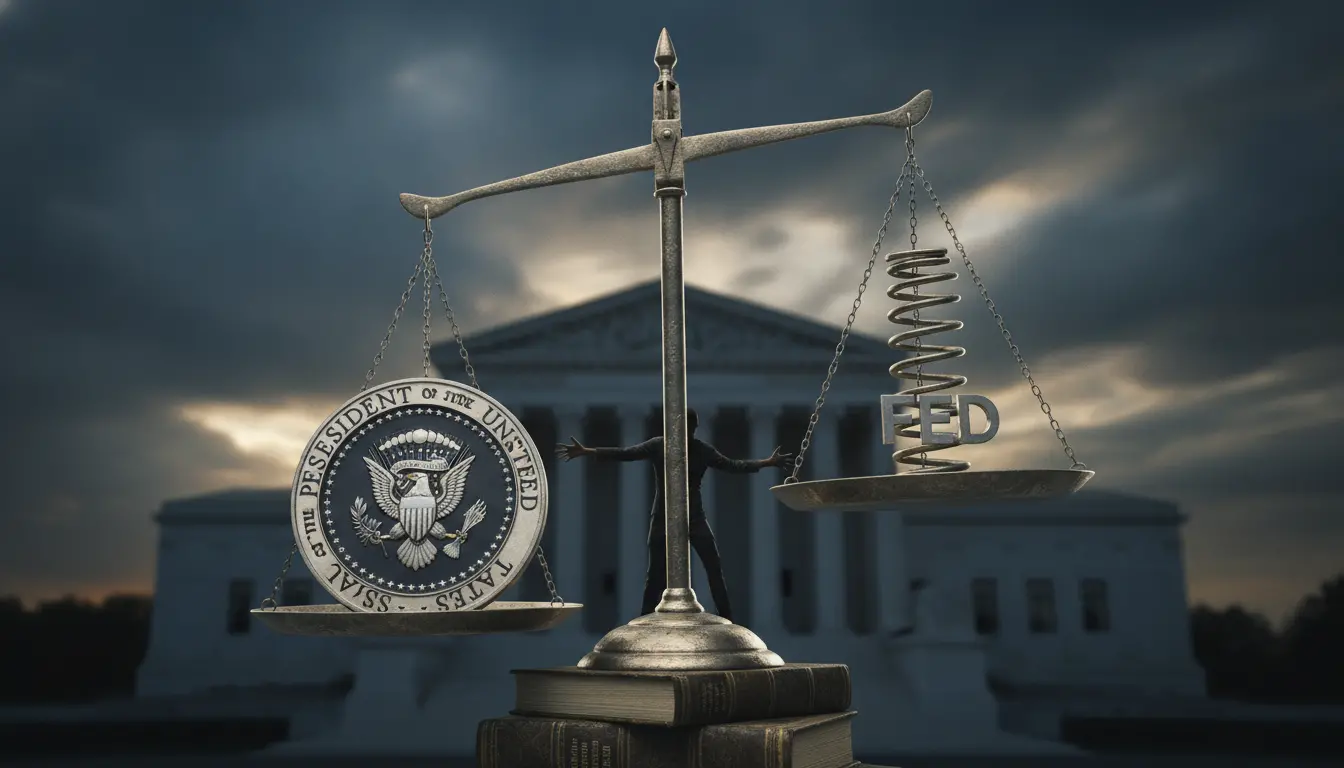
Supreme Court Poised to Redefine Presidential Authority Over Federal Reserve Leadership
The United States Supreme Court is on the cusp of issuing a landmark ruling that could fundamentally reshape the balance of power between the President and the nation's most critical independent agencies, particularly the Federal Reserve. The High Court is currently deliberating a case that examines the President's authority to remove a Federal Reserve Governor without a specific legal cause, a power that, if affirmed, would represent a significant shift in the operational independence of the central bank and potentially other federal bodies.
At the heart of the legal challenge lies the constitutional principle of the unitary executive theory, which posits that the President must have the inherent power to supervise and remove all executive branch officers to ensure accountability and effective governance. This view directly confronts decades of established precedent and statutory design intended to insulate agencies like the Federal Reserve from direct political interference. For nearly a century, Federal Reserve governors have been protected by "for cause" removal provisions, meaning they can only be dismissed for specific, statutorily defined reasons, rather than at the President's discretion. This independence is widely considered crucial for allowing the Fed to make decisions on monetary policy, such as setting interest rates and managing the money supply, based purely on economic data and long-term stability rather than short-term political cycles.
The Federal Reserve's structure, with governors serving staggered 14-year terms, was deliberately designed by Congress to foster a non-partisan approach to monetary policy, protecting it from the electoral calendar and transient political pressures. This institutional design, stemming from the Federal Reserve Act of 1913, aims to ensure that decisions affecting inflation, employment, and economic growth are made with a long-term perspective. Advocates for the Fed's independence argue that removing this insulation would politicize monetary policy, leading to boom-and-bust cycles driven by political expediency rather than sound economic principles. They point to historical instances where political pressure on central banks has led to economic instability and hyperinflation in other nations.
Legal arguments in the ongoing case are expected to delve deeply into previous Supreme Court rulings, most notably Humphrey's Executor v. United States (1935), which upheld Congress's power to create independent agencies with for-cause removal protections for their officers. However, more recent decisions, such as Seila Law LLC v. Consumer Financial Protection Bureau (2020), have shown the Court's willingness to re-examine and, in some cases, limit the scope of such protections, particularly for single-director agencies. The current case presents a critical opportunity for the Court to clarify the constitutional boundaries of presidential power over multi-member independent commissions, like the Fed's Board of Governors, which have historically enjoyed greater insulation.
The implications of a ruling in favor of expanded presidential removal power are profound and far-reaching. If the President gains the ability to fire a Fed Governor at will, it could significantly erode the central bank's ability to act independently. A sitting President, displeased with the Fed's interest rate decisions or other policy stances, could potentially replace governors who do not align with their economic agenda. Such a scenario could undermine global confidence in the U.S. financial system, as the predictability and stability provided by an independent central bank are highly valued by international markets and investors. Moreover, a decision that weakens the Fed's independence could set a precedent for challenging the autonomy of other independent regulatory bodies overseeing critical sectors like energy, telecommunications, and finance.
Economists, financial analysts, and political observers are keenly watching the Supreme Court's deliberations. The potential shift in power could inject a new layer of uncertainty into monetary policy decisions, impacting everything from borrowing costs for consumers and businesses to the stability of financial markets. The Court's ruling will not only redefine the relationship between the White House and the Federal Reserve but also leave an indelible mark on the future of the administrative state, potentially altering how presidential administrations interact with federal agencies for generations to come. The stakes are immense, touching upon the very foundations of democratic governance, economic stability, and the separation of powers.
Stay Informed. Act Smarter.
Get weekly highlights, major headlines, and expert insights — then put your knowledge to work in our live prediction markets.
Related News

Supreme Court Poised to Redefine Presidential Authority Over Federal Reserve Governors
Supreme Court Weighs Presidential Power to Remove Federal Reserve Governors
Supreme Court Set to Deliver Landmark Ruling on Presidential Authority Over Federal Reserve Governors

Supreme Court Examines Presidential Authority Over Federal Reserve Governor Removals
Supreme Court Deliberates Presidential Authority to Remove Federal Reserve Governors

Supreme Court Weighs President's Power to Fire Federal Reserve Governors
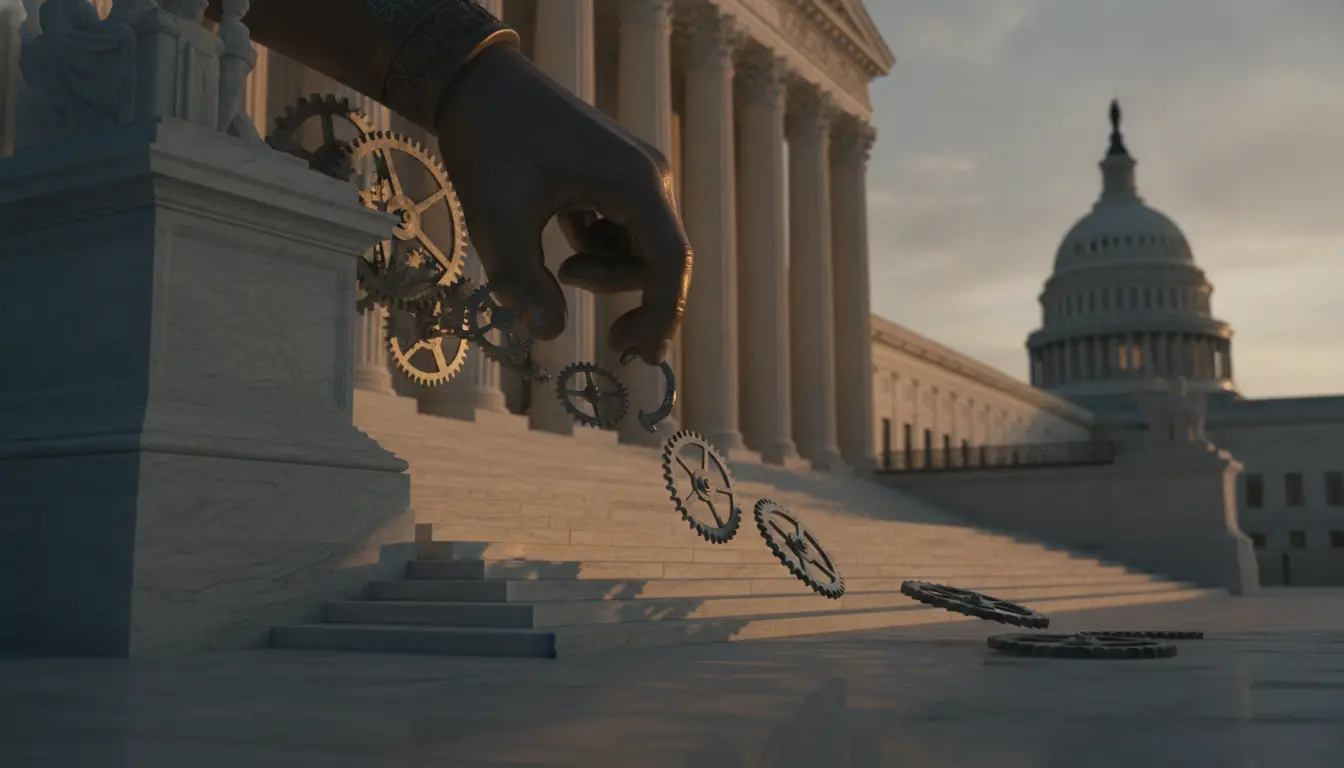
Supreme Court Expands Presidential Authority to Remove Independent Agency Heads, Redefining Executive Control

Trump Reportedly Renews Push to Remove Federal Reserve Governor Lisa Cook, Setting Stage for Constitutional Clash

Supreme Court Rulings Ignite Debate Over Presidential Authority to Challenge FCC Leadership

Kevin Warsh Faces Mounting Pressure as Fed Chair Amid Political Storm