

- News
- Politics
- Supreme Court Poised for Potential Review of Birthright Citizenship Under 14th Amendment
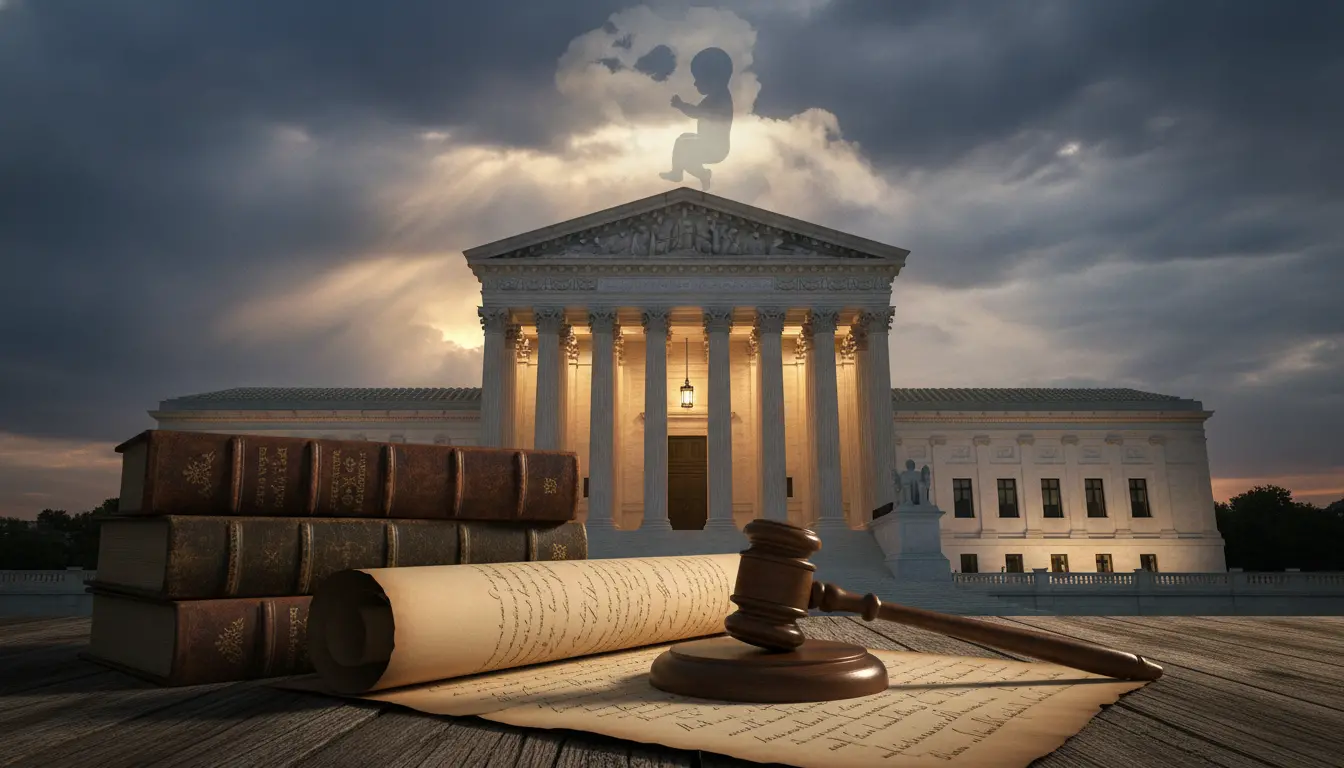
Supreme Court Poised for Potential Review of Birthright Citizenship Under 14th Amendment
hottest news
Anticipation is mounting among legal scholars and political observers regarding a potential Supreme Court review of birthright citizenship, a bedrock principle of American law for over a century and a half. The prospect of the nation’s highest court re-examining the interpretation of the 14th Amendment’s Citizenship Clause stems largely from persistent efforts by former President Donald Trump and his allies to challenge the prevailing understanding that nearly all individuals born on U.S. soil are automatically citizens. Such a move by the Court would ignite a profound constitutional debate and could fundamentally reshape immigration policy and the very definition of American identity.
At the heart of the impending legal discussions lies Section 1 of the 14th Amendment, ratified in 1868, which states: “All persons born or naturalized in the United States and subject to the jurisdiction thereof, are citizens of the United States and of the State wherein they reside.” This clause was primarily intended to grant citizenship to formerly enslaved people after the Civil War. For generations, legal consensus and Supreme Court precedent, notably the 1898 United States v. Wong Kim Ark decision, have affirmed that this language guarantees citizenship to virtually everyone born within U.S. borders, regardless of their parents’ immigration status. This broad interpretation has been a foundational element of American society, distinguishing the U.S. from many other nations that base citizenship on parental nationality.
The push to re-evaluate this long-standing interpretation has been a consistent theme in conservative legal and political circles, gaining significant traction during the Trump administration. Former President Trump has repeatedly argued that the “subject to the jurisdiction thereof” phrase was never intended to apply to children of undocumented immigrants or those without legal residency, suggesting it leaves room for executive action or judicial reinterpretation to exclude them. Proponents of this narrower view contend that only those 'fully subject' to U.S. law, typically excluding foreign diplomats and potentially those whose parents are not legally present, should qualify for birthright citizenship, a position largely rejected by mainstream constitutional lawyers but vigorously championed by a vocal segment of the Republican party.
Legal experts are now closely watching for a viable pathway for such a case to reach the Supreme Court’s docket. This could materialize through several avenues, including a challenge to an executive order attempting to redefine citizenship, an appeal from a lower court ruling on an individual’s citizenship claim, or even a case arising from new legislative efforts. The current ideological composition of the Supreme Court, with a solid conservative majority, is seen by many as more amenable to revisiting established constitutional precedents, particularly on issues that align with a conservative judicial philosophy often emphasizing originalism or textualism. The readiness of the Court to take up such a politically charged and constitutionally significant matter remains a key point of speculation.
The implications of any move to roll back birthright citizenship would be seismic. It could create a novel class of individuals born in the United States who are not considered citizens, leading to immense administrative and social challenges. Millions of people who currently hold U.S. citizenship could find their status, or that of their children, called into question, leading to widespread uncertainty and potential statelessness within the country’s borders. Moreover, such a ruling would inevitably spark fierce national and international debate over human rights, immigration policy, and the very character of American society. The legal precedent set would reverberate across civil liberties, family law, and the fundamental relationship between the individual and the state.
Beyond the intricate legal arguments, the discussion around birthright citizenship is deeply embedded in the broader, often contentious, national discourse on immigration, border security, and national identity. It represents a flashpoint for conflicting visions of America: one as a land of open opportunity and inclusion, another as a nation needing to assert greater control over its borders and define citizenship more restrictively. As the legal landscape evolves, the prospect of the Supreme Court weighing in on this foundational principle elevates the debate from political rhetoric to a potentially transformative legal battle, with consequences that would reshape the nation for generations.
The potential for the Supreme Court to consider this issue signifies a pivotal moment in American constitutional law. Any reinterpretation would not only overturn a long-held understanding but also send a powerful signal about the direction of the judiciary and its willingness to revisit foundational doctrines. The outcome would undoubtedly define the legal and social fabric of the United States for decades to come, affecting everything from demographic trends to political representation and the nation's standing on the global stage.
Stay Informed. Act Smarter.
Get weekly highlights, major headlines, and expert insights — then put your knowledge to work in our live prediction markets.
Related News
Trump Readies Supreme Court Bid to Overturn Birthright Citizenship Interpretation

Legal Challenges Mount Against Trump Administration's Birthright Citizenship Executive Orders
Conservative Coalition Explores Legislative Pathways to Reconsider Birthright Citizenship
Advocacy Groups Prepare New Challenges to Supreme Court Asylum Decision
Trump Administration Gains Authority for Potential Deportations as Supreme Court Ends TPS Protections
Supreme Court Considers President's Power to Remove Federal Reserve Governors

Texas Law Mandating Bible Stories in Public Schools Faces Immediate Federal Court Challenge Over Church-State Separation
Supreme Court Considers Presidential Authority to Remove Federal Reserve Governors Without Cause
Supreme Court Poised to Rule on Presidential Power to Fire Fed Governors, Threatening Central Bank Independence
Supreme Court Weighs Presidential Power to Dismiss Federal Reserve Governors Without Cause