

- News
- Politics
- Supreme Court Expands Presidential Authority to Remove Independent Agency Heads, Redefining Executive Control
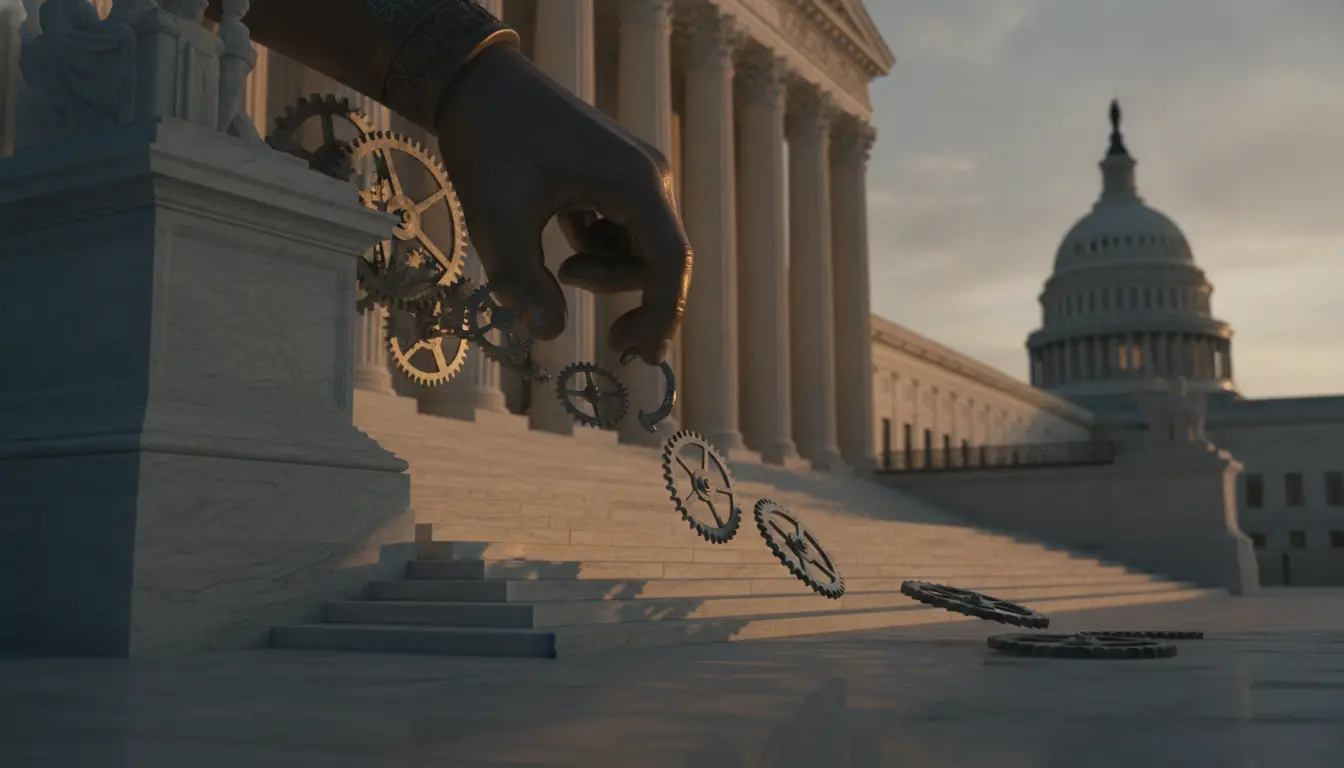
Supreme Court Expands Presidential Authority to Remove Independent Agency Heads, Redefining Executive Control
The United States Supreme Court has significantly reshaped the landscape of executive power, affirming the President's expanded authority to remove the heads of key independent federal agencies. This development marks a pivotal moment in the ongoing debate over the balance of power between the executive branch and the quasi-independent bodies designed to operate free from direct political influence. While the rulings have been incremental, their cumulative effect establishes a clearer pathway for a president to exert greater control over the vast federal bureaucracy, prompting both proponents of executive accountability and critics concerned about politicization to closely examine the implications for future administrations.
Independent agencies, such as the Securities and Exchange Commission, the Federal Trade Commission, and the Consumer Financial Protection Bureau, were largely established to administer complex laws and regulations with expertise and impartiality, shielded from the immediate whims of political cycles. Historically, their leaders often enjoyed statutory protection against at-will removal, meaning a president could only dismiss them "for cause"—a legal standard intended to prevent arbitrary firings. This insulation was seen as crucial for ensuring stability and integrity in critical areas ranging from financial markets to consumer protection and environmental regulation. However, a series of Supreme Court decisions in recent years has progressively narrowed the scope of these protections, challenging the traditional understanding of the separation of powers and the President's constitutional role in overseeing the executive branch.
The jurisprudential shift accelerated with cases like Seila Law LLC v. Consumer Financial Protection Bureau in 2020, which held that the CFPB's single director, protected by a "for cause" removal provision, unconstitutionally infringed on the President’s executive power. This was followed by Collins v. Yellen in 2021, where the Court found a similar removal restriction for the director of the Federal Housing Finance Agency (FHFA) to be unconstitutional. These rulings, though focusing on agencies led by a single director, have been interpreted as broadening the President's inherent authority to remove principal officers, irrespective of statutory limitations that conflict with the executive's unitary nature. The underlying principle in these decisions reinforces the President's power to hold subordinates accountable, aligning with a more robust view of executive control. It is important to note, however, that the status of multi-member commissions and specific agencies like the Federal Reserve, whose governors serve fixed terms and whose structure is designed for monetary policy independence, remains a distinct and often more protected domain, with Federal Reserve Governor Lisa Cook representing a category of officials whose removal powers are still largely constrained.
At stake is the very nature of federal governance and the independence of regulatory action. Proponents of expanded presidential removal power argue that it enhances accountability, allowing an elected president to implement their policy agenda more effectively and ensure that the bureaucracy is responsive to the will of the people. They contend that unchecked independent agencies can become unaccountable "fourth branches" of government. Conversely, critics express concerns that removing "for cause" protections will lead to greater politicization of regulatory bodies, undermine expert decision-making, and introduce instability as administrations frequently change personnel for ideological reasons rather than performance. This could lead to a revolving door of agency heads, creating regulatory uncertainty and potentially compromising the impartial application of laws.
The implications of these judicial precedents loom particularly large for a potential future administration, especially given former President Donald Trump’s past rhetoric and actions regarding the federal bureaucracy. During his previous term, Trump frequently voiced frustration with officials he perceived as disloyal or obstructive, often expressing a desire for more direct control over government agencies. Should he return to office, the newly affirmed legal landscape could empower him, or any future president, to swiftly replace independent agency leaders who do not align with their agenda, potentially facilitating rapid and sweeping policy changes across various sectors. The focus would undoubtedly shift to agencies that play critical roles in economic regulation, environmental policy, and social programs, transforming the dynamic between the White House and these traditionally insulated government bodies. This expanded executive latitude sets the stage for a period of heightened scrutiny and potential confrontation over the structure and function of America's regulatory state.
Stay Informed. Act Smarter.
Get weekly highlights, major headlines, and expert insights — then put your knowledge to work in our live prediction markets.
Related News
Supreme Court Poised to Redefine Presidential Authority Over Federal Reserve Governors
Supreme Court Set to Deliver Landmark Ruling on Presidential Authority Over Federal Reserve Governors
Supreme Court Poised to Redefine Presidential Authority Over Federal Reserve Leadership
Supreme Court Examines Presidential Authority Over Federal Reserve Governor Removals
Supreme Court Deliberates Presidential Authority to Remove Federal Reserve Governors
Supreme Court Weighs Presidential Power to Remove Federal Reserve Governors
Supreme Court Weighs President's Power to Fire Federal Reserve Governors
Supreme Court Rulings Ignite Debate Over Presidential Authority to Challenge FCC Leadership
Trump Reportedly Renews Push to Remove Federal Reserve Governor Lisa Cook, Setting Stage for Constitutional Clash
U.S. Supreme Court Deliberates Sweeping Presidential Immunity Claims Amidst Landmark Case