

- News
- Politics
- Supreme Court Considers Presidential Authority to Remove Federal Reserve Governors Without Cause

Supreme Court Considers Presidential Authority to Remove Federal Reserve Governors Without Cause
The United States Supreme Court is currently deliberating a pivotal case that could fundamentally redefine the balance of power between the executive branch and independent federal agencies, most notably the Federal Reserve. At the heart of the matter is the President's ability to dismiss a Federal Reserve governor without cause, a question that challenges long-standing interpretations of agency independence and the separation of powers.
This constitutional showdown comes amidst a broader debate about the scope of presidential authority over the administrative state. Traditionally, certain independent agencies, including the Federal Reserve, have been shielded from direct presidential dismissal of their leaders without specific statutory cause, ensuring their ability to make decisions free from political pressure. This principle of 'for cause' removal has been a cornerstone of the Fed's independence, allowing it to set monetary policy—managing inflation, employment, and interest rates—with a degree of autonomy critical for economic stability. The Court's ruling, anticipated by late June or early July, could either affirm this established independence or significantly expand presidential control, with profound implications for the nation's economic governance.
The legal challenge traces back to a line of Supreme Court cases that have grappled with the President's removal power. Landmark decisions such as Myers v. United States (1926) established the President's broad power to remove executive officers, while Humphrey's Executor v. United States (1935) carved out an exception for officials of quasi-legislative or quasi-judicial agencies who perform duties not purely executive. This distinction created the framework for 'for cause' removal protections, which have since been applied to various independent bodies. More recently, the Court's rulings in Seila Law LLC v. Consumer Financial Protection Bureau (2020) and Collins v. Yellen (2021) have narrowed the scope of these protections, signaling a potential shift towards greater presidential oversight of independent agencies, particularly those led by a single director or agency heads whose terms are not staggered.
For the Federal Reserve, an institution vital to global financial markets, the stakes are exceptionally high. Its structure, with a Board of Governors serving staggered 14-year terms and a Chair and Vice Chairs serving 4-year renewable terms, is designed to insulate it from short-term political cycles. A ruling granting the President unilateral power to fire a governor without cause could expose the Fed to direct political influence, potentially undermining its credibility and independence in setting monetary policy. This could lead to concerns about politically motivated adjustments to interest rates, jeopardizing the Fed's dual mandate of maximum employment and price stability, and potentially triggering market volatility and investor uncertainty.
Legal scholars and economists are closely watching the proceedings, divided on the potential outcomes. Proponents of expanded presidential removal power argue that it enhances democratic accountability, ensuring that the executive branch, accountable to voters, can effectively implement its policy agenda across all federal entities. They contend that the current system of agency independence has created an unaccountable "fourth branch" of government. Conversely, those advocating for the Fed's current protections emphasize the critical need for an apolitical central bank to manage complex economic challenges, arguing that political interference could lead to suboptimal economic outcomes, boom-bust cycles, and a loss of international confidence in the U.S. financial system.
The Court's decision will not only shape the future of the Federal Reserve but also set a significant precedent for the independence of other critical agencies, from the Securities and Exchange Commission to the Federal Trade Commission. It could redefine the very nature of the administrative state, impacting everything from environmental regulations to financial oversight. As the nation anticipates the ruling, the contours of executive power and institutional autonomy hang in the balance, promising to leave a lasting mark on American governance for decades to come.
The implications of such a ruling extend beyond domestic policy, potentially influencing global economic stability. A perception of a politically compromised Federal Reserve could diminish the dollar's standing as the world's reserve currency and weaken international trust in U.S. economic leadership. The case thus represents a crucial moment for judicial interpretation of constitutional checks and balances, with far-reaching consequences for both domestic policy and America's role in the global economy.
Stay Informed. Act Smarter.
Get weekly highlights, major headlines, and expert insights — then put your knowledge to work in our live prediction markets.
Related News

Supreme Court Weighs Presidential Power to Dismiss Federal Reserve Governors Without Cause

Supreme Court Considers President's Power to Remove Federal Reserve Governors
Supreme Court Poised to Rule on Presidential Power to Fire Fed Governors, Threatening Central Bank Independence

Project 2025 Blueprints Potential Purge of Independent Agency Heads in a Second Trump Term
Legal Challenges Anticipated Regarding Executive Power Over Election Assistance Commission
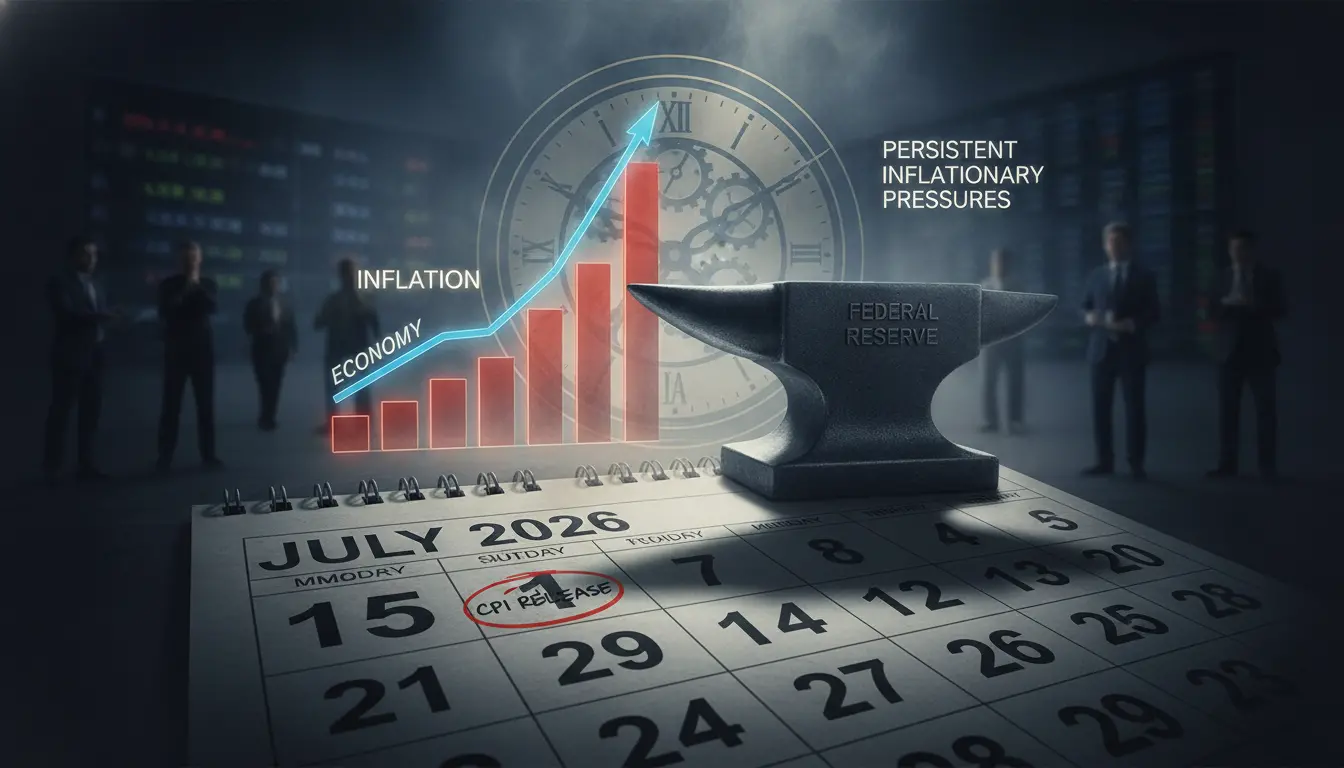
Federal Reserve Focuses on July 2026 CPI Amid Persistent Inflationary Pressures
Supreme Court Poised for Potential Review of Birthright Citizenship Under 14th Amendment

Advocacy Groups Prepare New Challenges to Supreme Court Asylum Decision
Federal Court Blocks Trump Executive Order on Voter Lists and Mail Ballots, Administration Vows Appeal

US Wage Growth Trajectory for 2026 Under Scrutiny Amid Inflation Concerns