

- News
- Politics
- Potential Trump Administration Eyes Significant Economic Sanctions Escalation Against Iran
Potential Trump Administration Eyes Significant Economic Sanctions Escalation Against Iran
A potential return of a Trump administration to the White House is signaling a significant recalibration of U.S. policy towards Iran, with strong indications of a renewed emphasis on stringent economic sanctions. Despite recent, limited waivers concerning Iranian oil exports, past rhetoric and the former president's stated views suggest a dramatic shift from current approaches, potentially reigniting a "maximum pressure" campaign designed to curtail Tehran's nuclear ambitions and regional influence. The prospect of an escalated economic offensive looms as a critical foreign policy consideration, with profound implications for global energy markets, Middle East stability, and the future of international diplomacy concerning Iran's controversial nuclear program.
During his previous term, Donald Trump notably withdrew the United States from the Joint Comprehensive Plan of Action (JCPOA) in 2018, deeming the multilateral nuclear accord insufficient. This move was swiftly followed by the re-imposition and expansion of U.S. sanctions, targeting key sectors of the Iranian economy, including oil exports, banking, and shipping. The stated aim of this "maximum pressure" campaign was to compel Iran to negotiate a new, more comprehensive deal that would address not only its nuclear activities but also its ballistic missile program and support for regional proxy groups. While the policy severely impacted Iran's economy, leading to widespread hardship and currency depreciation, it did not lead to a new agreement and arguably fueled greater Iranian assertiveness in the region.
The current U.S. administration has largely maintained the comprehensive sanctions framework inherited from its predecessor, but has also implemented certain waivers, notably concerning Iranian oil exports, which have allowed a degree of trade to continue with specific partners. This approach has been seen by some as an attempt to de-escalate tensions and provide some economic relief, or at least avoid further destabilization, while still containing Iran. However, the backdrop remains one of heightened regional tension, with Iran continuing to advance its uranium enrichment activities—now closer than ever to weapons-grade levels—and its network of proxy forces remaining active across the Middle East, from Lebanon and Syria to Yemen.
The prospect of renewed and expanded sanctions under a new administration would inevitably draw strong reactions from a diverse array of international actors. Allies such as Israel and Saudi Arabia, long advocating for a tougher stance against Iran's regional aggression and nuclear ambitions, would likely welcome such a move. Conversely, European nations, who often prioritize diplomatic engagement and the preservation of the JCPOA, could find themselves at odds with Washington, potentially complicating transatlantic relations and forcing difficult choices for businesses trading with Iran. The challenge for any U.S. administration lies in balancing the desire to exert pressure with the need to maintain a united front among global powers and prevent outright conflict.
Economically, a significant escalation of sanctions would place immense strain on Iran's already struggling economy. Further restrictions on oil exports, which remain a primary source of national revenue, would severely limit the government's ability to fund public services and maintain stability, potentially sparking internal dissent. Globally, a drastic reduction in Iranian oil supply could send ripples through international energy markets, driving up prices and impacting global inflation, a concern for major economies reliant on stable energy supplies. Furthermore, international companies and financial institutions would face increased scrutiny and potential penalties for any dealings with sanctioned Iranian entities, raising the stakes for global supply chains and trade.
The trajectory of U.S.-Iran relations, therefore, hinges precariously on future political developments and policy choices. A return to an aggressive sanctions posture would test the limits of Iran's resilience and further entrench the standoff, making diplomatic breakthroughs even more challenging. The coming period promises intense debate over the efficacy of such measures and the broader strategy for managing a volatile and strategically critical region. The international community will watch closely as the U.S. contemplates its next steps in a long-standing and complex geopolitical rivalry with Tehran.
Stay Informed. Act Smarter.
Get weekly highlights, major headlines, and expert insights — then put your knowledge to work in our live prediction markets.
Related News
President Trump Poised to Announce New Iran Sanctions Amid Escalating Regional Tensions
Washington Faces Renewed Calls to Toughen Sanctions on Iran's Nuclear Program
Former President Trump's Past Iran Rhetoric Signals Potential for Escalated Future Tensions
Washington Considers Full Reinstatement of Iran Oil Sanctions Amid Deepening Regional Tensions
Former President Trump Threatens Renewed US Military Action Against Iran Amid Escalating Regional Tensions
Trump's 'Massive Attack' Rhetoric on Iran Stokes Fears of Renewed Middle East Conflict

US-Iran Tensions Escalate Amid Renewed Rhetoric, Raising Specter of Direct Confrontation
U.S. Considers Strategic Military Options Amid Heightened Tensions in Strait of Hormuz
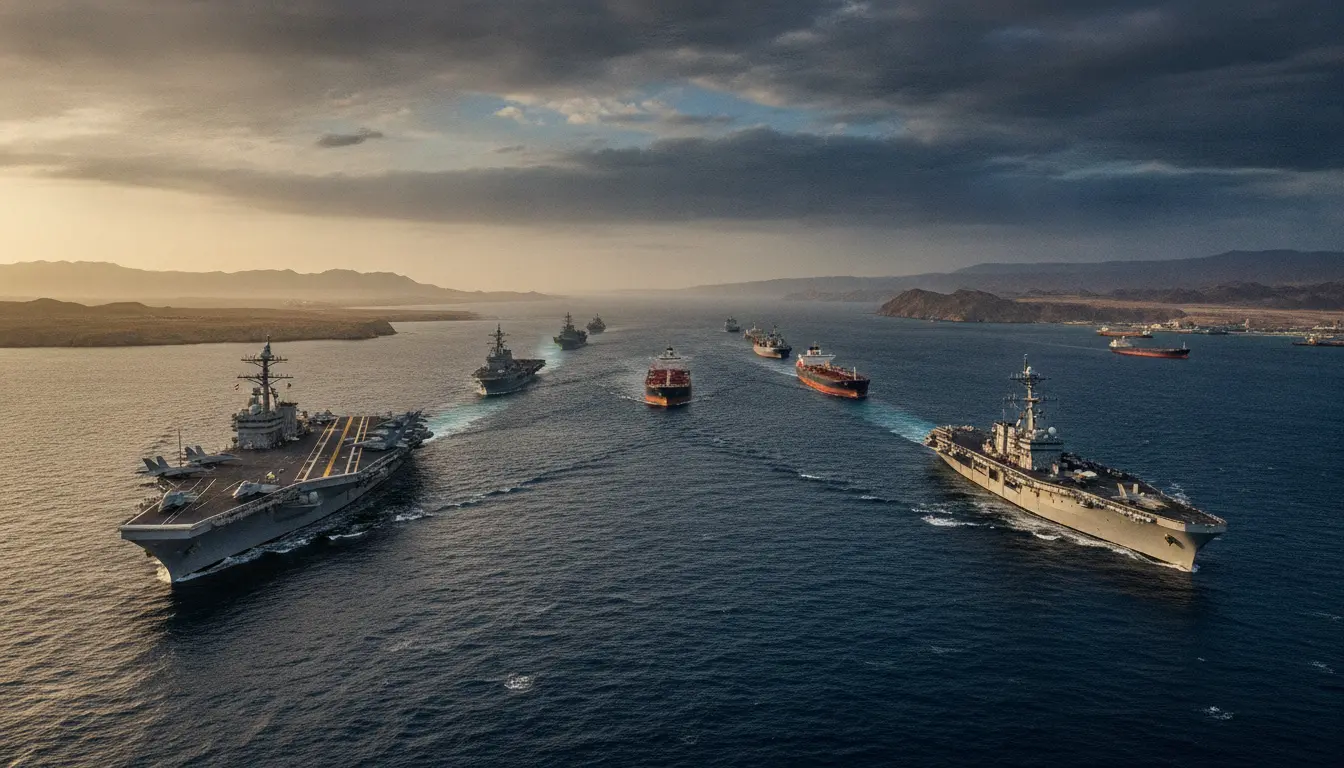
U.S. Considers Naval Blockade in Strait of Hormuz Amid Escalating Tensions with Iran

Future of US-Iran Diplomacy Under Scrutiny Amid Reports of Potential High-Level Talks