Politicsconflict & defenseMilitary Operations
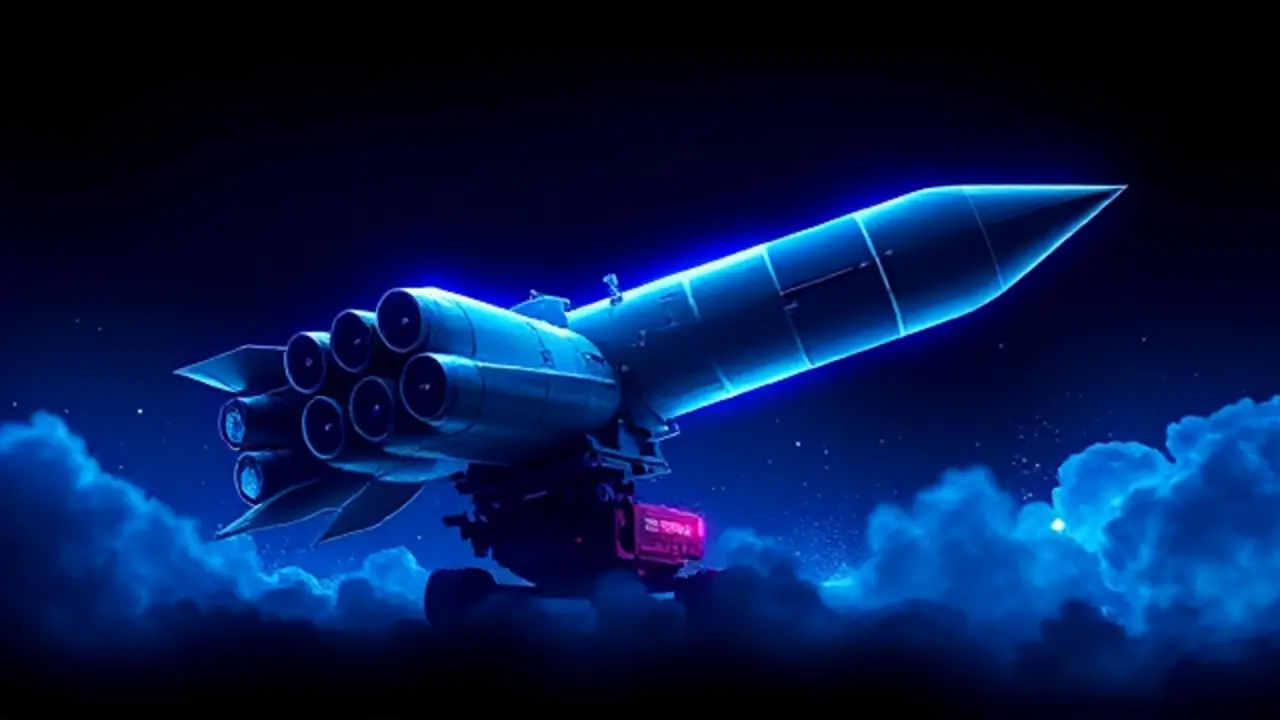
North Korea displays new large Hwasong-20 missile.
The recent unveiling of North Korea's Hwasong-20 missile represents more than a mere incremental upgrade in its arsenal; it is a calculated escalation in a high-stakes geopolitical gambit that demands a thorough risk assessment. The missile's substantial size, a key detail immediately noted by analysts, is not just for show—it strongly suggests a payload capacity designed for multiple independent reentry vehicles (MIRVs), a technology that would fundamentally alter the strategic calculus on the Korean Peninsula.To understand the gravity of this development, one must consider the historical context: North Korea's ballistic missile program has evolved from crude Scud derivatives to intercontinental-range weapons in a matter of decades, a trajectory marked by repeated testing bans, failed summits, and a relentless pursuit of a credible nuclear deterrent against what it perceives as existential threats from the United States and its allies. This new system, potentially capable of deploying several nuclear warheads across separate trajectories to overwhelm sophisticated defense systems like the U.S. -deployed THAAD in South Korea or Aegis Ashore, signals a move from a basic deterrent to a more sophisticated, first-strike capable posture.The immediate scenario this presents is a regional arms race accelerating at a dizzying pace, forcing South Korea and Japan to reconsider their own defense postures and potentially spurring further advancements in their own missile capabilities or even nuclear proliferation debates. From a global risk perspective, this development complicates an already volatile security environment, intersecting with ongoing tensions between major powers.A MIRV-equipped North Korea diminishes the efficacy of U. S.extended deterrence guarantees, creates new challenges for Chinese regional stability calculations, and provides a dangerous playbook for other aspirational nuclear states. Expert commentary from arms control analysts, such as those at the James Martin Center for Nonproliferation Studies, often points to the chilling precedent this sets, effectively dismantling the long-held goal of denuclearization and locking in a new, more perilous status quo of managed confrontation.The potential consequences are multifaceted: in a low-probability but high-impact scenario, a miscalculation during a future crisis—a failed satellite launch misinterpreted as an attack, or a cyber operation against command and control systems—could trigger a chain reaction with catastrophic outcomes. The Hwasong-20 is not just a new weapon; it is a tangible manifestation of a deteriorating international security architecture and a stark reminder that in the calculus of political risk, the most dangerous shocks often emerge from the persistent, slow-burn crises the world has learned to live with, until it can no longer.
#hottest news
#North Korea
#Hwasong-20
#missile
#military parade
#nuclear warheads
#ICBM