

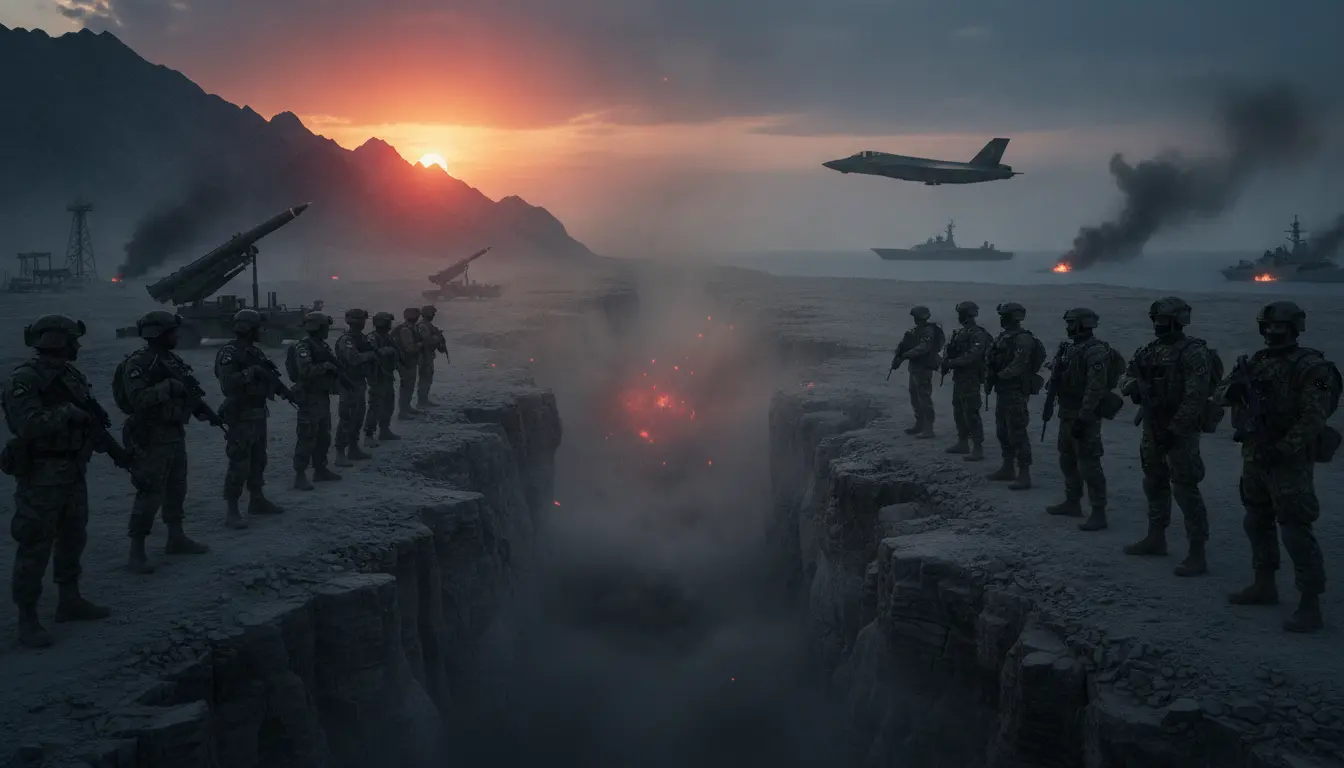
Middle East Tensions Soar Amid Warnings of Direct Iran-US Military Confrontation
The Middle East is gripped by heightened fears of a direct military confrontation between Iran and the United States, as recent retaliatory strikes and ongoing provocations push the long-standing animosity to a critical new phase. A series of incidents, notably attacks on commercial shipping in vital waterways like the Strait of Hormuz and the Red Sea, have drawn forceful responses from Washington, raising the specter of a wider conflict with profound regional and global implications.
The current escalation is rooted in a complex interplay of historical grievances, regional power struggles, and strategic miscalculations. For decades, the relationship between Tehran and Washington has been characterized by deep mistrust, stemming from the 1979 Iranian Revolution, the subsequent hostage crisis, and enduring disagreements over Iran's nuclear program and its extensive network of proxy forces across the Middle East. US sanctions have long aimed to curb Iran’s influence and nuclear ambitions, yet Tehran has consistently demonstrated its capacity to project power through various asymmetric means, often employing groups like the Houthis in Yemen, Hezbollah in Lebanon, and various militias in Iraq and Syria.
The immediate trigger for the latest surge in tensions includes a spate of attacks on commercial vessels, which the US and its allies attribute to Iranian-backed entities. These aggressions, particularly in the critical Strait of Hormuz – a choke point for global oil shipments – and the Red Sea, have prompted a robust American and allied military presence. The US has openly conducted targeted strikes against Iranian Revolutionary Guard Corps (IRGC) facilities and allied militia infrastructure in regions like Syria and Iraq, framing these actions as necessary responses to safeguard maritime security and protect US personnel and interests in the region. Each retaliatory move, however, risks further entangling the two powers in a cycle of escalation that is increasingly difficult to contain.
Iran’s strategy appears multifaceted: it seeks to undermine US influence, pressure Washington to ease sanctions, and assert its dominance within its immediate sphere. The attacks on shipping lanes, while not always directly attributed to Iran itself, serve as a potent reminder of its capacity to disrupt global trade and potentially trigger economic instability, particularly in energy markets. Furthermore, by supporting proxy groups, Tehran maintains a degree of deniability while effectively challenging the existing regional security architecture and demonstrating its reach across the Levant and the Arabian Peninsula. The ongoing war in Gaza has also created a fertile ground for these proxy activities, with groups linking their actions to the Palestinian cause, further complicating de-escalation efforts.
The stakes in this increasingly volatile environment are exceptionally high. A direct military engagement between Iran and the US, or even sustained high-intensity proxy warfare, could devastate the regional economy, disrupt global energy supplies, and trigger a refugee crisis. It would also severely test international diplomacy and alliances, potentially drawing in other regional powers such as Saudi Arabia and Israel, who view Iran as a primary threat to their security. Both Washington and Tehran face the delicate task of balancing deterrence with de-escalation, aiming to project strength without inadvertently triggering a full-scale conflict.
Amidst the military maneuvers and political rhetoric, a clear diplomatic off-ramp remains elusive. International calls for restraint continue, but concrete steps towards dialogue appear limited, overshadowed by mutual accusations and entrenched positions. The absence of direct communication channels at high levels further exacerbates the risk of miscalculation, where a localized incident could quickly spiral out of control. As both sides continue to test each other’s resolve, the prospect of a more direct, high-stakes military confrontation looms large over the geopolitical landscape, demanding urgent attention from global policymakers.
Ultimately, the current trajectory points towards a sustained period of elevated tension and the ever-present threat of kinetic action. The region remains a powder keg, with the potential for any significant incident to ignite a broader conflict. The international community watches closely, aware that the consequences of a direct clash between these two formidable adversaries would reverberate far beyond the Middle East, impacting global security and economic stability for years to come.
Stay Informed. Act Smarter.
Get weekly highlights, major headlines, and expert insights — then put your knowledge to work in our live prediction markets.
Related News
Analysts Warn of Growing Risk for Direct Iran-US Military Engagements
U.S. Raises Threat Level as Iranian Actions Escalate Tensions in Strait of Hormuz
US Bolsters Presence in Strait of Hormuz Amid Escalating Tensions with Iran

Anticipation Builds for Highly Competitive Best Drama Series Race at 78th Primetime Emmy Awards in 2026

Matt Damon Crashes 'Jimmy Kimmel Live!' in a Trojan Horse to Troll Him: 'I Did It!'