

Politics
Lawrence Wright Reviews Liebling's Classic Political Profile of a Louisiana Governor
RO
Robert Hayes
6 months ago7 min read
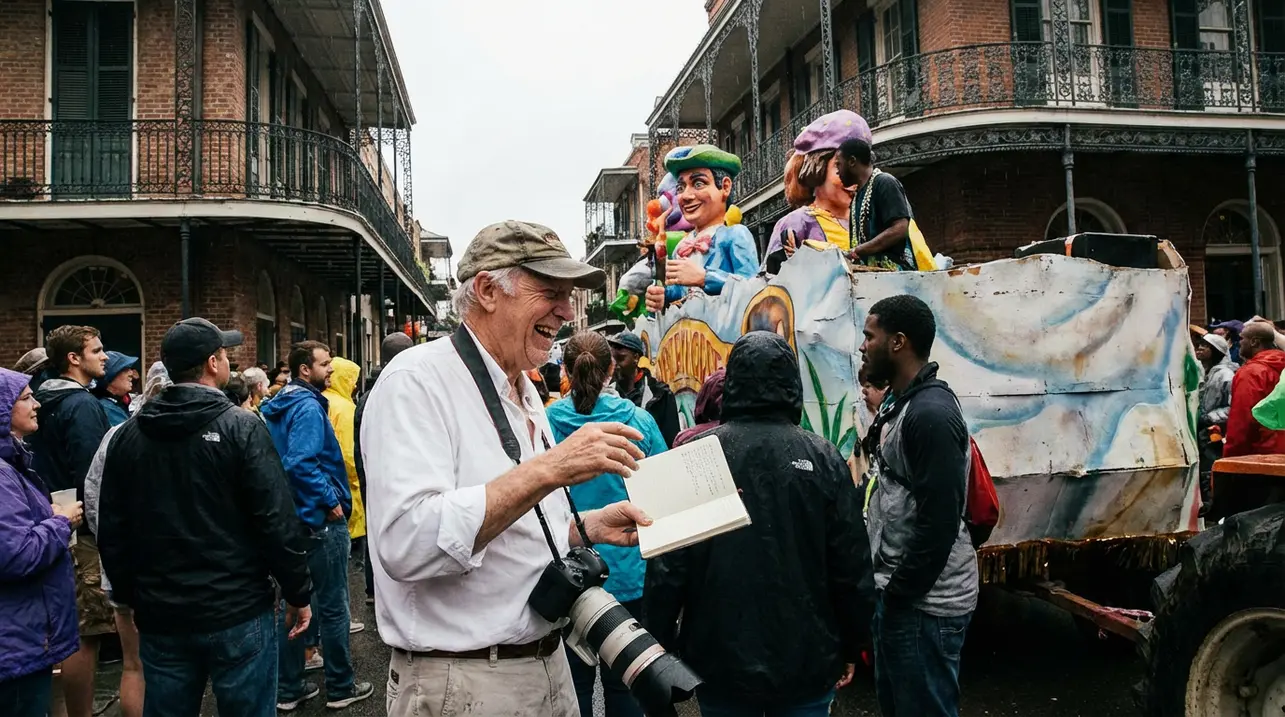
In the annals of American political journalism, few profiles have endured with the penetrating clarity of A. J.Liebling’s portrait of a Louisiana governor. While the surface is undeniably rich with the humor and grotesquerie endemic to the state’s politics, Liebling’s genius lay in his refusal to let the spectacle obscure the substance.He recognized the governor not merely as a regional caricature or political buffoon, but as a formidable operator whose methods, however unorthodox, revealed deeper truths about power, populism, and the American electorate. This critical insight—the ability to see the strategic calculus beneath the carnival—is what elevates the piece from a period piece to a classic, a masterclass in understanding that the most effective political power often resides in the deliberate cultivation of an image that the coastal elite is all too eager to dismiss.Liebling understood that in the theater of Louisiana politics, the governor was both the lead actor and the shrewd director, using humor and a carefully constructed persona as instruments of control, a tactic with historical parallels reaching back to the Roman practice of ‘panem et circenses’ or the folksy, yet iron-willed, populism of a Andrew Jackson. The piece serves as a vital corrective to a perennial journalistic failing: the tendency to conflate stylistic flamboyance with a lack of seriousness.In today’s political landscape, where personality-driven campaigns and media narratives often overshadow policy, Liebling’s approach is more relevant than ever. A modern analyst, observing similar figures who dominate the news cycle through provocation and performance, would do well to apply Liebling’s lens—to ask not just ‘what is this spectacle?’ but ‘what purpose does this spectacle serve?’ The governor’s legacy, filtered through Liebling’s prose, challenges us to consider how democratic systems accommodate, and are sometimes shaped by, leaders who master the symbols and sentiments of their constituents, often speaking a language unintelligible to the traditional political press corps.It was a profile built not on condemnation or mockery, but on a clear-eyed analysis of efficacy within a specific cultural and economic context, reminding us that political power is rarely about who appears most ‘presidential’ in a conventional sense, but about who most effectively channels the hopes, resentments, and identities of the voters. In this, Liebling’s work stands alongside the foundational political analyses of thinkers like Richard Hofstadter, who explored the ‘paranoid style’ in American politics, or the on-the-ground reporting of a Norman Mailer. The piece’s endurance is a testament to its foundational truth: to understand American politics in its full, messy complexity, one must occasionally venture into the provinces, where the rules of the game are written differently, and where a laugh can sometimes be the sharpest weapon in a politician’s arsenal.
#editorial picks news
#A. J. Liebling
#The Great State
#Louisiana
#governor
#political analysis
#classic journalism
Stay Informed. Act Smarter.
Get weekly highlights, major headlines, and expert insights — then put your knowledge to work in our live prediction markets.
Related News
Comments
It's quiet here...Start the conversation by leaving the first comment.