

Politics
Lawrence Wright Reviews A.J. Liebling's Classic Political Reporting on Louisiana
RO
Robert Hayes
6 months ago7 min read
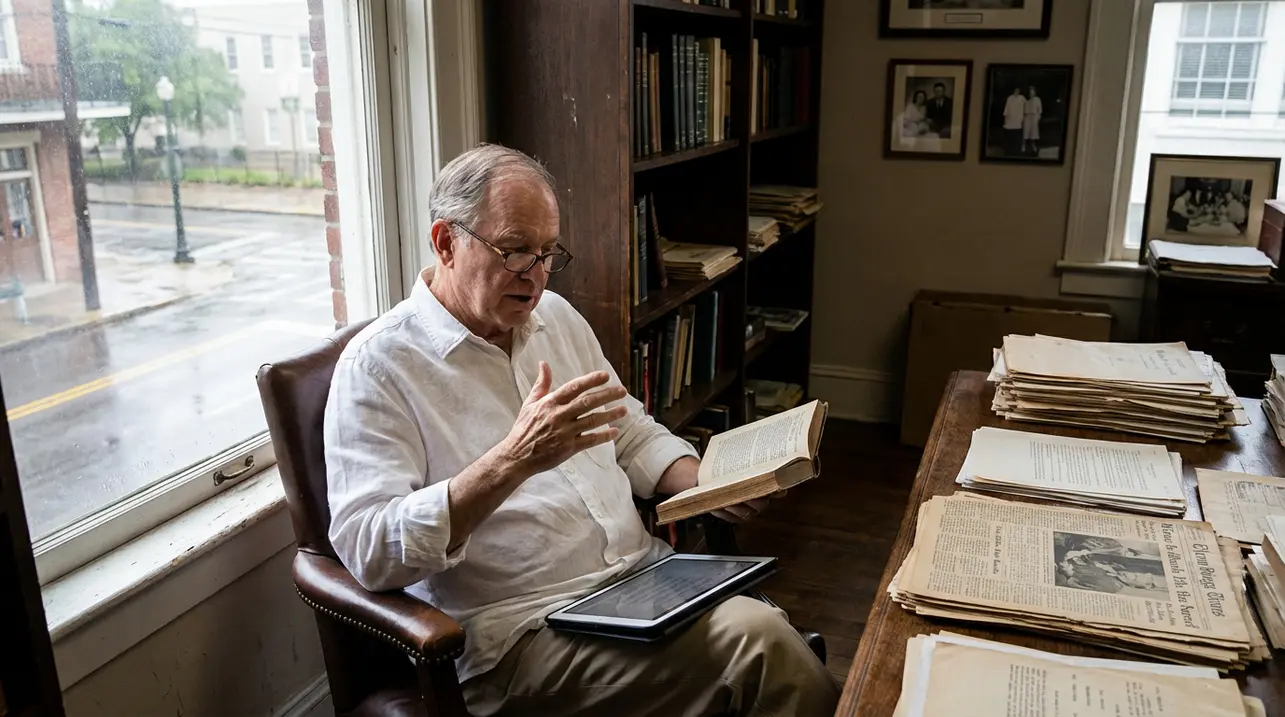
In the annals of American political journalism, few pieces have managed to dissect the intricate, often grotesque theater of state politics with the precision and lasting insight of A. J.Liebling’s classic reporting on Louisiana. Lawrence Wright’s recent review rightly underscores the core of Liebling’s genius: his ability to peer beyond the surface-level buffoonery and recognize the formidable, even dangerous, political machinery at work.For Liebling, covering the antics of figures like Governor Earl K. Long wasn’t merely an exercise in caricature; it was a forensic study of power, populism, and the peculiar vulnerabilities of democracy in a one-party state.His work, primarily for *The New Yorker*, transcended mere reportage to become a seminal text on how personality, patronage, and performative outrage could coalesce into an effective, if deeply flawed, governance model. Liebling arrived in Louisiana during a pivotal era, a period where the Long dynasty’s shadow still stretched across the bayous.While Huey Long, the Kingfish, had been assassinated in 1935, his brother Earl inherited not just a political organization but a playbook that blended radical economic populism with ruthless, often comic, personal authority. Where other national correspondents might have filed a series of colorful anecdotes about the governor’s notorious public outbursts or his battles with the state legislature, Liebling engaged in a deeper analysis.He understood that the clownish exterior was a deliberate tactic, a smokescreen that disarmed critics and endeared him to a rural, disenfranchised electorate that felt seen by his unvarnished, if volatile, persona. This insight—that the buffoon was a strategic operator—is what elevates the work from period piece to perennial classic.It prefigured modern political analysis that grapples with figures who weaponize perceived gaffes and chaos to consolidate a base. Liebling’s prose, elegant and sharp, never condescended to its subject nor to the reader.He mapped the connections between the courthouse gangs, the oil interests, and the racial politics that simmered beneath the era’s loud debates. He placed Louisiana’s unique political culture within a broader American context, drawing subtle parallels to urban political machines in the North, yet highlighting the distinctly Southern blend of paternalism and rebellion.In doing so, he provided a template for understanding not just Louisiana, but the rise of charismatic, anti-institutional figures anywhere. The piece’s endurance speaks to a fundamental truth in political reporting: the most memorable work isn’t that which simply records events, but that which decodes the underlying systems and motivations.In today’s media landscape, saturated with real-time commentary and reactive analysis, Liebling’s model of immersive, historically-grounded, and stylistically distinguished reporting remains the gold standard. Wright’s review serves as a timely reminder of this legacy, urging contemporary journalists to look past the spectacle and, as Liebling did, identify the substantive architecture of power, however outlandish its facade may appear.
#featured
#Louisiana
#political journalism
#A.J. Liebling
#The Great State
#governors
#classic reporting
#Lawrence Wright
Stay Informed. Act Smarter.
Get weekly highlights, major headlines, and expert insights — then put your knowledge to work in our live prediction markets.
Related News
Comments
It's quiet here...Start the conversation by leaving the first comment.