

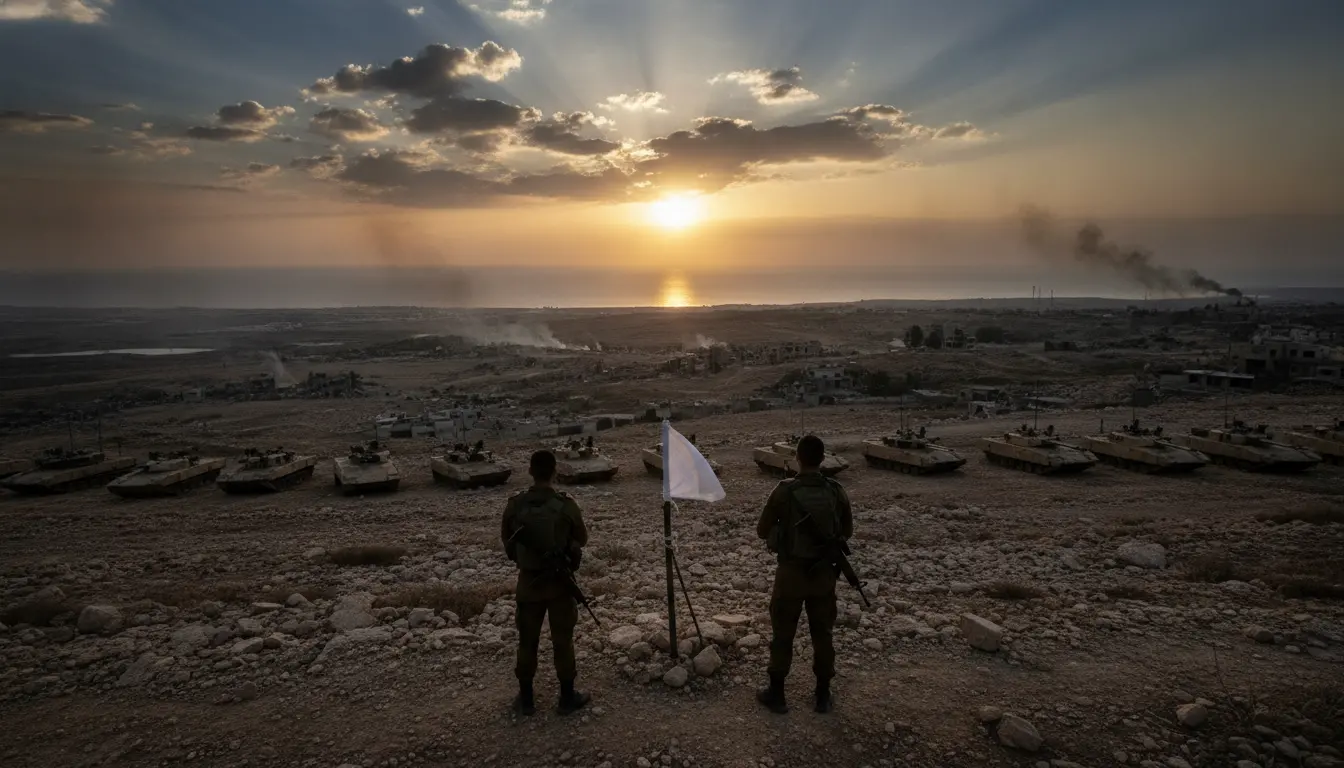
Israel and Hezbollah Announce Ceasefire Amidst Ongoing Regional Volatility
A significant development emerged on July 1, 2026, as Reuters reported a ceasefire agreement between Israel and Hezbollah, signaling a potential, albeit fragile, pause in the escalating cross-border hostilities that have gripped the region. The reported agreement comes after weeks, if not months, of intense exchanges that have threatened to spiral into a broader conflict, displacing thousands and raising alarms across international capitals. While the immediate details of the accord remain guarded, its announcement has injected a cautious optimism into a Middle East frequently destabilized by proxy confrontations and deep-seated animosities. The true test, however, lies in its sustained adherence by both parties, an outcome that past experiences suggest is far from guaranteed given the complex geopolitical landscape.
The history of confrontation between Israel and Hezbollah is long and often brutal, marked by significant clashes, most notably the 2006 Lebanon War. That conflict, which lasted 34 days, resulted in widespread destruction in Lebanon, hundreds of casualties on both sides, and a fragile UN-brokered truce. Hezbollah, a powerful Shi'ite political party and militant group in Lebanon, views itself as a resistance movement against Israeli occupation and is heavily backed by Iran, serving as a critical proxy in Tehran's regional influence strategy. For Israel, Hezbollah represents a formidable security threat on its northern border, possessing a vast arsenal of rockets and advanced weaponry capable of reaching deep into Israeli territory. The intermittent flare-ups since 2006 have underscored the persistent tension, often triggered by events elsewhere in the region, particularly developments concerning Iran, Syria, or the Palestinian territories.
The immediate period preceding this reported ceasefire saw a sharp increase in hostilities along the Israel-Lebanon border. Both sides had been engaged in daily exchanges of fire, including rocket attacks, drone incursions, and targeted strikes. Residential areas in northern Israel and southern Lebanon bore the brunt of these attacks, leading to civilian casualties, widespread property damage, and the internal displacement of populations on both sides. International observers had voiced grave concerns that the situation was teetering on the brink of an all-out war, potentially drawing in other regional actors and further destabilizing an already volatile Middle East. Diplomatic efforts, often conducted behind the scenes by countries such as the United States, France, and Qatar, had been intensifying in recent weeks to de-escalate the situation and prevent a full-scale conflagration.
The current ceasefire agreement, if it holds, reflects a mutual interest in avoiding the devastating consequences of a full-blown war, at least for now. For Israel, a protracted conflict with Hezbollah would stretch its military resources and potentially open another front while it navigates other security challenges. For Hezbollah and Lebanon, another major conflict could cripple an already struggling Lebanese economy and infrastructure, further exacerbating humanitarian crises. The terms of the agreement likely involve a halt to all offensive operations, potentially a withdrawal of forces from certain border areas, and possibly enhanced monitoring mechanisms by the United Nations Interim Force in Lebanon (UNIFIL). The role of international guarantors will be crucial in ensuring compliance and mediating any potential breaches.
However, the path to lasting peace remains fraught with challenges. The deep-seated mistrust between Israel and Hezbollah, coupled with the latter's ideological commitment to resistance and its external allegiances, makes any truce inherently precarious. Hardline elements within both camps could exploit minor incidents to reignite tensions, while regional events, such as ongoing developments in the Gaza Strip or renewed pressures on Iran, could easily spill over and undermine the agreement. The lack of a comprehensive political settlement addressing the root causes of the conflict means that any ceasefire, while welcome, serves as a temporary measure rather than a definitive resolution. Its short-term durability hinges on constant vigilance, robust diplomatic engagement, and the political will of all parties to prioritize de-escalation over confrontation.
The coming weeks will be a critical test for the reported agreement. Should it endure, it could pave the way for more substantive diplomatic efforts aimed at establishing a more stable security arrangement along the border and potentially even broader de-escalation across the wider Middle East. Conversely, a rapid breakdown of the ceasefire would plunge the region back into a heightened state of alert, with potentially catastrophic consequences. The world watches cautiously, hoping that this pause in hostilities can be sustained and built upon, offering a glimmer of hope amidst persistent regional strife.
Stay Informed. Act Smarter.
Get weekly highlights, major headlines, and expert insights — then put your knowledge to work in our live prediction markets.
Related News
Fragile Israel-Hezbollah Ceasefire Under Intense International Scrutiny

Israel and Hezbollah Agree to Ceasefire Amid Intensified US-Iran Diplomatic Push
Renewed Israeli Military Strikes in Lebanon Jeopardize Regional Stability and US-Iran Diplomacy

US and Iran Reach Fragile Ceasefire Agreement in Strategically Critical Strait of Hormuz

US and Iran Agree to Extend Ceasefire Until August 2026 Amid Persistent Tensions
Mounting Tensions Between Israel and Iran Fuel Fears of Broader Regional Conflict

US and Iran Strive to Maintain Fragile De-escalation Amid Persistent Regional Tensions

US and Iran Navigate Fragile Cease-Fire Amid Heightened Tensions
Escalating US-Iran Military Confrontation Spurs Calls for Formal Ceasefire

Iran war live: Vance heads to Switzerland; Israel kills 16 in Lebanon