

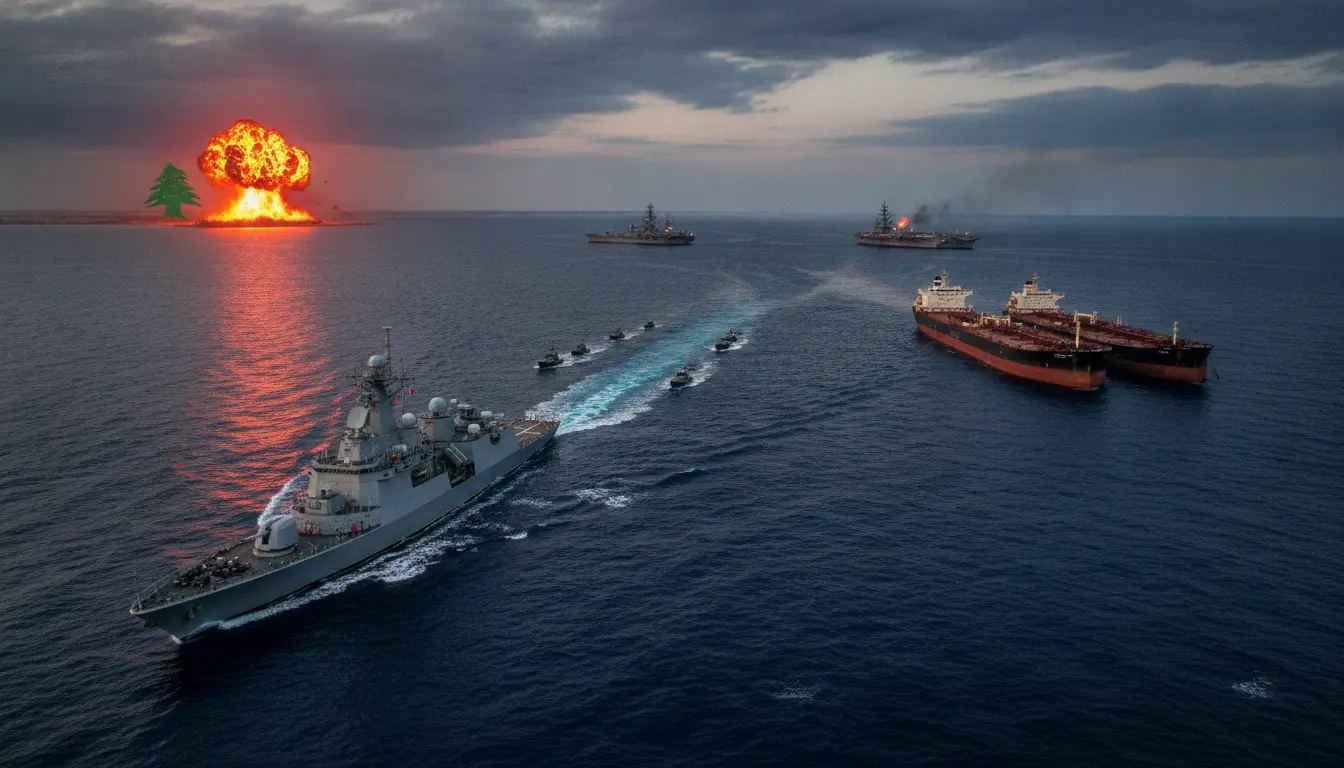
Iran says it's closing Strait of Hormuz, citing Israeli strikes on Lebanon
Iran's top joint military command issued a stark warning on Saturday, announcing its intention to close the Strait of Hormuz, a pivotal global waterway for oil shipments, in response to what it described as ongoing Israeli military operations in Lebanon. The dramatic pronouncement from the Khatam al-Anbiya Central Headquarters, a central command for Iran's armed forces, directly linked the potential closure to Israeli strikes targeting Iran-backed Lebanese militia Hezbollah, arguing these actions constitute a breach of an existing ceasefire agreement between the United States and Iran. This threat immediately raised concerns across international markets and diplomatic circles, highlighting the volatile nature of Middle Eastern geopolitics and the immense strategic importance of the Strait.
The assertion by Tehran that Israeli attacks violated a ceasefire agreement adds another layer of complexity to an already tense regional dynamic. While specific details of the alleged U.S.-Iran ceasefire agreement remain opaque in the context of recent hostilities, Iran's military leadership explicitly stated that the Israeli targeting of Hezbollah positions in Lebanon contravened understandings established to de-escalate wider regional conflicts. The Strait of Hormuz, a narrow passage connecting the Persian Gulf with the Arabian Sea and beyond, is arguably the world's most critical chokepoint for oil transit, with an estimated 20% of global oil consumption passing through its waters daily. Any disruption to this artery would inevitably send shockwaves through the global economy, impacting energy prices and international trade routes.
Threats to close the Strait of Hormuz are not new to the geopolitical landscape, having been periodically invoked by Iran during moments of heightened tension with Western powers or regional adversaries. Such declarations historically serve as a potent tool of deterrence and a demonstration of leverage, underscoring Iran's capacity to disrupt global energy supplies. The strategic vulnerability of the Strait lies in its geographical confines, being only about 21 miles wide at its narrowest point, with the shipping lanes themselves just two miles wide in either direction. While Iran controls the northern flank, its southern shores face Oman, with international maritime law theoretically guaranteeing free passage. However, in practice, Iran possesses the naval capabilities to severely impede or halt traffic, risking a direct confrontation with international naval forces often deployed to ensure maritime security in the region.
The intricate web of alliances and antagonisms in the Middle East positions Hezbollah as a key proxy for Iran in its broader contestation with Israel and the United States. Hezbollah, a powerful political party and militant group in Lebanon, has been a central player in various conflicts with Israel, frequently engaging in cross-border skirmishes. Israeli strikes against Hezbollah are often described as preemptive measures to degrade the group's capabilities or retaliatory actions following rocket fire or other provocations. Iran's decision to link these specific strikes to the Strait of Hormuz underscores its perceived role as the regional hegemon and its willingness to escalate beyond the immediate conflict zone, drawing a direct line between Israeli actions against its allies and potential repercussions for global commerce and stability.
The immediate fallout from such a closure, if implemented, would be catastrophic. Global oil prices would surge, supply chains would be disrupted, and maritime insurance rates would skyrocket, plunging the world economy into significant uncertainty. Beyond economic implications, a move to close the Strait would represent a dramatic escalation, almost certainly provoking a robust military response from the United States and its allies, who have consistently maintained that ensuring freedom of navigation through the Strait is a top priority. The international community would be forced to grapple with a profound challenge to global maritime law and the potential for a full-scale military conflict in one of the world's most volatile regions. The current Iranian threat, therefore, serves as a high-stakes geopolitical gambit, testing the resolve of its adversaries and signalling a willingness to employ extreme measures.
This latest development must be understood within the broader context of persistent tensions in the Middle East, which have been exacerbated by regional conflicts and a fragile diplomatic landscape. The stated ceasefire agreement between the U.S. and Iran, which Iran now claims has been violated, hints at behind-the-scenes efforts to manage potential flare-ups that often spiral out of control. By invoking the Strait of Hormuz, Iran aims to elevate the stakes, compelling international attention and potentially pressing the U.S. to rein in Israeli military actions against its proxies. It is a strategic move designed to reassert Iran's influence and demonstrate its capacity to inflict economic pain globally, a calculated maneuver that adds another layer of unpredictability to an already combustible region. The world now watches to see whether this threat remains rhetorical or precipitates a dangerous new phase of confrontation.
Stay Informed. Act Smarter.
Get weekly highlights, major headlines, and expert insights — then put your knowledge to work in our live prediction markets.
Related News
US and Iran Intensify Standoff for Control of Vital Strait of Hormuz
US-Canada Trade War Escalates as Trump Signs Order to Rename Lake Ontario

OpenAI Reportedly Offers U.S. Government 5% Stake Amid Regulatory Pressures

Outpoll Weekly Recap: Finance (August 10 – 16, 2026)

Stripe Reportedly Nearing $7 Billion Acquisition of AI Infrastructure Firm OpenRouter

OpenAI Reportedly Pursues $42 Billion Investment from Potential Trump Administration

Outpoll Weekly Recap: Entertainment (June 22 – 28, 2026)

Outpoll Weekly Recap: AI (August 17 – 23, 2026)

Nvidia Reportedly Nears $13 Billion Acquisition of AI Platform Hugging Face

Outpoll Weekly Recap: AI (July 13 – 19, 2026)