

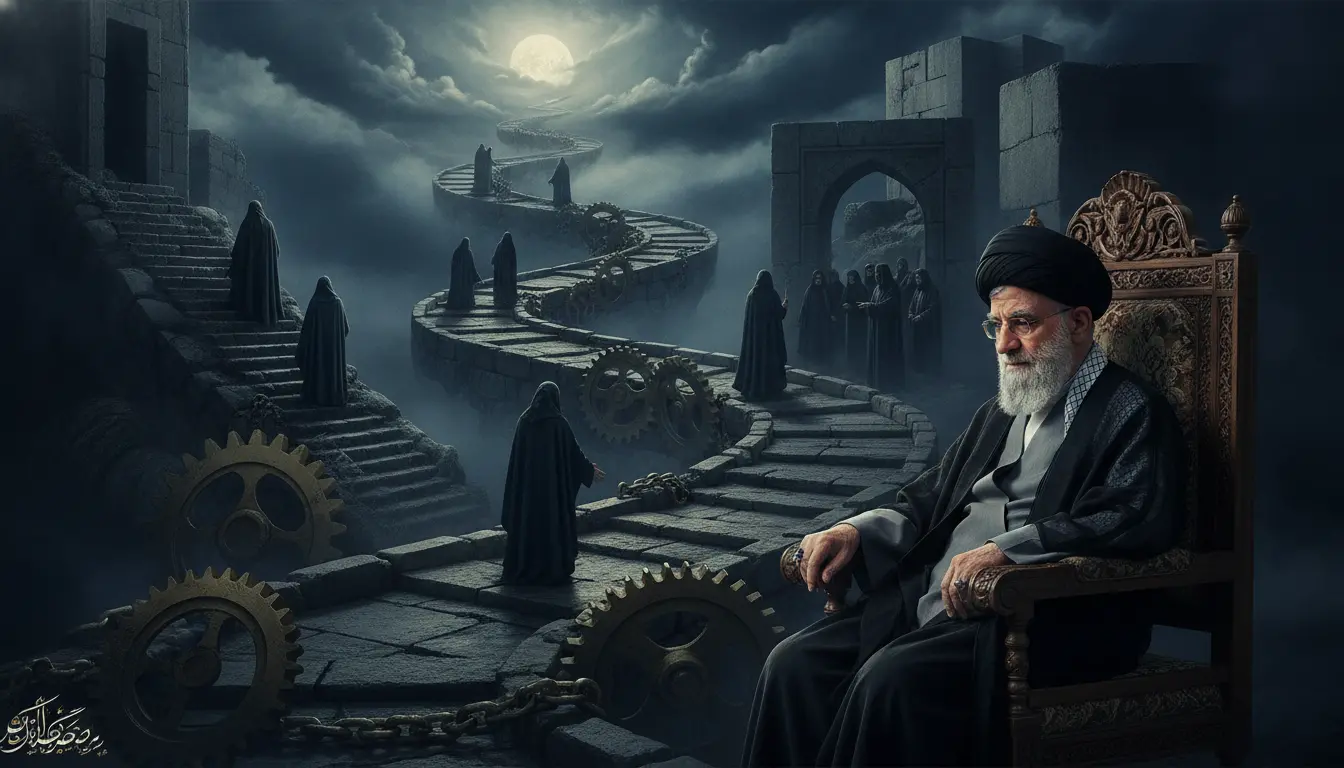
Iran Navigates Complex Succession Path for Next Supreme Leader
The question of who will eventually succeed Supreme Leader Ali Khamenei stands as one of the most critical and delicate issues facing Iran's political establishment. With Khamenei, 85, having led the Islamic Republic for over three decades, his advanced age and past health concerns have consistently focused attention on the opaque process by which his successor will be chosen, a process further complicated by recent high-profile deaths within the political elite.
The Supreme Leader holds ultimate authority in Iran, overseeing all major state affairs, including domestic and foreign policy, the judiciary, and the armed forces. This makes the selection of the next leader not merely a change in personnel but a potential pivot point for the nation's ideological direction and geopolitical standing. Unlike many other nations with clear lines of succession, Iran's system relies on an elected body, the Assembly of Experts, to identify and appoint the individual best suited to embody the spiritual and political leadership of the Islamic Republic.
The Assembly of Experts, comprised of 88 high-ranking Shia clerics, is constitutionally tasked with selecting the Supreme Leader. Its members are themselves elected to eight-year terms by public vote, though all candidates must first be vetted and approved by the Guardian Council, a powerful body also under the influence of the current Supreme Leader. This intricate web of vetting and selection ensures that only individuals deemed fully aligned with the principles of the Islamic Revolution can even contend for a seat in the Assembly, thereby maintaining a consistent conservative ideological bent within the institution responsible for choosing the nation's paramount leader.
The criteria for the Supreme Leader are demanding: he must be a jurisprudent (faqih), a source of emulation (marja), politically astute, and capable of governing. Historically, the selection process is shrouded in secrecy, involving extensive deliberations and political maneuvering behind closed doors. The unexpected death of President Ebrahim Raisi in a helicopter crash in May 2024 significantly altered the succession landscape. Raisi, a hardline cleric, had been widely considered a frontrunner, often positioned as a potential successor due to his close ties to Khamenei and his rapid ascent through judicial and executive ranks. His demise has left a void and opened up possibilities for other figures, including Mojtaba Khamenei, the Supreme Leader's influential son, whose potential candidacy has long been a subject of intense speculation and debate within Iran, given the inherent tensions around hereditary succession in a revolutionary system.
Other prominent figures potentially in contention include influential clerics and former officials, though their public profiles and perceived ideological purity are constantly weighed by the inner circles. The dynamics involve not only theological credentials but also the intricate power balances between various conservative factions and institutions, including the Revolutionary Guard Corps. The next Supreme Leader will inherit a nation grappling with persistent economic challenges, widespread social discontent, and complex regional and international pressures, including the ongoing nuclear program and strained relations with the West.
The period leading up to any eventual transition is therefore characterized by subtle power plays, quiet endorsements, and the careful positioning of potential candidates by various political blocs. The ultimate decision will reflect a consensus among the most influential hardline factions and will likely aim to preserve the stability and core principles of the Islamic Republic. Observers anticipate that the individual chosen will be a figure capable of maintaining the current trajectory of Iran's internal and external policies, while also commanding sufficient religious and political legitimacy to unite the disparate conservative elements within the ruling establishment.
While the exact timing of a succession remains unknown, the continued focus on this crucial transition underscores the profound implications for Iran's future. The selection, when it occurs, will not only define the coming era for the Iranian people but also reshape the geopolitical landscape of the Middle East, making it one of the most closely watched political developments globally.
Stay Informed. Act Smarter.
Get weekly highlights, major headlines, and expert insights — then put your knowledge to work in our live prediction markets.
Related News
Fujimori's Reported 2026 Peruvian Presidential Victory Awaits Contentious Official Certification

Qatar's Strategic Trajectory Under Scrutiny Following Architect Sheikh Hamad's Death
International Scrutiny Intensifies Over Allegations of Genocide in Gaza by UN Investigators

Electronic Arts Acquisition Rumors Intensify Amidst $55 Billion Consortium Talks

Literary World Anticipates 2026 Booker Prize Shortlist Amidst Strong Showing from Debut Novelists

Top AI Labs Eye 2026 for Potential Artificial General Intelligence Breakthrough Claim

Early Buzz Builds for 99th Academy Awards Best Picture Race Ahead of 2026 Film Slate
Nintendo Confirms Switch Successor in Development as Industry Awaits Details on Next-Gen Hardware
BTS's 'Arirang' North American Tour Expected to See Unprecedented Ticket Demand

AI Chip Demand Fuels Sky-High Expectations for Nvidia's Data Center Revenue Ahead of Q2 Fiscal 2027 Earnings