

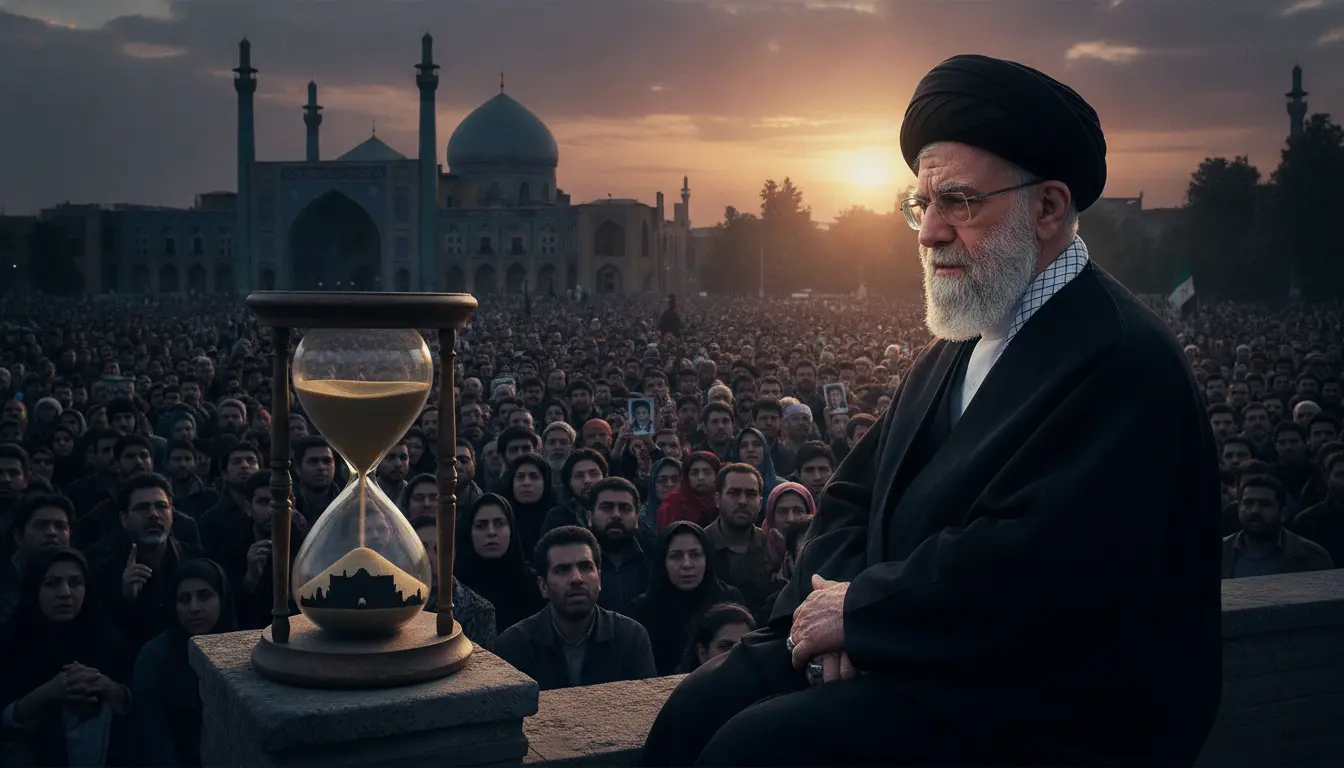
Iran Braces for Pivotal Leadership Transition as Supreme Leader Succession Nears
The Islamic Republic of Iran stands on the precipice of a potentially transformative leadership transition, as Supreme Leader Ayatollah Ali Khamenei, 85, faces persistent questions about his health and the future of his decades-long rule. The prospect of succession for the nation's highest political and religious authority has intensified discussions among Iran's political elite, regional adversaries, and global powers, signaling a critical juncture for a country at the heart of Middle Eastern geopolitics. The selection of Khamenei’s successor will not merely be a change of figurehead but a definitive moment that will shape Iran's domestic trajectory, its foreign policy, and its stance on critical international issues for decades to come.
Khamenei assumed the mantle of Supreme Leader in 1989, following the death of Ayatollah Ruhollah Khomeini, the founder of the Islamic Republic. His tenure has been marked by steadfast adherence to the principles of the revolution, a confrontational posture towards the West, and a significant expansion of Iran’s regional influence through various proxy groups. As Supreme Leader, Khamenei holds ultimate authority over all major state policies, including the nuclear program, military strategy, and judicial appointments. The meticulously guarded process of choosing his successor falls to the Assembly of Experts, an 88-member body of high-ranking clerics elected by the public, though their vetting by the Guardian Council ensures loyalty to the existing system. The immense power concentrated in the Supreme Leader's office means that the succession is a deeply opaque and intensely contested affair, largely decided behind closed doors by an inner circle of influential clerics and Revolutionary Guard commanders.
While no official contenders are ever publicly declared, speculation often centers on a few prominent figures within the conservative establishment. Mojtaba Khamenei, the Supreme Leader's second son, has frequently been mentioned due to his influential position within his father's office and strong ties to the Revolutionary Guard. His potential elevation would represent a dynastic succession, a concept traditionally resisted in the Islamic Republic but increasingly feasible given his reported influence. Other names that have previously surfaced include prominent hardline clerics who are members of the Assembly of Experts or hold significant religious authority, though the sudden death of former President Ebrahim Raisi in a helicopter crash earlier this year removed a once-leading candidate from consideration, further complicating the internal dynamics and narrowing the field of potential successors.
The stakes surrounding this succession are extraordinarily high. Domestically, the next Supreme Leader will inherit a nation grappling with severe economic challenges, widespread public discontent, and persistent calls for greater social and political freedoms. The choice of leader will dictate whether Iran pursues a path of further entrenchment of hardline policies, potentially leading to increased repression, or if there is any room for internal reform. Internationally, the transition will have profound implications for global security. It will inevitably influence Iran's nuclear ambitions, its involvement in regional conflicts in Syria, Iraq, Yemen, and Lebanon, and its volatile relationship with the United States and Israel. Any shift in leadership could either intensify existing tensions or, in a less likely scenario, open avenues for renegotiation and de-escalation.
The clandestine nature of the succession planning makes it difficult to predict the timeline or the ultimate outcome. Ayatollah Khamenei’s health status is a closely guarded state secret, leading to recurrent waves of rumors and anxieties. The process itself is designed to maintain continuity and stability, but the sheer weight of the Supreme Leader’s authority means that the transition period carries inherent risks of internal power struggles and external opportunism. Iran's political system, while seemingly monolithic, is characterized by intricate factionalism, and the selection of the next leader will undoubtedly be the result of intense negotiations and strategic maneuvering among these powerful clerical and military factions.
As the Islamic Republic navigates this inevitable succession, the world watches closely. The choice of the next Supreme Leader will not only define Iran's future but also send reverberations across the Middle East and beyond, shaping the geopolitical landscape for a generation. It represents a critical test for the longevity and adaptability of Iran's unique system of clerical rule, poised to usher in a new era with profound implications for peace and stability in one of the world's most volatile regions.
Stay Informed. Act Smarter.
Get weekly highlights, major headlines, and expert insights — then put your knowledge to work in our live prediction markets.
Related News
Iran Prepares for Unavoidable Transition as Focus Shifts to Next Supreme Leader's Selection
Iran Mobilizes for Crucial Succession as Ayatollah Khamenei's Era Concludes
U.S.-Iran Nuclear Dialogue Stalled Amid Tehran Leadership Transition and Unresolved Issues
Mounting Tensions Between Israel and Iran Fuel Fears of Broader Regional Conflict
Heightened Geopolitical Tensions Spark Concerns Over Potential US-Iran Conflict

Future of US-Iran Diplomacy Under Scrutiny Amid Reports of Potential High-Level Talks

Escalating US-Iran Tensions Stoke Fears of Formal Conflict Declaration
United States Considers Direct Offensive Strikes Against Iranian Mainland Amid Heightened Regional Tensions
Prospects for Significant U.S. Sanctions Relief on Iran Under Scrutiny

US and Iran Strive to Maintain Fragile De-escalation Amid Persistent Regional Tensions