

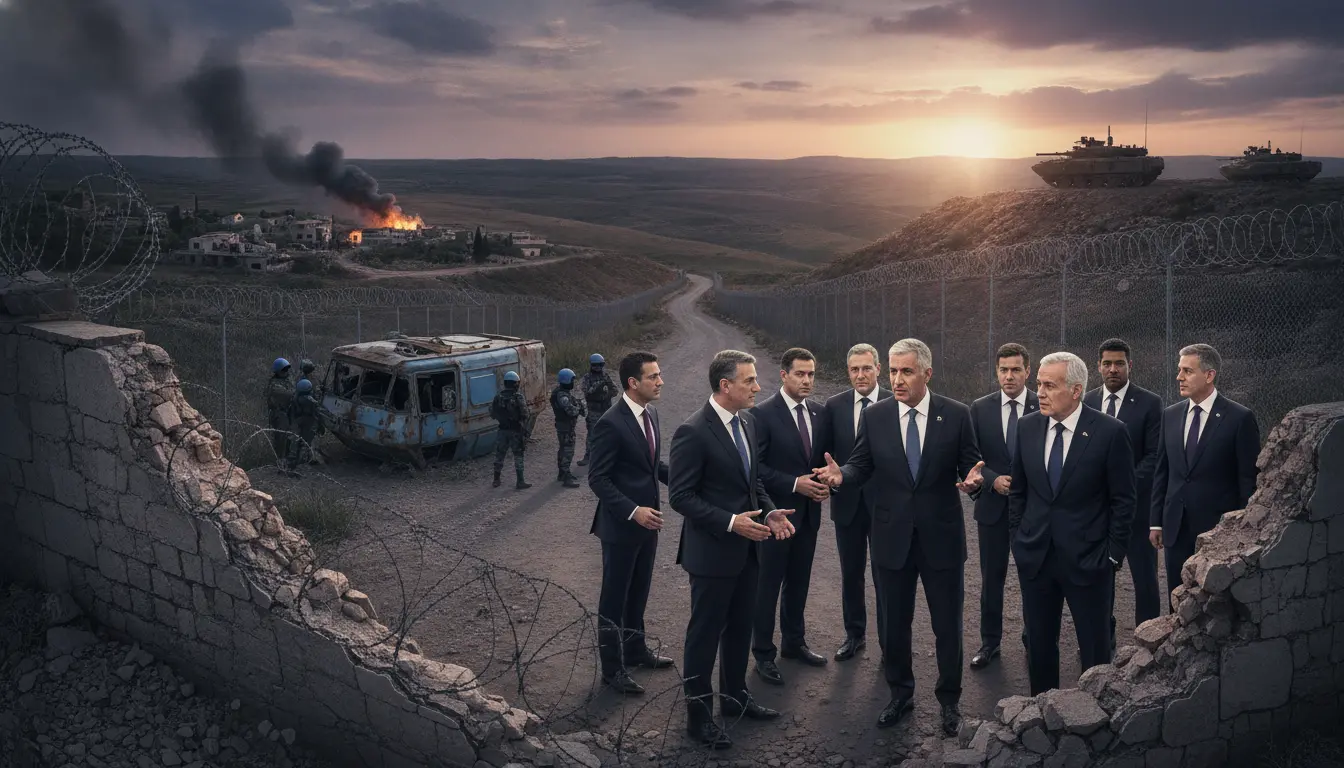
Fragile Israel-Hezbollah Ceasefire Under Intense International Scrutiny
The delicate understanding between Israel and Hezbollah regarding a cessation of hostilities remains perilously fragile, drawing considerable international attention as diplomats scramble to prevent a broader regional conflagration. Despite recent periods of intense cross-border exchanges, a reported renewal of informal agreements to de-escalate has offered a thin veneer of calm, but the underlying tensions and military build-up on both sides suggest this stability is tenuous at best. The durability of this tacit ceasefire is viewed as a critical barometer for regional stability, especially against the backdrop of ongoing, sensitive US-Iran discussions and the wider repercussions of the conflict in Gaza.
The history between Israel and Hezbollah is marked by decades of intermittent violence, culminating most recently in the devastating 2006 Lebanon War. That conflict concluded with UN Security Council Resolution 1701, which called for a full cessation of hostilities, a demilitarized zone south of Lebanon’s Litani River, and the deployment of the UN Interim Force in Lebanon (UNIFIL). While Resolution 1701 has technically been in effect, its implementation has been consistently challenged. Hezbollah has maintained a significant military presence south of the Litani, frequently engaged in intelligence gathering and military drills, while Israel has continued aerial surveillance over Lebanese airspace. The persistent violations by both parties have ensured that the border region, known as the Blue Line, has remained a flashpoint rather than a zone of lasting peace.
The period following the October 7 attacks and the subsequent Israeli military campaign in Gaza has seen a significant uptick in cross-border clashes. Hezbollah, a powerful Lebanese political party and militant group backed by Iran, has launched rockets, anti-tank missiles, and drones into northern Israel, ostensibly in solidarity with Palestinians. Israel has retaliated with targeted strikes against Hezbollah infrastructure and operatives in southern Lebanon. These exchanges, while carefully calibrated by both sides to avoid a full-scale war, have nevertheless displaced tens of thousands of civilians from their homes on both sides of the border and inflicted considerable damage. The reported “renewal” of a ceasefire refers not to a formal, signed document, but rather a mutual, often indirect, understanding to pull back from the brink, largely brokered through intense international diplomatic pressure.
For Israel, the primary concern is the security of its northern border and the perceived existential threat posed by Hezbollah's arsenal of advanced rockets and precision-guided missiles. Israeli officials have repeatedly warned that they will not tolerate Hezbollah’s continued military entrenchment along their border and have advocated for a more robust implementation of Resolution 1701, potentially through diplomatic means or, if necessary, military action. Hezbollah, on the other hand, views its arsenal and presence as a deterrent against Israeli aggression and a core component of its ‘resistance axis’ against Israel and Western influence. The group also holds significant political sway within Lebanon, further complicating any efforts by the Lebanese government to rein in its activities. Lebanon, meanwhile, is desperate to avoid another war, grappling with a crippling economic crisis and deep political divisions that would only be exacerbated by a new conflict.
International efforts, led by the United States and France, have intensified to formalize the current fragile calm into a more enduring arrangement. These diplomatic initiatives aim to secure a lasting de-escalation along the Blue Line, potentially involving troop redeployments and stronger monitoring mechanisms. The challenge lies in reconciling the irreconcilable demands of both parties, ensuring Hezbollah’s withdrawal from specific areas, and addressing Israel’s security imperatives. The stability of the Israel-Hezbollah front is inextricably linked to broader regional dynamics, including the ongoing war in Gaza and the complex relationship between the U.S. and Iran. A full breakdown of the ceasefire would not only plunge Lebanon and Israel into a devastating conflict but also risk igniting a wider regional war with catastrophic humanitarian and economic consequences, potentially drawing in other regional and international actors. The stakes for peace and stability across the entire Middle East could not be higher.
Stay Informed. Act Smarter.
Get weekly highlights, major headlines, and expert insights — then put your knowledge to work in our live prediction markets.
Related News
Israel and Hezbollah Announce Ceasefire Amidst Ongoing Regional Volatility
Israel and Hezbollah Agree to Ceasefire Amid Intensified US-Iran Diplomatic Push
Renewed Israeli Military Strikes in Lebanon Jeopardize Regional Stability and US-Iran Diplomacy
Mounting Tensions Between Israel and Iran Fuel Fears of Broader Regional Conflict

US and Iran Strive to Maintain Fragile De-escalation Amid Persistent Regional Tensions

US and Iran Navigate Fragile Cease-Fire Amid Heightened Tensions

Global Diplomacy Intensifies Efforts for Enduring Gaza Ceasefire Amid Humanitarian Crisis

US and Iran Reach Fragile Ceasefire Agreement in Strategically Critical Strait of Hormuz

Diplomatic Efforts Intensify for Permanent Gaza Ceasefire Amid Protracted Conflict

Iran war live: Vance heads to Switzerland; Israel kills 16 in Lebanon