

- News
- Politics
- Federal Reserve's Independence Hangs in Balance as Supreme Court Weighs Presidential Firing Power
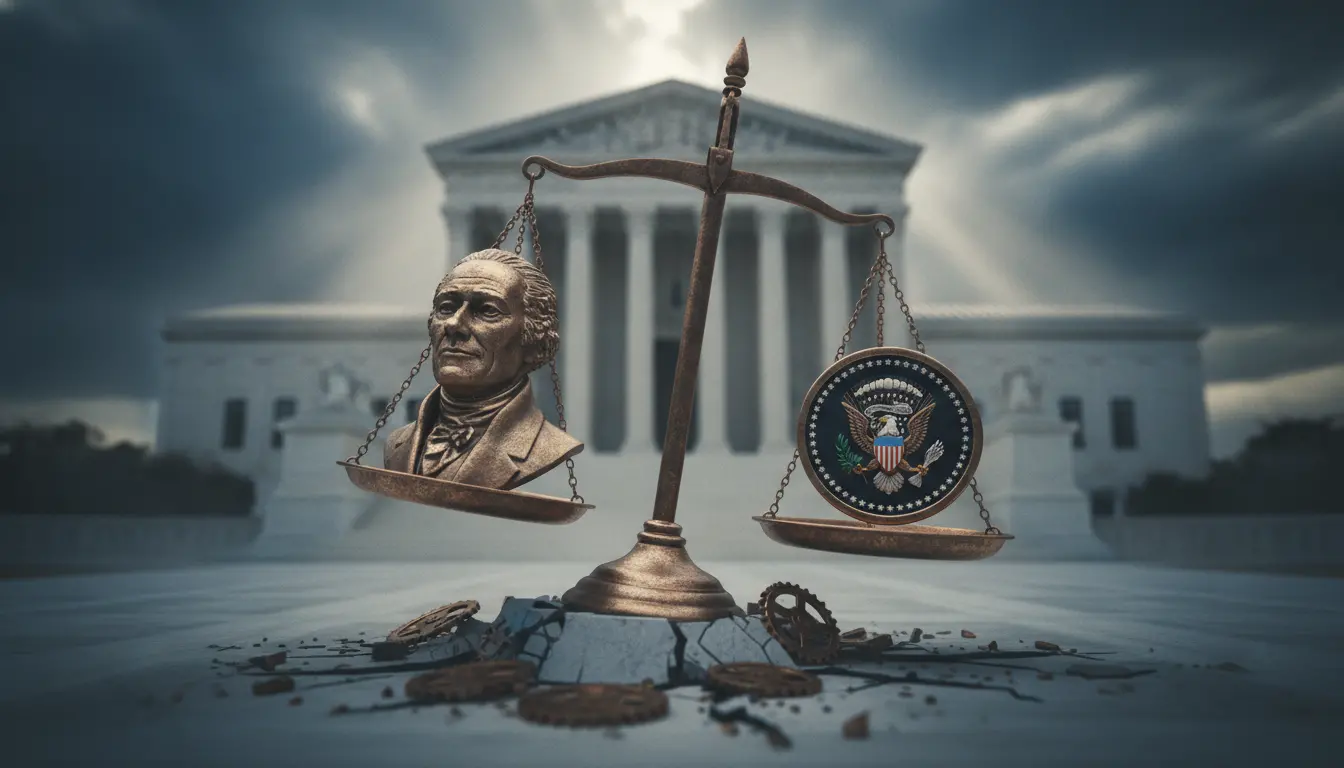
Federal Reserve's Independence Hangs in Balance as Supreme Court Weighs Presidential Firing Power
WASHINGTON – The U.S. Supreme Court is poised to deliver a landmark ruling that could fundamentally reshape the American economic landscape by altering the long-standing independence of the Federal Reserve. A pending decision, expected before the court's summer recess, centers on whether the President of the United States has the authority to fire a governor of the central bank without cause, a move that would upend a century of precedent designed to insulate monetary policy from the winds of partisan politics.
At the heart of the issue is the structure of the Federal Reserve itself. Established by Congress in 1913, the central bank was deliberately created as an independent entity within the government. Its seven-member Board of Governors are appointed to staggered 14-year terms, a design intended to ensure that no single president can stack the board with political allies. Crucially, the law currently stipulates that a governor can only be removed from office "for cause," a high legal standard typically interpreted as neglect of duty or malfeasance, not for policy disagreements. This protection is widely seen by economists as essential for maintaining the Fed's credibility in its fight against inflation and its management of the nation's money supply.
The legal challenge threatening this foundation stems from a broader conservative legal movement advocating for the "unitary executive theory." This theory posits that the Constitution grants the President full control over the executive branch, and that independent agencies whose leaders cannot be fired at will are an unconstitutional infringement on that power. The Supreme Court has already signaled its evolving stance on this issue. In the 2020 case Seila Law v. Consumer Financial Protection Bureau, the court ruled that the structure of the CFPB, led by a single director with for-cause removal protection, was unconstitutional. However, the justices left open the question of whether this logic applies to multi-member boards like the Federal Reserve, the Securities and Exchange Commission, or the Federal Trade Commission.
Supporters of expanding presidential authority argue that it is a matter of democratic accountability. They contend that unelected and insulated bureaucrats at the Fed wield immense power over the economy, and that the President, as the nation's elected leader, should have the ability to direct their policy. This perspective suggests that if the public is unhappy with rising interest rates or other monetary decisions, their vote for president should have a direct impact. Critics, however, warn that such a change would have catastrophic consequences. They fear a future where a president could threaten to fire a Fed chair for raising interest rates in an election year, even if such a move is necessary to combat inflation. This politicization, they argue, would shatter market confidence, lead to more volatile economic cycles, and ultimately damage the long-term health of the U.S. economy.
The potential implications are vast and have drawn concern from across the financial world. If the court finds for-cause protections unconstitutional for the Fed, it could trigger a domino effect across dozens of other independent agencies. For the central bank specifically, the mere possibility of at-will removal could create a chilling effect, pressuring governors to align their decisions with the short-term political goals of the White House rather than the long-term economic needs of the country. International investors, who rely on the U.S. dollar as a stable global reserve currency, could lose faith in the institution, potentially leading to a flight of capital and a weaker dollar.
As Washington and Wall Street await the decision, the ideological composition of the current Supreme Court adds to the uncertainty. The conservative majority has shown a willingness to reconsider long-held precedents related to the power of federal agencies. While Chief Justice John Roberts has historically favored a more incremental approach, other justices have expressed more expansive views on presidential power. The final ruling, whichever way it lands, will not just be an abstract legal interpretation; it will set a new course for the relationship between political power and economic stability in the United States for generations to come.
Stay Informed. Act Smarter.
Get weekly highlights, major headlines, and expert insights — then put your knowledge to work in our live prediction markets.
Related News

Supreme Court Ruling Threatens to End Federal Reserve's Political Independence
Supreme Court's Recent Decisions Hint at Broader Presidential Immigration Powers Ahead
US Supreme Court Bolsters Executive Authority on Immigration, Posing Long-Term Policy Implications
Supreme Court Rulings Stoke Concerns Over Expanding Executive Immigration Powers

Brazilian Senate Weighs Landmark Constitutional Amendment to Rein in Supreme Court Powers

ECB Navigates Persistent Inflation and Growth Headwinds Ahead of Future Rate Adjustments
Brazil Braces for Contentious 2026 Presidential Election as Lula Eyes Re-election Bid

UEFA-FIFA Power Struggle Intensifies, Casting Doubt on European Participation in 2026 World Cup

S&P 500 Poised for New All-Time Highs by 2026 Amid Tech Sector Resurgence and Anticipated Federal Reserve Rate Cuts

Mounting Political Tensions Raise Prospects of Early Canadian Federal Election