

- News
- Politics
- DOJ snubs judge's demand on anti-weaponization fund, cites 'serious separation of powers concerns'
DOJ snubs judge's demand on anti-weaponization fund, cites 'serious separation of powers concerns'
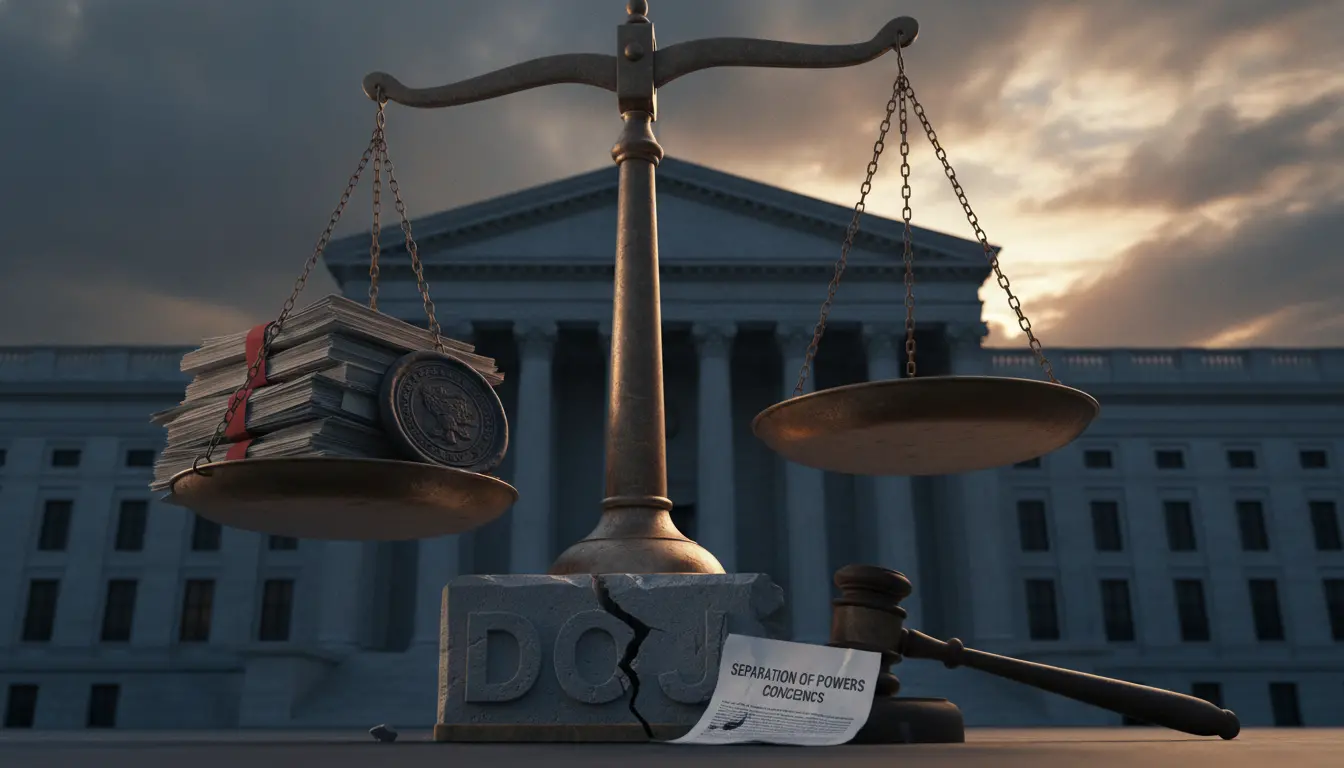
In a direct challenge to judicial authority, the Justice Department on Friday formally rejected a federal judge’s directive to confirm the cessation of a nearly $1.8 billion fund, asserting that such a demand transgresses the fundamental principle of the separation of powers. This standoff between the executive and judicial branches highlights a growing tension over the limits of oversight and the distinct roles each branch plays in the governance of the United States.
The genesis of this high-stakes legal dispute traces back to last Friday when Judge Leonie Brinkema issued a decisive order, indefinitely blocking the controversial fund. Her ruling came with a stringent seven-day ultimatum, demanding that acting Attorney General Todd Blanche, Treasury Secretary Scott Bessent, and an unnamed Associate Attorney provide sworn affirmation that the fund had been definitively shelved. The judge's bold move signaled a judiciary prepared to exercise robust oversight over federal spending, particularly concerning initiatives that might be perceived as politically charged or constitutionally suspect.
The fund, often referred to as an “anti-weaponization fund,” has garnered significant attention and scrutiny, with its very designation implying a response to perceived abuses of power or resources. While the specifics of its intended expenditures remain subjects of public debate, its substantial value—nearly $1.8 billion—underscores the significant financial implications of Judge Brinkema's intervention. The Justice Department’s refusal to comply with the judge's demand is rooted in a constitutional argument, specifically invoking the doctrine of separation of powers, which divides governmental responsibilities among the legislative, executive, and judicial branches to prevent any single branch from accumulating excessive authority.
From the Executive Branch's perspective, complying with a judicial order that compels high-ranking officials to swear to the dismantling of an executive-branch initiative represents an encroachment upon their constitutionally defined powers. The DOJ's stance suggests that while the judiciary can rule on the legality of a fund, dictating the administrative steps for its formal dissolution, particularly under sworn testimony, oversteps judicial bounds and veers into executive prerogative. This argument posits that such a demand could establish a dangerous precedent, blurring the lines between judicial review and executive management, potentially undermining the independence of the executive branch in its daily operations and policy implementations.
The implications of this legal impasse extend far beyond the fate of a single fund. It ignites a critical debate on the precise boundaries of judicial review, especially when it intersects with matters of federal appropriations and executive decision-making. Should the judiciary be able to compel sworn statements from cabinet-level officials regarding the execution of its orders, or does such a power fundamentally alter the delicate balance of power envisioned by the framers of the Constitution? This case could set significant legal precedents regarding the relationship between federal courts and the executive agencies they oversee.
Legal experts are closely watching how this confrontation will unfold. The Justice Department’s refusal could lead to further legal maneuvers, including potential appeals or motions to reconsider the judge’s original order and subsequent demands. Conversely, Judge Brinkema could explore options for enforcing her order, although direct enforcement against high-ranking executive officials without clear historical precedent could create an unprecedented constitutional crisis. The current scenario places immense pressure on both sides to navigate a path that upholds their respective constitutional duties without plunging the federal government into a protracted and destabilizing inter-branch conflict.
Ultimately, this developing narrative underscores the enduring vitality and occasional friction inherent in the American system of checks and balances. The “serious separation of powers concerns” articulated by the Justice Department are not merely bureaucratic jargon but reflect deeply held constitutional principles central to the functioning of democratic governance. The resolution of this particular dispute will likely inform future interactions between the judiciary and the executive, shaping the operational landscape for federal funds and governmental accountability for years to come.
Stay Informed. Act Smarter.
Get weekly highlights, major headlines, and expert insights — then put your knowledge to work in our live prediction markets.
Related News
Todd Blanche Attorney General Nomination Faces Intense Senate Scrutiny Over Financial Dealings and Trump Ties

US Department of Justice Pushes for Google Chrome Divestiture in Antitrust Battle

US DOJ Intensifies Push for Google Ad-Tech Business Breakup
Federal Appeals Court Weighs Challenge to Trump Administration's Use of Alien Enemies Act

High-Stakes Antitrust Battle: Justice Department and Apple Explore Early Settlement Path
Supreme Court Examines Presidential Authority Over Federal Reserve Governor Removals
Supreme Court Deliberates Presidential Authority to Remove Federal Reserve Governors
Supreme Court Weighs Presidential Power to Remove Federal Reserve Governors
U.S. Supreme Court Deliberates Sweeping Presidential Immunity Claims Amidst Landmark Case
Supreme Court Set to Deliver Landmark Ruling on Presidential Authority Over Federal Reserve Governors