

- News
- Politics
- DHS Unveils Controversial Policy Tying Counterterrorism Funding to State Election Reforms
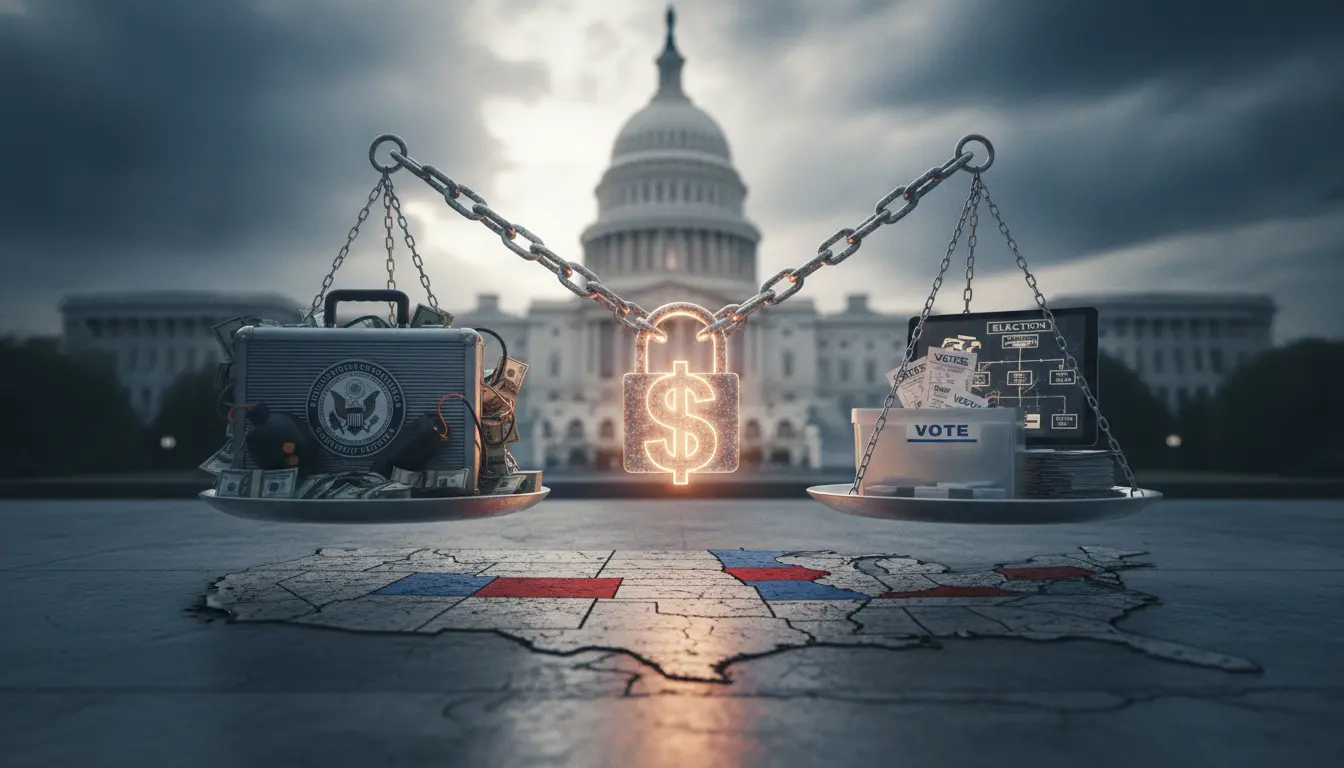
DHS Unveils Controversial Policy Tying Counterterrorism Funding to State Election Reforms
The Department of Homeland Security (DHS) has announced a significant and immediately contentious policy that links federal anti-terrorism funding directly to state compliance with prescribed election rule changes. This unprecedented move signals a new frontier in the federal government's engagement with state electoral processes, leveraging critical security grants as a mechanism to drive desired reforms. The policy is expected to ignite a firestorm of political opposition and trigger substantial legal challenges from states and advocacy groups vehemently opposed to what they perceive as federal overreach into sovereign state functions.
The core of the DHS directive stipulates that states must implement specific alterations to their election administration rules to remain eligible for certain anti-terrorism allocations. While the specifics of these mandated changes have yet to be fully detailed by the department, the underlying principle is to ensure what DHS characterizes as enhanced security and uniformity across electoral systems nationwide. This initiative arises amid a highly polarized national debate over election integrity, security vulnerabilities, and the appropriate balance between federal guidance and states' constitutional authority over their voting processes. For years, federal agencies have provided funding and expertise to states to bolster cybersecurity and physical security around elections, but a direct conditional linkage to policy changes represents a marked escalation.
Such federal funding, often distributed through programs like the State and Local Anti-Terrorism Program, is vital for states to maintain robust intelligence-sharing networks, enhance emergency preparedness, and train first responders. The potential loss of these funds could severely hamper critical security initiatives at the state level, creating a difficult choice for governors and state legislatures. Critics argue that diverting or withholding funds earmarked for national security in order to influence electoral policy not only undermines state autonomy but could also inadvertently compromise national security by weakening local counterterrorism capabilities. This financial leverage places significant pressure on states, particularly those already grappling with tight budgets.
The policy's legal footing is anticipated to be a central battleground. Legal scholars and state attorneys general are already examining potential challenges based on states' rights under the Tenth Amendment, which reserves powers not delegated to the federal government to the states, respectively, or to the people. Arguments are likely to center on whether the federal government can constitutionally condition unrelated funding on changes to state election laws. This debate could rapidly ascend through the federal court system, potentially leading to Supreme Court intervention to clarify the limits of federal conditional spending and the scope of state sovereignty in electoral matters.
Politically, the directive is poised to exacerbate existing partisan divides. Many states, particularly those governed by opposing parties to the federal administration, are expected to frame this as an authoritarian federal power grab, infringing upon the democratic principle of states managing their own elections. Governors and state legislative leaders are preparing to mount robust campaigns against the policy, engaging in both public denouncements and coordinated legal actions. The situation could also prompt congressional scrutiny, with calls for hearings and legislative attempts to either affirm or curtail DHS's authority in this domain.
Looking ahead, the implementation of this policy faces a protracted period of uncertainty and contestation. The July 1, 2027, timeframe implied in discussions surrounding the policy suggests that the Department of Homeland Security anticipates a lengthy rollout and potentially years of legal and political maneuvering. The ultimate success of DHS in compelling states to alter their election rules will depend heavily on the outcomes of these impending legal challenges and the political will of both federal and state actors to either enforce or resist the new mandates. The stakes are high, touching upon fundamental questions of federalism, national security, and the future of election administration in the United States.
Stay Informed. Act Smarter.
Get weekly highlights, major headlines, and expert insights — then put your knowledge to work in our live prediction markets.
Related News
Legal Challenges Anticipated Regarding Executive Power Over Election Assistance Commission
Federal Court Blocks Trump Executive Order on Voter Lists and Mail Ballots, Administration Vows Appeal

Anticipated Surge in Late-Counted Mail Ballots for 2026 US Midterms Following Key Court Decisions

Legal Challenges Mount Against Trump Administration's Birthright Citizenship Executive Orders

Federal Judge Declares Georgia's Voter Citizenship Verification System Unlawful

Congress Introduces 'AI Kill Switch Act' Granting Executive Authority Over Rogue Systems Following Major Tech Incidents

Regulatory Scrutiny Intensifies as US States Consider New Prediction Market Restrictions

Texas Law Mandating Bible Stories in Public Schools Faces Immediate Federal Court Challenge Over Church-State Separation

US Lawmakers Intensify Push for Federal AI Regulation to Preempt State Laws

US Justice Department Under Pressure to Launch Civil Rights Probe into Fatal Houston ICE Shooting