PoliticsdiplomacyBilateral Relations
China, North Korea Pledge Dynamic Development in Meeting
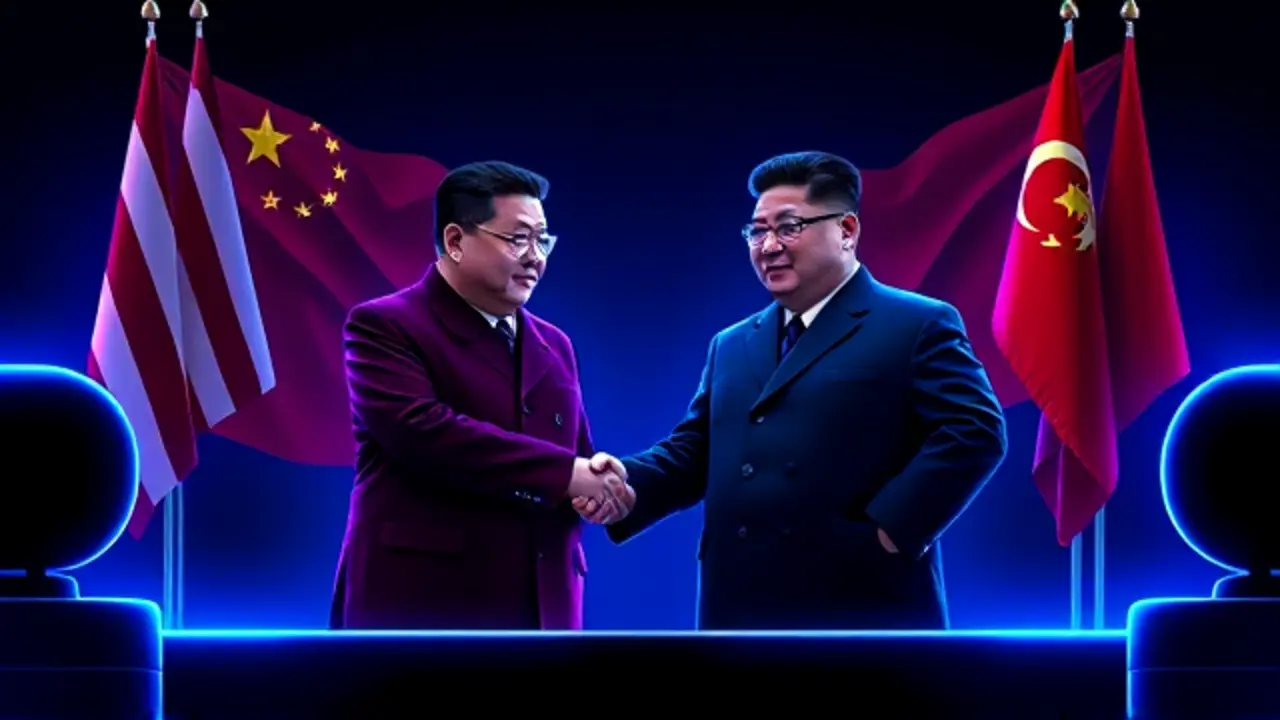
The recent meeting between Chinese Premier Li Qiang and North Korean leader Kim Jong-un represents far more than a routine diplomatic exchange; it is a calculated maneuver in the grand strategic theater of Northeast Asia, echoing the kind of great-power alignments that have historically reshaped the global order. Li’s declaration in Pyongyang, delivered with the gravitas one would expect from Beijing’s second-highest official, that China stands ready to deepen collaboration to advance a 'more just and equitable international order' is a phrase laden with meaning, a direct challenge to the US-led liberal international system that both nations view with profound suspicion.This is not merely about reaffirming the 'unwavering' ties, a term so frequently deployed in Sino-North Korean communiqués that it has become a diplomatic trope; it is about signaling a consolidated front at a time of heightened regional tension, with the United States strengthening its trilateral security cooperation with South Korea and Japan. The historical precedent is impossible to ignore: the 1961 Sino-North Korean Mutual Aid and Cooperation Friendship Treaty, a Cold War-era pact that, while its automatic military intervention clause has been ambiguously interpreted over the decades, continues to serve as the bedrock of their alliance.Analysts in Washington and Seoul will be scrutinizing Li’s visit, the highest-level Chinese delegation to Pyongyang in years, for any subtle shifts in this commitment, particularly regarding North Korea’s increasingly brazen weapons testing and China’s strategic calculus in balancing its support for a destabilizing ally against its desire to avoid a full-scale confrontation on the Korean Peninsula. The economic dimension, often overshadowed by security concerns, is equally critical.While China remains North Korea’s economic lifeline, accounting for over 90% of its trade, the relationship is not one of pure charity; it provides Beijing with a strategic buffer state and a lever of influence, a dynamic reminiscent of how larger powers have historically managed client states. The promise of 'dynamic development' likely alludes to infrastructure projects and potential sanctions-busting trade mechanisms, yet it unfolds against the backdrop of a stringent UN sanctions regime that China itself has endorsed, placing Beijing in the perpetual position of walking a tightrope—publicly upholding international non-proliferation norms while privately ensuring the Kim regime’s survival.The consequences of this reinforced alliance are multifaceted: for Japan and South Korea, it validates their push for closer military integration with the US; for American strategists, it complicates any potential scenario involving the denuclearization of the North, as Kim Jong-un can operate with the implied, if not explicit, backing of his powerful neighbor. This meeting, therefore, is a stark reminder that the Cold War never truly ended in this part of the world; it merely evolved, with the same actors now playing a more complex and dangerous game, where a pledge of friendship in Pyongyang can send ripples across the globe, influencing everything from stock markets to nuclear posture reviews. The enduring partnership between Beijing and Pyongyang, forged in the fires of the Korean War, continues to be one of the most resilient and consequential anomalies of the 21st century, a testament to the fact that in geopolitics, ideology often bows to the cold, hard necessities of realpolitik and strategic survival.
#featured
#China
#North Korea
#Li Qiang
#Kim Jong-un
#diplomacy
#international order
#bilateral relations