

- News
- Politics
- Bipartisan War Powers Resolution on Iran Sets Stage for Contentious Presidential Veto Showdown
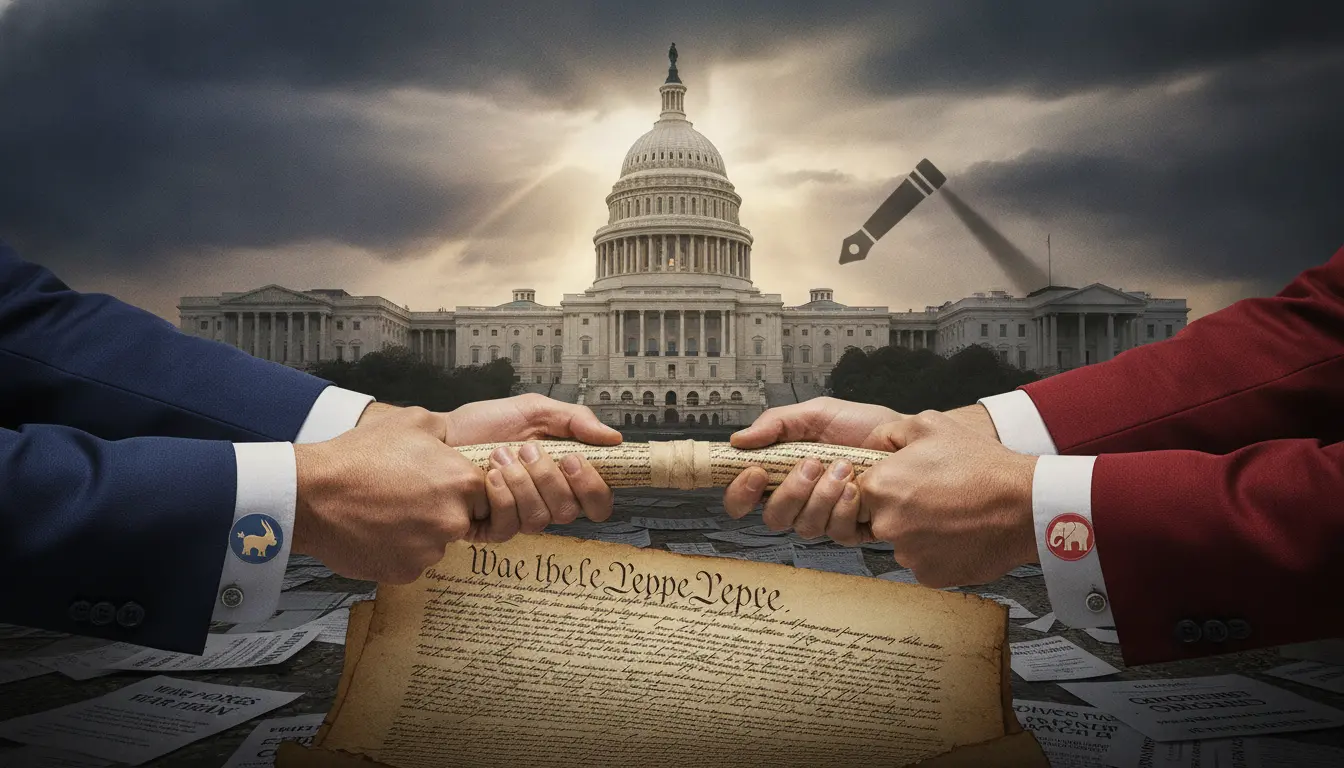
Bipartisan War Powers Resolution on Iran Sets Stage for Contentious Presidential Veto Showdown
WASHINGTON D.C. — A significant constitutional clash between the legislative and executive branches is rapidly escalating in Washington, following the US Congress's passage of a resolution in June 2026 directing President Donald Trump to withdraw American forces from hostilities with Iran. The bipartisan measure, which cleared both the House and Senate, now faces an almost certain presidential veto, setting the stage for a high-stakes legislative battle that will test the limits of executive power in foreign policy and Congress's ability to assert its constitutional prerogatives over war-making.
The resolution’s passage underscores a persistent tension between Congress and the White House regarding military engagements abroad. Rooted in the War Powers Resolution of 1973, which was enacted in the aftermath of the Vietnam War to limit the president's ability to commit troops to armed conflict without congressional approval, this latest legislative push reflects lawmakers’ growing unease over the nature and scope of US military involvement in the Middle East. Proponents of the resolution argue that continued engagement with Iran, particularly without explicit congressional authorization, risks drawing the United States into a broader conflict that lacks clear strategic objectives and public consensus. They emphasize the need to reassert Congress’s sole authority to declare war, a power explicitly granted by the Constitution.
President Trump's administration, however, has consistently defended its actions in the region as necessary for national security and the protection of American interests and personnel. Officials from the State Department and Pentagon have frequently asserted that the executive branch requires flexibility and swift decision-making capabilities to respond to evolving threats, particularly from adversaries like Iran. The President’s past rhetoric and actions suggest he views congressional attempts to limit his commander-in-chief powers as an infringement on executive authority, a stance that makes a veto highly probable. His administration has maintained that US military presence and actions are defensive in nature, aimed at deterring Iranian aggression and safeguarding regional stability, rather than constituting an act of war requiring congressional declaration.
Should the President indeed veto the resolution, the focus will immediately shift to Congress’s capacity to override it. A successful override requires a two-thirds majority vote in both the House and Senate – a formidable legislative hurdle. While the resolution garnered significant bipartisan support during its initial passage, reaching the supermajority threshold against a determined White House often proves exceptionally challenging, particularly in an election cycle or highly polarized political environment. Lawmakers on both sides of the aisle will face intense pressure from their constituencies, advocacy groups, and the administration to either uphold or reject the President's veto, transforming the vote into a crucial indicator of intra-party cohesion and cross-party cooperation.
Beyond the immediate legislative skirmish, the potential override battle carries profound implications for US foreign policy and the delicate balance of power enshrined in the Constitution. A successful override would send a powerful message about Congress’s willingness to rein in executive military authority, potentially establishing a new precedent for future administrations. Conversely, a failed override would solidify the President's ability to conduct military operations in the region without direct congressional approval, potentially emboldening future executive actions. The outcome will not only redefine the contours of US engagement with Iran but also have lasting repercussions on the relationship between the White House and Capitol Hill for years to come, shaping debates over national security and constitutional governance.
The global community watches closely as the United States navigates this internal dispute. Allies and adversaries alike are keen to understand the implications for American leadership and its posture in the Middle East, a region already marked by instability. The deliberations on Capitol Hill are therefore more than just a procedural vote; they represent a fundamental debate about the future direction of American power and its accountability, echoing historical tensions over war powers and the role of democratic oversight in military interventions abroad. The coming weeks will determine whether Congress can summon the political will and numerical strength to assert its vision for US engagement with Iran, or if the executive branch’s authority will once again prevail in this long-standing constitutional tug-of-war.
Stay Informed. Act Smarter.
Get weekly highlights, major headlines, and expert insights — then put your knowledge to work in our live prediction markets.
Related News
Trump Requests $87.6 Billion for Iran Operations Amidst Growing Congressional Scrutiny Over War Powers
Renewed US Airstrikes on Iran-Backed Militias Signal Persistent Threat of Escalation in Middle East

Congress Introduces 'AI Kill Switch Act' Granting Executive Authority Over Rogue Systems Following Major Tech Incidents

Iran war live: US-Tehran agree roadmap to reach a final deal in 60 days
2026 US Senate Midterms Poised for Razor-Thin Control, Fueling Bipartisan Struggle
2026 Midterms Set to Decide Critical Control of US House of Representatives
US Political Landscape Girds for Pivotal 2026 Midterm Elections as Control of Congress Hangs in Balance

Supreme Court Weighs Presidential Power to Dismiss Federal Reserve Governors Without Cause
Supreme Court Poised to Rule on Presidential Power to Fire Fed Governors, Threatening Central Bank Independence

Israel Warns US of Alleged Iranian Assassination Plot Against Donald Trump