

Politics
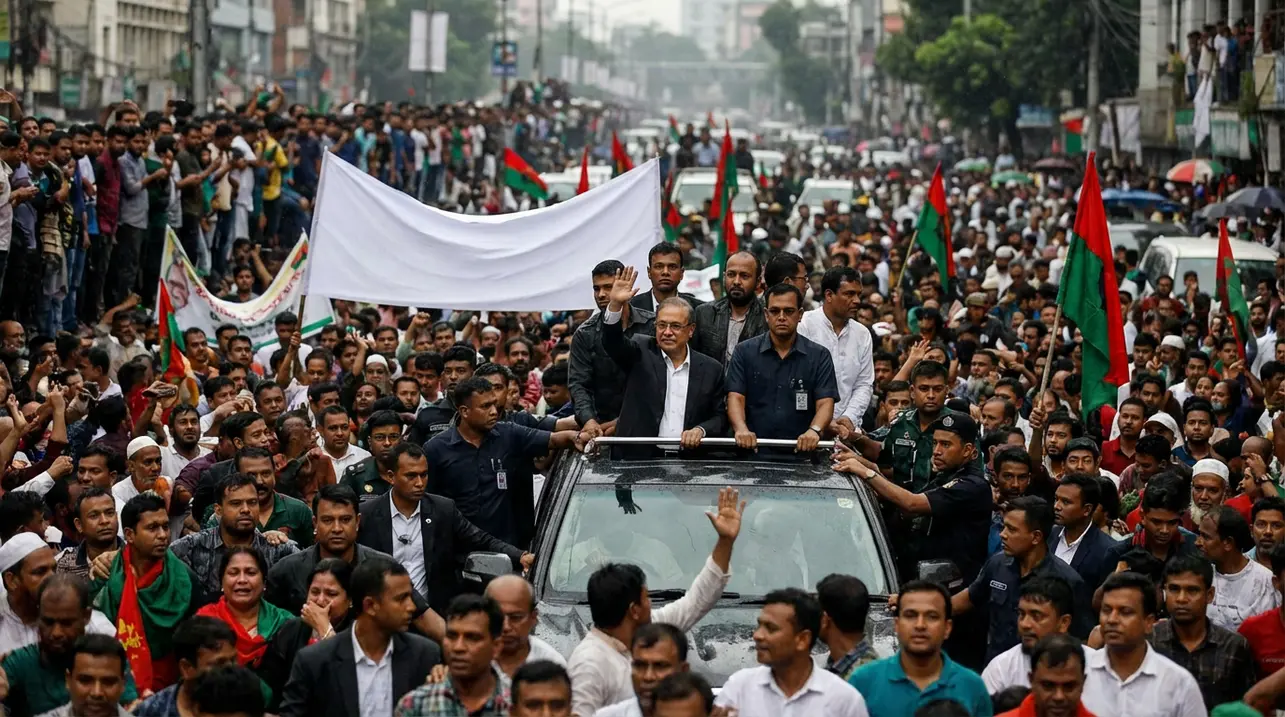
Bangladesh's PM front-runner returns from 17-year exile ahead of elections.
RO
Robert Hayes
6 months ago7 min read
In a move that has electrified Bangladesh’s already volatile political landscape, Tarique Rahman, the acting chairman of the opposition Bangladesh Nationalist Party (BNP) and long-term political heir apparent, has dramatically returned to the country after seventeen years of self-imposed exile in London. His arrival, mere weeks before a pivotal general election, is not merely a homecoming; it is a calculated gambit that threatens to upend the carefully orchestrated political calculus of Prime Minister Sheikh Hasina’s ruling Awami League.Rahman, who fled in 2008 following a conviction on corruption and money laundering charges—allegations he and his supporters decry as politically motivated—returns as the de facto leader of a party that has been systematically suppressed, its street protests met with mass arrests and a security apparatus operating with impunity. The historical parallels are stark, reminiscent of other exiled leaders returning to claim a mantle, yet the Bangladeshi context is uniquely fraught.The nation stands at a crossroads between its hard-won democratic aspirations and an increasingly authoritarian consolidation of power, where elections have often been pre-determined affairs, boycotted by major opposition factions. Rahman’s physical presence on the ground transforms him from a distant symbolic figurehead into a tangible rallying point, potentially re-energizing a demoralized BNP base and testing the limits of the state’s tolerance.Analysts are divided on the potential consequences: some see this as a last-ditch effort to legitimize a hollow electoral process, while others warn it could precipitate a severe crackdown, drawing uncomfortable comparisons to historical precedents where the return of a charismatic opposition leader has either catalyzed democratic renewal or triggered deeper repression. The international community, particularly observers from the United States and the European Union who have expressed deepening concerns over democratic backsliding, will be watching closely, their statements and potential sanctions likely influenced by how this homecoming plays out.Beyond the immediate electoral theater, Rahman’s return forces a reckoning with Bangladesh’s turbulent political legacy—the bitter rivalry between the BNP and Awami League that has defined its post-independence era, a cycle of vengeance and retribution that has often spilled into violence. Whether this marks a genuine opening for dialogue or merely the prelude to a more intense phase of confrontation will depend on the strategic calculations in Dhaka and the resilience of Bangladesh’s civil society, caught between the anvil of state power and the hammer of opposition mobilization.
#lead focus news
#Bangladesh
#Tarique Rahman
#elections
#exile
#return
#political comeback
#prime minister
Stay Informed. Act Smarter.
Get weekly highlights, major headlines, and expert insights — then put your knowledge to work in our live prediction markets.
Related News

Comments
It's quiet here...Start the conversation by leaving the first comment.