

- News
- Politics
- Anticipated Surge in Late-Counted Mail Ballots for 2026 US Midterms Following Key Court Decisions

Anticipated Surge in Late-Counted Mail Ballots for 2026 US Midterms Following Key Court Decisions
Recent judicial interpretations and a complex web of state election laws are setting the stage for a potential increase in the percentage of mail-in ballots tabulated after Election Day in the 2026 US Midterm Elections, a development that could significantly shape electoral outcomes and public perception of the process. The evolving legal landscape, particularly rulings concerning grace periods for absentee and mail-in ballots, suggests that election administrators may be compelled to count a greater proportion of votes arriving post-election, provided they meet specific criteria like being postmarked by the official election date.
This trend follows a significant expansion of mail-in voting practices, largely accelerated by the COVID-19 pandemic during the 2020 and 2022 election cycles. While proponents argue that extended counting periods and grace periods enhance voter access and ensure every legitimate ballot is counted, critics often raise concerns about election integrity, citing potential for fraud and the prolonged uncertainty of results. The debate encapsulates a fundamental tension in American democracy: balancing broad participatory access with the demand for swift, decisive electoral outcomes. Each state currently maintains its own set of rules regarding absentee and mail-in ballots, including varying deadlines for receipt and acceptance, leading to a patchwork system that often becomes the battleground for legal challenges.
The specific “Supreme Court ruling upholding grace periods” mentioned in the underlying context refers to a series of legal challenges and state-level decisions, sometimes affirmed or influenced by higher courts, that have solidified or extended the window for accepting mail-in ballots post-Election Day. While no single landmark Supreme Court case has universally mandated grace periods, the cumulative effect of various lower court rulings, often left undisturbed by the high court, has reinforced the legality of these provisions in many jurisdictions. These rulings typically hinge on the principle that voters should not be disenfranchised due to postal delays if their ballot was properly submitted by the legal deadline, such as being postmarked by Election Day. This often leads to a substantial number of ballots being processed in the days and even weeks following the official vote, particularly in states with high mail-in ballot usage and tight races.
The implications for the 2026 midterm elections are profound. A higher volume of post-Election Day ballot counts could prolong the final tally in closely contested races, fostering an environment where initial results shift as more ballots are processed. This extended period of tabulation has, in past cycles, fueled suspicion and claims of impropriety, regardless of the transparency or diligence of election officials. Campaigns will need to adapt their strategies, not only in terms of voter outreach and ballot harvesting where legally permitted but also in managing public expectations and messaging around election night and the subsequent days. Political parties, already deeply divided on the efficacy and security of mail-in voting, are likely to intensify their legal and public relations efforts in anticipation of these trends.
Election officials, already operating under immense pressure, face the dual challenge of adhering to court-mandated grace periods while striving for efficiency and maintaining public trust. This often requires significant logistical planning, including staffing for extended counting operations and implementing robust audit procedures to ensure accuracy. Furthermore, the increased scrutiny and partisan rhetoric surrounding late-counted ballots could exacerbate an already polarized political landscape, potentially eroding confidence in the electoral process if not managed with utmost clarity and integrity. The ultimate impact will depend on a confluence of factors, including specific state laws, voter turnout patterns, and the judicial temperament surrounding future election challenges.
What is at stake is not merely the efficiency of counting but the very perception of electoral legitimacy. For some, ensuring every legal vote is counted, regardless of when it arrives, is a cornerstone of democratic fairness. For others, the delay in final results and the potential for late-arriving ballots to alter outcomes undermines the finality of Election Day. As states continue to refine their election statutes and courts weigh in on their legality, the 2026 midterms are poised to become another critical test of America’s evolving electoral infrastructure and its capacity to manage a voting landscape increasingly reliant on delayed tabulation.
The ongoing legislative and judicial battles over election administration, particularly regarding the timelines for ballot receipt and counting, underscore a deeply partisan struggle over voter access and election security. While some states may move to tighten their deadlines, others, under judicial pressure or legislative intent, may further embrace grace periods. The coming years will undoubtedly see continued legal challenges and political maneuvering as both parties seek to shape the rules to their advantage, all while election administrators navigate the complex mandate of executing fair, secure, and transparent elections under intense public scrutiny.
Stay Informed. Act Smarter.
Get weekly highlights, major headlines, and expert insights — then put your knowledge to work in our live prediction markets.
Related News
Campaign Spending for 2026 US Midterm Elections Poised to Exceed $18 Billion Following Judicial Shifts
US Political Landscape Girds for Pivotal 2026 Midterm Elections as Control of Congress Hangs in Balance

2026 Midterms Set to Decide Critical Control of US House of Representatives
Republicans Eye Critical Gains as Battle for US Senate Control Intensifies Ahead of 2026 Midterms
2026 US Senate Midterms Poised for Razor-Thin Control, Fueling Bipartisan Struggle
Federal Court Blocks Trump Executive Order on Voter Lists and Mail Ballots, Administration Vows Appeal

2026 Gubernatorial Elections: Republicans Eye Significant Statehouse Shifts
Speculation Intensifies Over Donald Trump's 2028 Presidential Bid Ahead of Key 2026 Political Crossroads
Supreme Court Poised for Potential Review of Birthright Citizenship Under 14th Amendment
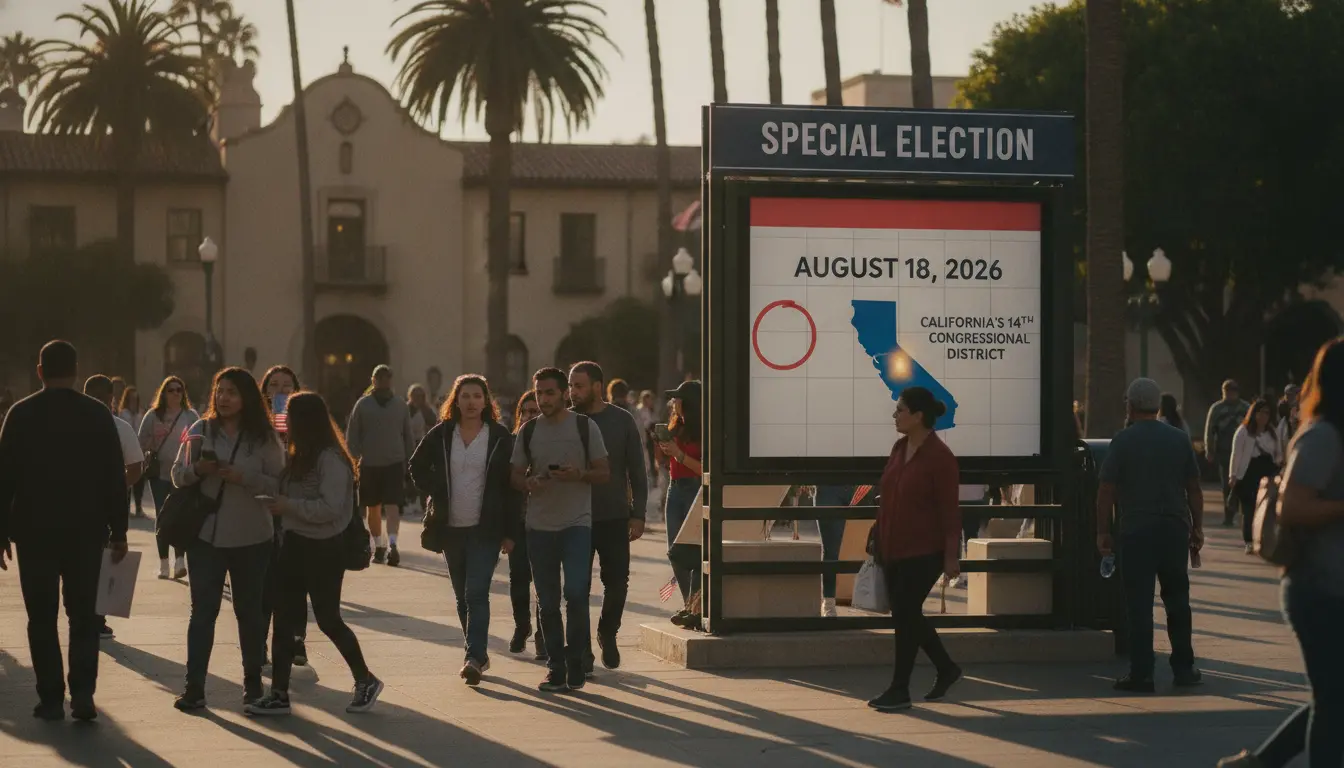
California's 14th Congressional District Gears Up for August 2026 Special Election