

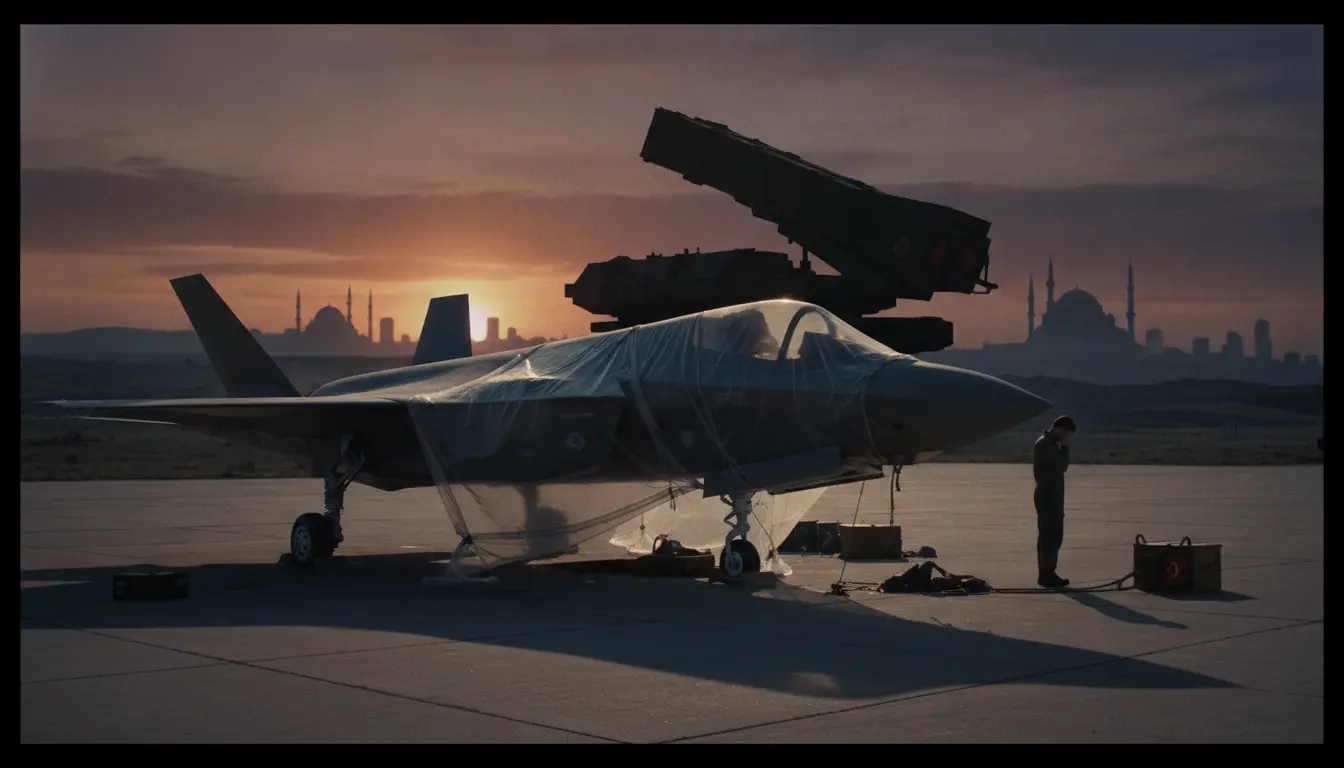
Ankara's F-35 Ambitions Grounded by Lingering S-400 Dispute with Washington
WASHINGTON – Despite a recent thaw in relations marked by the approval of a major F-16 fighter jet sale, Turkey's long-held ambition to rejoin the F-35 stealth fighter program remains firmly on hold. The core obstacle, a seemingly intractable dispute over Ankara’s acquisition of the Russian-made S-400 air defense system, continues to define the strategic misalignment between the two NATO allies. While the recent sale of 40 new F-16s and modernization kits for Turkey’s existing fleet signaled a degree of pragmatic cooperation, officials in Washington maintain that a path back to the F-35 consortium is impossible as long as the S-400 remains on Turkish soil.
The rupture in defense cooperation dates back to 2019, when the Trump administration formally ejected Turkey from the multinational F-35 Joint Strike Fighter program. The move was not merely punitive but rooted in deep security concerns shared across the NATO alliance. Turkey, an original partner in the program, had not only planned to purchase over 100 of the advanced aircraft but was also a key manufacturing partner, producing hundreds of essential parts for the jet. The decision to remove Ankara dealt a blow to both its air force modernization plans and its defense industry. The core of the dispute was Turkey’s insistence on purchasing and activating the S-400, a sophisticated Russian surface-to-air missile system that U.S. and NATO officials warned could compromise the F-35’s stealth capabilities by collecting sensitive data on its radar signature.
Washington’s response was unequivocal. Invoking the Countering America's Adversaries Through Sanctions Act (CAATSA), the U.S. not only halted the delivery of completed F-35s destined for Turkey but also sanctioned its defense procurement agency. The Pentagon swiftly moved to source the components previously made by Turkish firms from other partners, a complex and costly process that underscored the seriousness of the breach. For years, Ankara has lobbied for a reversal, arguing that the S-400 system would operate independently and pose no threat to NATO assets. However, this argument has failed to persuade policymakers in Washington, where the bipartisan consensus against accommodating the S-400 has remained remarkably solid.
The recent approval of the $23 billion F-16 deal was a significant diplomatic development, but it was transactional in nature. The Biden administration and key members of Congress explicitly linked the sale to Turkey’s ratification of Sweden’s membership in NATO, a strategic priority for the alliance following Russia's invasion of Ukraine. Ankara’s eventual approval unlocked the fighter jet sale, resolving one major point of friction. Yet, U.S. officials have been careful to frame this as a separate issue from the F-35 impasse. The F-16s are seen as a necessary stopgap to maintain the interoperability of a key ally’s air force, not as a stepping stone for Turkey's readmission into the elite fifth-generation fighter program.
Complicating the strategic calculus are the broader regional dynamics, particularly the security concerns of other U.S. allies. Israel, which operates its own customized variant of the F-35, has long been wary of Turkey's growing military assertiveness under President Recep Tayyip Erdoğan. The prospect of Ankara fielding the same advanced stealth aircraft has been a source of concern in Jerusalem, adding another layer of diplomatic complexity for Washington to navigate. The delicate balance of military power in the Eastern Mediterranean and the Middle East means that any decision regarding F-35 sales carries significant geopolitical weight beyond the bilateral U.S.-Turkey relationship.
Looking ahead, the F-35 issue appears set to remain a defining feature of the U.S.-Turkey alliance. The official American position is clear: Turkey must fully divest itself of the S-400 system before any conversation about the F-35 program can resume. For Ankara, this would represent a major political concession and a reversal of a key strategic decision. As long as this fundamental disagreement persists, Turkey will find itself on the outside looking in, equipped with upgraded fourth-generation fighters while its regional rivals and NATO partners operate the world's most advanced stealth aircraft. The F-35 is more than just a plane; it is a symbol of a deeper strategic alignment that, for now, remains out of Ankara's reach.
Stay Informed. Act Smarter.
Get weekly highlights, major headlines, and expert insights — then put your knowledge to work in our live prediction markets.
Related News
Italian Foreign Minister's US Trip Halted Amid Meloni-Trump Photo Row

Italian Prime Minister Giorgia Meloni Under Pressure to Clarify Stance on Future Alliance with Donald Trump

Trump insults Meloni again amid spat over G7 photo claims
Italy’s top diplomat nixes US trip after Meloni says Trump fabricated story

Trump's 'Begged for Photo' Claim Continues to Stir Diplomatic Fallout with Italy
US-Iran Tensions Escalate Sharply After Renewed Strikes and Trump's 'Ceasefire Over' Proclamation

Donald Trump's Potential 2028 Presidential Bid Already Shaping Republican Landscape

Age, Legal Woes, and Political Volatility Fuel Speculation Over Durability of a Potential Second Trump Term

Tyson Fury's Path to Undisputed Status Dominates Heavyweight Conversation Amidst Unexpected Matchup Mentions

Pope Leo XIV's General Remarks Seen as Implicit Critique of Donald Trump's Divisive Rhetoric