

OthereducationSchool Reforms
The Economic Power of Investing in Early Childhood Education
ET
Ethan Brown
6 months ago7 min read
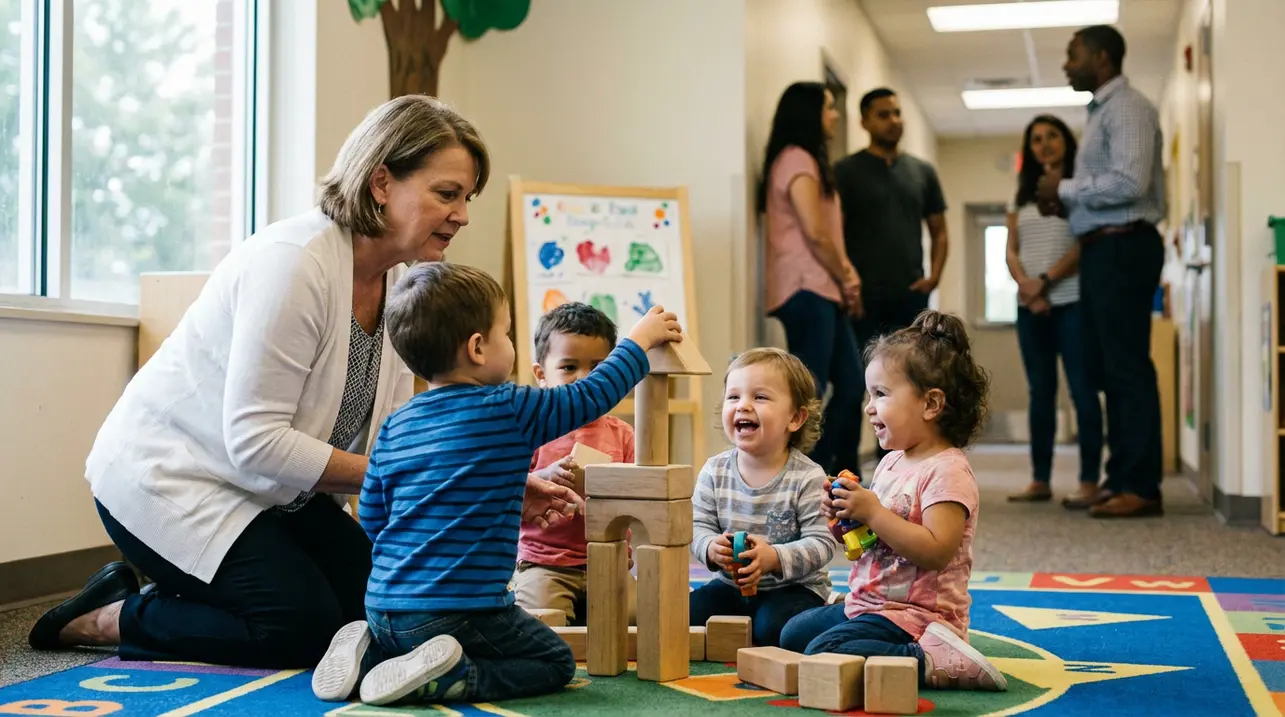
Let's talk about the single most powerful investment you can make, and I'm not referring to the latest tech stock or a hot real estate market. I'm talking about the foundational years of a human life—those first five or six.The data is unequivocal: funneling resources into early childhood education isn't just a feel-good social policy; it's the ultimate economic catalyst, a high-yield bond for societal prosperity that we are, collectively, failing to purchase. Think of it like the most critical seed funding round for a startup.You wouldn't expect a fledgling company to thrive without initial capital for talent, R&D, and a solid operational base, yet we routinely expect children to build successful lives on shaky, underfunded foundations. The volatility of our global economy—marked by technological disruption, shifting labor markets, and social unrest—demands a workforce that is adaptable, innovative, and resilient.That process starts not in college, or even high school, but in the preschool classroom and the quality of care a child receives from birth. Nobel laureate economist James Heckman's groundbreaking work has quantified this, showing a return on investment of 7-10% per annum for quality early childhood programs, outperforming the historical returns of the stock market.This ROI isn't magic; it's the compound interest of human capital. Children who receive strong early education are more likely to graduate high school, hold stable jobs, earn higher wages, and contribute more in taxes.They are significantly less likely to require costly social services, enter the criminal justice system, or experience chronic health issues. It's the very definition of a preventative investment, paying massive dividends by avoiding future societal costs.Yet, as the article notes, this sector remains chronically and bafflingly underfunded, trapped in a short-term political cycle where the payoffs—though enormous—are realized over a decade or two, not within a single election term. From a personal finance perspective, this is the equivalent of refusing to contribute to your 401(k) because you'd rather have the cash now, ignoring the monumental power of decades of growth.The blockage here is a failure of imagination and political will. We see the annual budget line items for pre-K and think 'cost,' when we should see 'strategic infrastructure spending.' Countries like Finland and Sweden, which have long prioritized universal, play-based early childhood education, don't just have happier kids; they boast more equitable economic outcomes and consistently high-performing adult populations. In the U.S. , the fight for universal pre-K often gets mired in partisan debates, but at its core, it's a non-partisan economic imperative.The business community gets this—groups like the Committee for Economic Development have long advocated for early childhood investments as crucial for future workforce readiness. The consequences of inaction are a self-inflicted wound.We are essentially leaving economic growth on the table, accepting higher future costs for remediation, incarceration, and healthcare, while perpetuating cycles of inequality. For any entrepreneur or investor, the lesson is clear: the highest-return ventures often require patience and conviction in the underlying fundamentals.The fundamental truth here is that nurturing capable, emotionally intelligent, and cognitively developed children is the ultimate driver of long-term national wealth and stability. It's the surest route to the prosperous and peaceful world we claim to want, and it's time our financial and policy priorities finally aligned with that indisputable fact.
#early childhood education
#investment
#economic returns
#underfunding
#prosperity
#peace
#stability
#editorial picks news
Stay Informed. Act Smarter.
Get weekly highlights, major headlines, and expert insights — then put your knowledge to work in our live prediction markets.
Related News






1 month ago
Outpoll Weekly Recap: Other (April 20 – 26, 2026)

2 months ago
Outpoll Weekly Recap: Other (April 13 – 19, 2026)

2 months ago
Why ‘others have it harder’ is a form of empathy bypassing

2 months ago
Outpoll Weekly Recap: Other (March 30 – April 5, 2026)

2 months ago
Outpoll Weekly Recap: Other (March 23 – 29, 2026)

3 months ago
Outpoll Weekly Recap: Other (March 16 – 22, 2026)

3 months ago
Washington State Passes Millionaires Tax as Model for Others

3 months ago
Outpoll Weekly Recap: Other (March 9 – 15, 2026)
3 months ago
Telura Emerges with €4M Seed to De-Risk Deep Geothermal, as Europe's Subsurface Energy Race Intensifies

3 months ago
Outpoll Weekly Recap: Other (March 2 – 8, 2026)
Comments
It's quiet here...Start the conversation by leaving the first comment.