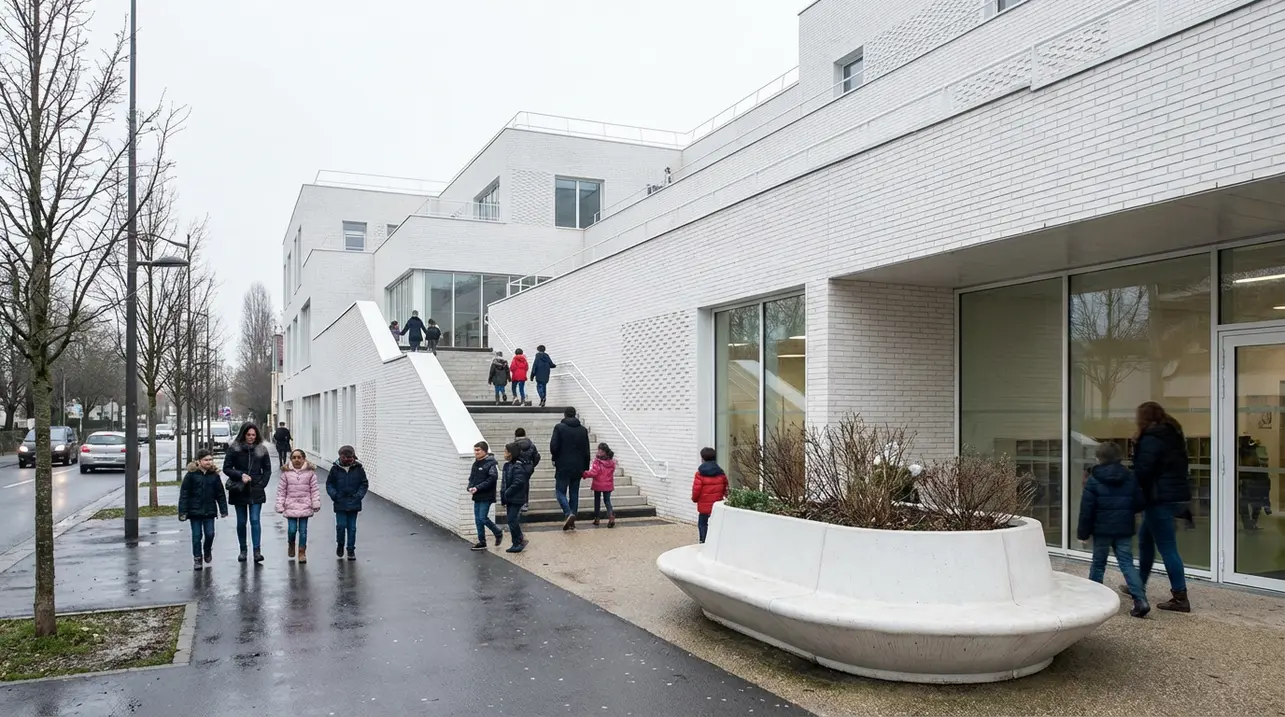
Stepped white brick facade wraps school group in France.

In the French town of Saint-Ouen-l'Aumône, a new school group by Brenac & Gonzalez & Associés stands as a stark, sculptural statement in white brick, its terraced facade stepping down like a geological formation. This is more than architectural flair; it's a deliberate environmental strategy.The stepped design maximizes natural light penetration deep into the classrooms and creates usable outdoor terraces, embodying a philosophy where form follows ecological function. This project joins a global chorus of public architecture—from a geometric sports complex in China's Daixi to a reversible timber stage in the Italian Alps—that prioritizes local materials, passive design, and a deep connection to place over iconic, energy-intensive statements.These buildings, celebrated in design circles, signal a vital shift towards infrastructure that serves community needs while treading lightly on the planet, often through adaptive reuse and thoughtful material selection. Yet, as a biologist observing this trend, a critical question emerges: is this approach scalable? The bespoke nature and potentially higher upfront costs of such architecturally significant sustainable projects can limit them to well-funded municipalities or private developments, creating an 'eco-elite' tier of public buildings.This leaves a gaping hole in addressing the urgent, mass-scale need for affordable, green housing and schools. The French school, therefore, is a beautiful paradox—a beacon of aspirational, integrated sustainable design that also highlights the practical challenge of democratizing these principles to truly reshape our built environment for a climate-stressed future.
#architecture
#sustainability
#design
#construction
#innovation
#editorial picks
Stay Informed. Act Smarter.
Get weekly highlights, major headlines, and expert insights — then put your knowledge to work in our live prediction markets.