OthereducationSchool Reforms
Rename ‘home-to-school transport’ to tackle spiralling costs, MPs told
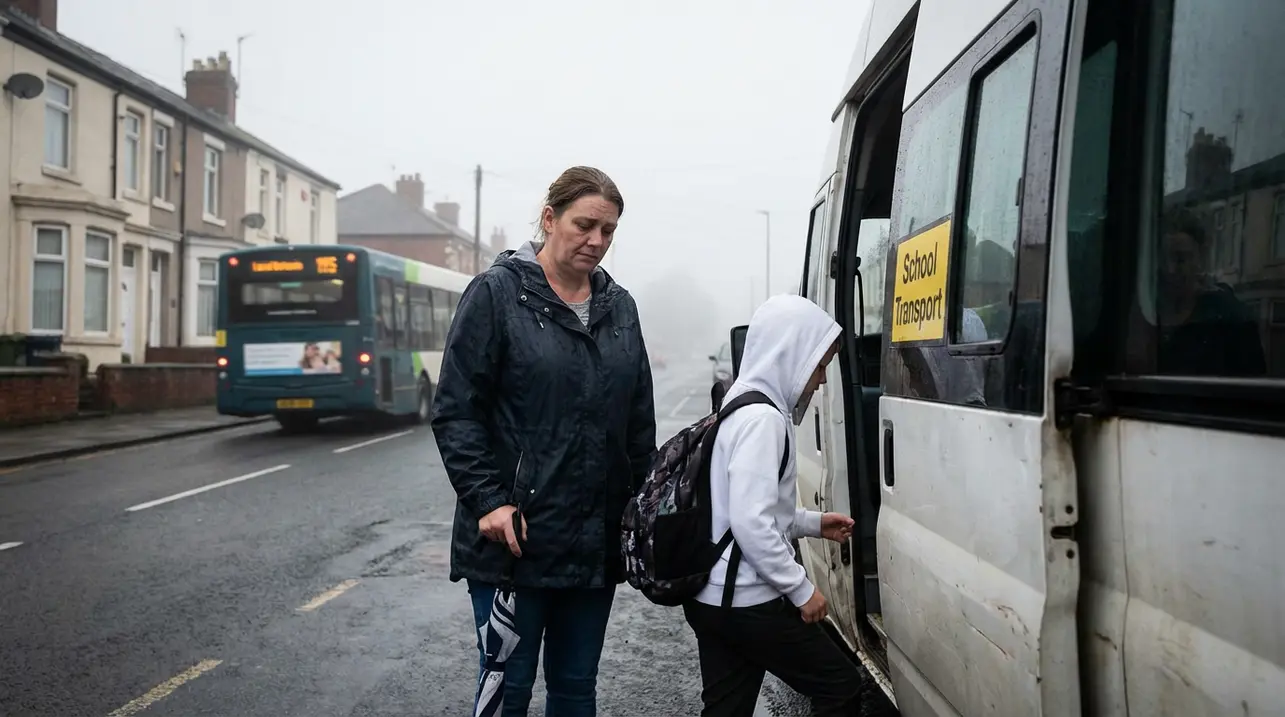
The escalating fiscal burden of school transport in England, now consuming a staggering £2. 3 billion annually, has sparked a strategic debate that echoes far beyond the ledger books.Local authorities, testifying before the public accounts committee, have proposed a seemingly semantic but profoundly tactical shift: renaming ‘home-to-school transport’ to ‘assisted travel to school’. This is not merely a bureaucratic rebranding exercise; it is a calculated maneuver to recalibrate public expectation and redefine the very nature of the state’s obligation.The core of their argument, that eligible pupils do not inherently require a ‘door-to-door taxi service’, strikes at the heart of a long-standing social contract, reminiscent of historical tensions between expanding welfare provisions and the imperative of fiscal austerity. The current framework, largely established by the Education Act 1996, mandates free transport for children living beyond statutory walking distances or with special educational needs, a policy born from post-war egalitarian ideals.However, its implementation has evolved into a complex patchwork where rising demand—driven by increased SEND diagnoses, school choice policies dispersing catchment areas, and the closure of rural schools—collides with a decade of severe local government funding cuts. The result is a perfect storm: costs have spiralled by over 40% in real terms since the mid-2010s, forcing councils to make brutal trade-offs between this service and other frontline provisions like adult social care and library services.Expert commentary from bodies like the County Councils Network underscores that the existing terminology inherently suggests a personalised, bespoke solution, creating an entitlement mentality that is increasingly unsustainable. They argue that ‘assisted travel’ more accurately reflects the goal of enabling attendance, potentially opening the door to more cost-effective, communal solutions like dedicated bus routes, travel training for older students, or subsidised public transport passes.This pivot, however, is fraught with political and social risk. Opponents, including many parent advocacy groups and disability rights organisations, warn that such a reframing could be a precursor to service dilution, disproportionately affecting the most vulnerable children for whom a ‘taxi service’ is not a luxury but a necessity due to medical conditions, safety concerns, or the absence of viable alternatives.The historical parallel here is not Churchillian, but perhaps Thatcherite, recalling the battles over community care reforms where language was weaponised to manage demand. The potential consequences are significant: a successful rebranding could save hundreds of millions, allowing reinvestment in educational support itself.
#education policy
#school transport
#local authorities
#government spending
#parental expectations
#featured